Nepal Flood Risk Grows as Lakes Threaten to Burst
Nepal flood risk has intensified after authorities in Nepal and China warned of another potential disaster in the Himalayas, where two newly formed lakes are threatening to burst following a catastrophic flood that has already killed hundreds of people.
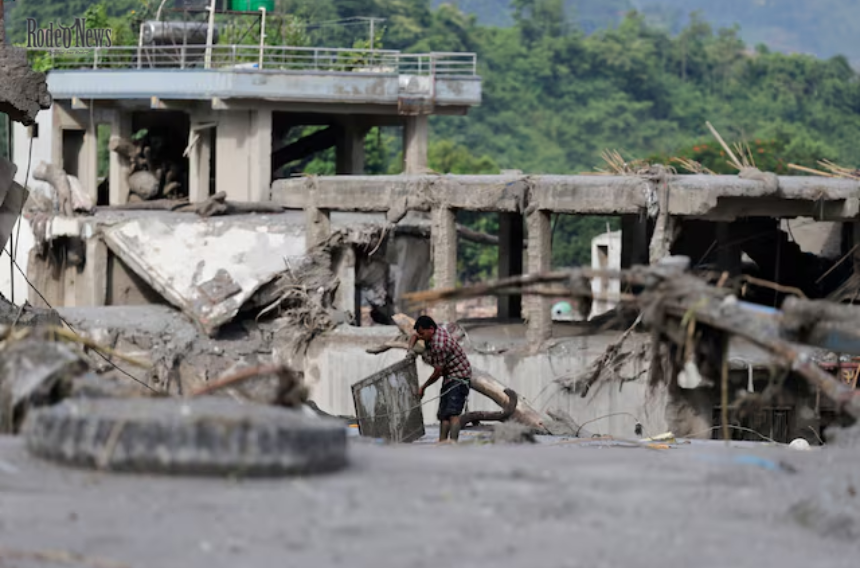
The latest warning comes as rescue teams continue searching through debris-covered valleys after Wednesday’s devastating flood along the Nepal-China border. At least 362 people had been reported dead, while nearly 1,000 remained missing, according to Reuters.
The disaster was linked to a glacier collapse that sent rock, ice, mud and debris into mountain river systems. The material blocked waterways and created new lakes, adding another layer of danger for communities and rescue workers already dealing with widespread destruction.
Nepal’s disaster authority warned that one newly formed lake was rising rapidly and could burst. Authorities urged residents, travelers and rescue personnel to stay away from riverbanks and other high-risk areas.


6
Nepal Flood Risk Rises After Catastrophic Glacier Collapse
The latest crisis began with a powerful event high in the Himalayas. A section of glacier and surrounding rock collapsed, sending a massive volume of ice, sediment and debris downhill and into river channels.
The resulting flood moved rapidly through the mountainous landscape. Rivers including the Bhotekoshi and Trishuli were affected, while downstream settlements suffered severe damage.
Initial reports considered whether an earthquake had caused the disaster. However, subsequent analysis of satellite imagery and seismic information pointed to a glacier collapse and associated debris flow as the primary trigger.
Scientists examining satellite imagery identified a major landslide involving glacier ice and underlying rock. The collapse produced a powerful debris flow capable of rapidly transforming river conditions far downstream.
The speed of the event made evacuation extremely difficult.
In mountainous areas, settlements are often concentrated along narrow river valleys because flat land is limited. Roads, bridges, hydropower facilities and trading routes also frequently follow the same corridors.
That means a sudden surge of water and debris can affect communities and critical infrastructure at the same time.
Two Lakes Create a Dangerous New Threat
The immediate concern is now shifting from the original flood to the lakes created by the disaster.
When landslides, ice and other debris block a river, water can accumulate behind the natural barrier. The resulting body of water is sometimes called a barrier lake. If the barrier fails, a second flood can travel downstream with little warning.
That is the scenario authorities are now trying to prevent.
Nepal’s disaster authority said a lake created when debris blocked a river was continuing to rise and could potentially burst. Officials warned people in lower-lying areas and those involved in rescue operations to move away from riverbanks and dangerous locations.
China has issued a separate warning involving another lake on its side of the border.
Chinese authorities estimated that around 3 million cubic meters of water could enter the already blocked lake over a three-day period. That additional volume could significantly increase pressure on the natural barrier and raise the possibility of an overflow or breach.
Aerial footage showed brown water accumulating behind the debris barrier, underscoring how quickly conditions can change in the region.
The situation is especially concerning because more rainfall is expected. Additional precipitation could increase water levels and place even greater pressure on unstable natural dams.
Nepal Flood Risk Complicates Rescue Operations
The new warning presents a major challenge for rescue teams.
Hundreds of people are still missing after the original flood, and rescuers are searching through mud, rocks and damaged settlements. Helicopters and ground teams are working to reach isolated communities while authorities assess the extent of the destruction.
But rescuers themselves face the danger of another sudden flood.
According to Reuters, some rescue teams have already begun moving toward safer ground because of concerns about the unstable lakes and additional flooding.
This creates a difficult balance.
Authorities need to search for survivors as quickly as possible. At the same time, sending large numbers of rescue workers into potentially dangerous river valleys could expose them to another flood wave.
A sudden lake breach could also destroy remaining roads and bridges, making access even harder.
The disaster has therefore become more than a single flood event. It is developing into a cascading emergency involving unstable slopes, blocked rivers, rising lakes and damaged infrastructure.
Why Barrier Lakes Can Be So Dangerous
Barrier lakes can form naturally after landslides, glacier collapses and rock avalanches.
The problem is that the material blocking a river is often unstable. Unlike a purpose-built dam, a natural barrier may consist of loosely packed rock, mud, ice and other debris.
If water rises high enough, it can begin flowing over the barrier. Once erosion starts, the process can accelerate rapidly.
In the worst cases, the natural dam collapses and releases a large amount of water downstream.
This type of event is commonly associated with glacial lake outburst floods, although the lakes formed in the latest Nepal disaster are directly linked to debris blocking river channels rather than simply being long-standing glacier-fed lakes.
The distinction matters because the underlying mechanism can differ. However, the potential consequence is similar: a large volume of water can suddenly enter a river system.
For communities downstream, the warning time may be extremely short.
Himalayan Flood Threat Is Growing
The latest Nepal disaster has renewed attention on the wider risks facing the Himalayan region.
The Hindu Kush Himalaya contains thousands of glaciers and glacial lakes. Scientists have warned for years that rising temperatures are changing the high-altitude environment.
Glacier retreat can contribute to the expansion of glacial lakes. At the same time, warming can affect permafrost and the stability of mountain slopes.
Experts have cautioned that the combination of melting ice, unstable terrain and extreme rainfall can create increasingly complex hazards.
Recent research has documented transboundary glacial lake outburst events along the China-Nepal border and highlighted the potential for severe impacts on communities downstream.
The current disaster is therefore occurring against a broader environmental backdrop.
However, scientists have cautioned against automatically attributing every individual glacier collapse directly to climate change. Establishing a precise causal link requires detailed investigation of local temperature, ice conditions, geology and other factors.
What is clearer is that the physical environment is changing rapidly, increasing the importance of monitoring and preparedness.
Nepal and China Face a Cross-Border Challenge
The geography of the Himalayas makes cooperation between Nepal and China particularly important.
Water does not stop at international borders. A landslide or glacier collapse in one country can alter rivers and create flooding risks in another.
That was demonstrated by the latest disaster, which affected communities on both sides of the Nepal-China border.
Nepalese political parties have already called for a joint scientific and technical mechanism with China to assess and reduce glacial lake risks. They have also urged stronger cross-border early-warning systems.
Such cooperation could involve sharing satellite imagery, hydrological data, rainfall measurements and information about rapidly changing lakes.
Early warning systems could also give communities more time to evacuate when a dangerous lake begins expanding or a natural dam shows signs of failure.
That is particularly important in remote mountain regions, where roads can be limited and communications can fail during disasters.
Infrastructure Remains Highly Vulnerable
Another major concern is the damage to infrastructure.
The original flood destroyed or damaged bridges, roads and other facilities across affected areas. Because many Himalayan communities depend on narrow transportation corridors, losing a single bridge can isolate entire settlements.
Trade routes between Nepal and China are also vulnerable.
The Bhotekoshi corridor is an important route through the mountains, and previous floods have demonstrated how quickly border infrastructure can be destroyed by extreme water and debris flows.
The latest disaster again showed how environmental hazards can become economic emergencies.
When roads and bridges disappear, rescue operations slow down. Supplies become harder to deliver. Businesses lose access to markets, while communities may remain isolated for days or weeks.
A second flood could deepen those problems considerably.
Rain Could Make Nepal Flood Risk Worse
Weather conditions will remain an important factor in the coming days.
Reuters reported that further rainfall was expected in the region, raising concerns that water levels in the newly formed lakes could increase.
Rainfall can be especially dangerous when a natural barrier is already under pressure.
Even if a lake does not immediately breach, continued precipitation could increase the amount of water behind the debris dam and accelerate erosion.
Authorities therefore face a race against time.
They must monitor the lakes, assess the stability of the barriers and determine whether people downstream need to be evacuated. At the same time, rescue operations from the first disaster cannot simply stop.
The situation requires constant reassessment because conditions in the mountains can change rapidly.
A Warning for the Wider Himalayan Region
The unfolding crisis in Nepal and Tibet is a reminder that Himalayan disasters do not always follow a single pattern.
A glacier collapse can trigger a landslide. The debris can block a river. The blockage can create a lake. That lake can then become a new flood threat.
Each stage can compound the previous one.
The result is a chain of hazards that can move through multiple communities and cross national borders.
Scientists and disaster authorities are increasingly emphasizing the importance of identifying these connected risks rather than treating each hazard separately.
Monitoring glaciers alone may not be enough. Authorities also need to track unstable slopes, river blockages, lakes and downstream infrastructure.
Satellite technology can help identify changes in remote areas that are difficult or dangerous for field teams to access.
What Happens Next?
The immediate priority remains protecting people who survived the original disaster while preventing another flood.
Authorities in Nepal and China will continue monitoring the dangerous lakes and assessing the stability of the natural barriers.
Rescue teams will also have to determine where they can safely operate.
For communities downstream, the warnings are clear: stay away from riverbanks and other areas that could be affected by a sudden release of water.
The longer-term challenge will be rebuilding infrastructure while improving the systems designed to detect future disasters.
The latest catastrophe has already demonstrated the devastating consequences of a rapidly evolving Himalayan hazard. With two new lakes now posing additional risks, the region remains on high alert.
For Nepal and China, the coming days could be critical.
The Nepal flood risk is no longer limited to the destruction already caused by Wednesday’s disaster. The possibility of another lake breach means that the emergency is still unfolding, and authorities must prepare for the possibility that the Himalayas could deliver another dangerous surge of water and debris.
As rescue workers search for missing people and communities begin assessing the damage, the new warnings provide a stark reminder of the unpredictability of high-mountain disasters.
The priority now is simple: monitor the lakes, move people away from danger and prevent an already devastating catastrophe from becoming even worse.