Arsenal vs Lille: Squad Depth Shines as Gyökeres Faces Questions
Arsenal delivered another convincing UEFA Champions League performance with a 3-0 victory over Lille on October 13, 2026, but the result also highlighted an issue that could become increasingly important as the season progresses. While Mikel Arteta’s substitutes transformed a difficult contest into a comfortable win, striker Viktor Gyökeres struggled to make a significant impact before leaving the pitch in the second half.
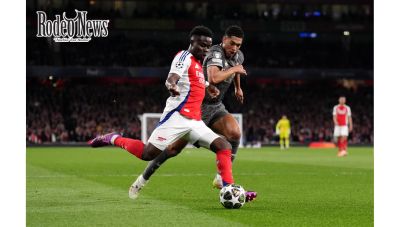
The Arsenal vs Lille match demonstrated the strength of a squad capable of changing the rhythm of a game through its depth, creativity, and attacking quality. Jurriën Timber opened the scoring before substitutes Eberechi Eze and Bukayo Saka added two more goals during a decisive second-half spell.
Arsenal’s ability to introduce established attacking players from the bench was particularly encouraging ahead of a demanding run of fixtures. However, Gyökeres’ quiet display raised questions about the team’s options at centre-forward and whether the Swedish striker can consistently deliver the influence expected of him.
According to ESPN’s James Olley, Arsenal’s substitutes played a decisive role in breaking down Lille’s resistance. The match offered both a reminder of the team’s considerable strengths and an indication of where further improvement may be needed.
Arsenal vs Lille: Timber Breaks the Deadlock
Lille made Arsenal work for the opening goal at the Emirates Stadium. The visitors defended with discipline, limited clear opportunities, and looked to exploit spaces when they could launch counterattacks.
For much of the first hour, Arsenal controlled significant portions of the contest without converting their possession into a comfortable lead. The home side created opportunities, but Lille’s defensive organization made it difficult to find consistent openings in dangerous areas.
Arsenal’s attacking structure also looked less fluid than it would later in the game. With Martin Ødegaard and Bukayo Saka initially on the bench, the team lacked some of the creativity and familiarity that often help it break down compact defensive lines.
The breakthrough eventually arrived through Timber, who marked his first home start since March with an important contribution.
After receiving the ball in the penalty area, the defender used a clever touch to create space before lifting a composed finish over Lille goalkeeper Berke Özer from a tight angle.
The goal was significant for two reasons. First, it relieved the pressure on Arsenal after a frustrating period in which Lille had managed to remain competitive. Second, it demonstrated the attacking value Timber can provide from a defensive position.
His movement, technical quality, and willingness to advance into dangerous areas gave Arsenal another dimension in the final third.
Timber’s contribution also reinforced the importance of having defenders who can influence attacking situations. Against opponents who defend deep, an overlapping full-back or an underlapping defender can help create the numerical advantages required to open up space.
Three Goals in Seven Minutes Change the Game
Once Timber scored, Arsenal moved into a different gear.
Arteta had already prepared changes involving Ødegaard, Saka, and Kai Havertz. Rather than abandoning his substitution plan after taking the lead, the manager continued with the changes he believed would best exploit the spaces emerging in the game.
The decision proved decisive.
Saka quickly influenced the match after entering the field. His combination with Ødegaard helped create the opportunity for Eze, who finished confidently to score Arsenal’s second goal.
The attacking move demonstrated the value of technical quality and quick decision-making in crowded areas. Where Arsenal had previously struggled to find a decisive pass, the substitutes were able to connect and exploit openings with greater speed.
Saka then added a third goal after combining with Havertz and Ødegaard. His finish completed a three-goal burst that left Lille with little opportunity to recover.
According to Opta Analyst’s match report, the goals came during a short second-half spell that turned a closely contested game into a decisive Arsenal victory.
The sequence illustrated how quickly the balance of a football match can change when a team has high-quality alternatives available from the bench.
It also gave Arteta further evidence that his squad can respond when an opponent’s defensive organization makes the starting lineup’s task difficult.
Arsenal’s Squad Depth Becomes a Major Advantage
One of the most encouraging aspects of the Arsenal vs Lille result was the quality of the players Arteta could introduce without sacrificing the team’s attacking threat.
Ødegaard offers creativity and control in midfield. Saka provides direct running, technical ability, and a consistent threat in one-on-one situations. Havertz brings intelligent movement and can connect midfield play with the forward line.
Eze, meanwhile, offers a different type of attacking creativity, combining close control with the ability to carry the ball into dangerous areas.
These qualities give Arsenal multiple ways to approach difficult matches.
When opponents defend deep, the team can use combinations between its creative midfielders and wide players. When space opens up, Arsenal can introduce players capable of accelerating the attack and exploiting defensive disorganization.
Squad depth also matters because a long season requires managers to distribute playing time across domestic and European competitions. Injuries, suspensions, fatigue, and changes in form can quickly test a team’s available options.
Having several experienced attackers gives Arteta flexibility when adjusting his lineup or responding to the circumstances of a particular match.
Nevertheless, the victory also raises an important question: should Arsenal need so much help from the bench to break down an opponent they are expected to defeat?
The answer depends on the broader context. Lille defended effectively for a substantial period, and even strong teams can struggle against organized opposition. However, Arsenal will want its starting attackers to create more consistent danger before matches reach their final stages.
Viktor Gyökeres’ Performance Raises Questions
While Arsenal’s substitutes enjoyed an influential evening, Gyökeres experienced a difficult match.
The Swedish striker started at centre-forward but struggled to become involved in the attacking play. ESPN reported that he registered only 12 touches, completed six of eight attempted passes, and did not record a shot before being substituted in the 65th minute.
Those numbers illustrate how limited his involvement was during a match in which Arsenal needed a more consistent attacking presence.
Gyökeres is expected to provide a combination of physical strength, movement, pressing, and goalscoring ability. His capacity to challenge defenders and attack space can make him valuable against teams that allow opportunities to run behind the defensive line.
However, Lille’s approach presented a different challenge.
The French side defended carefully and restricted the space available in central areas. Arsenal frequently had to work the ball around a compact defensive block, making timing, movement, and quick combinations particularly important.
In those circumstances, a centre-forward must find ways to remain connected to the team’s build-up play, create space for teammates, and identify opportunities to receive the ball in dangerous positions.
Gyökeres found that difficult against Lille.
His limited involvement does not automatically mean he had a poor season or cannot adapt to Arsenal’s system. A single performance provides only a snapshot, and strikers can struggle when the overall attacking structure fails to create suitable opportunities.
Nevertheless, the statistics are notable because Arsenal’s attacking play improved significantly after the substitutions.
The contrast between the first and second halves will inevitably encourage discussion about the balance between Gyökeres and Havertz in the centre-forward position.
Why Kai Havertz Remains Important to Arteta
Havertz’s introduction gave Arsenal a different attacking profile.
The German forward can contribute beyond simply finishing chances. His movement helps create space for other players, while his ability to connect passes and move into wide or central positions can make the attack more fluid.
Those qualities are particularly useful against opponents who defend with several players close together.
A striker who moves intelligently can draw defenders away from their positions, create passing lanes, and help attacking midfielders receive the ball between the lines.
Havertz’s involvement in Saka’s goal illustrated how those movements can contribute to a scoring opportunity even when the forward is not the player taking the final shot.
This does not necessarily mean Havertz should start every game. Arsenal will face different opponents and may benefit from using Gyökeres’ physical attributes and running ability in particular situations.
However, the match against Lille showed why Arteta values flexibility in the forward line.
Arsenal’s challenge is to ensure that its centre-forwards complement the surrounding attacking players while maintaining a reliable source of goals.
If Gyökeres can become more involved in the team’s combinations and improve his contribution against compact defenses, Arsenal could benefit from having two forwards with different strengths.
Eze and Saka Make Their Opportunities Count
Eze’s goal was another positive development for Arsenal.
The attacking midfielder has the technical ability to operate in tight spaces, carry the ball past opponents, and create opportunities when defensive structures begin to break down.
His finish against Lille gave him an important contribution on a night when the team needed greater creativity.
However, one goal does not settle every question about his role. Competition for attacking positions remains strong, and consistent performances will be important if he is to secure more regular opportunities.
Saka’s contribution was equally significant.
His assist for Eze and subsequent goal demonstrated the immediate influence he can have when introduced into a game. He combined effectively with Ødegaard and Havertz, helping Arsenal turn its advantage into a comfortable margin.
Saka’s importance extends beyond individual statistics. His movement, ball control, and understanding with teammates make him central to Arsenal’s attacking identity.
The ability to rest him initially and still bring him into a match-changing role could become valuable during periods when fixtures arrive in quick succession.
For Arteta, the challenge will be balancing the need to manage workloads with the importance of keeping his most influential attackers sharp.
Arsenal Must Prepare for a Difficult Bayern Munich Test
The victory over Lille maintained Arsenal’s perfect start to the Champions League group stage, according to ESPN’s report, but the next challenge will demand another strong performance.
Arsenal are scheduled to travel to Bayern Munich the following week, a fixture that will provide a more demanding test of their ability to control possession, create chances, and defend against high-quality opposition.
The performance against Lille offers reasons for confidence. Arsenal showed that it can maintain pressure, make effective substitutions, and exploit opportunities when opponents begin to tire or lose their defensive organization.
However, the team may need to start more quickly against Bayern.
A prolonged period without a goal could create additional pressure, particularly if the opposition is more effective at exploiting counterattacking opportunities.
The forward line will therefore be an important area to monitor. Arsenal need its starting attackers to contribute consistently, while the substitutes must continue to provide the energy and creativity that changed the Lille game.
Arteta will also have to consider how to distribute minutes without compromising the team’s ability to compete across multiple competitions.
The result against Lille was encouraging, but it was also a reminder that strong teams must continually refine their attacking approach.
What the Lille Win Means for Arsenal’s Season
Arsenal’s 3-0 victory provides a useful illustration of the opportunities and challenges facing the club.
The team’s squad depth is a clear asset. Timber demonstrated his ability to contribute in advanced positions, while Eze and Saka helped transform a difficult contest into a decisive result.
The performance also highlighted Arteta’s willingness to make changes based on the flow of a game rather than simply following a predetermined plan.
At the same time, Gyökeres’ limited involvement raises questions about how Arsenal can get the best from its centre-forward options.
The striker will have opportunities to respond in subsequent matches, and it would be premature to draw definitive conclusions from one evening. What matters is whether he can become more influential as Arsenal faces different defensive systems and increasingly difficult opponents.
Havertz’s versatility provides Arteta with an alternative, but the club’s long-term ambitions will benefit from consistent contributions across the entire attacking unit.
The Champions League campaign remains a test of depth, adaptability, and execution. Arsenal’s ability to introduce influential players from the bench could prove important as the season develops.
Conclusion
Arsenal’s 3-0 win over Lille delivered another positive Champions League result while revealing an important talking point for Arteta.
Timber’s opening goal broke the deadlock, and substitutes Eze and Saka completed a decisive attacking burst that underlined the team’s depth. Their contributions demonstrated how much Arsenal can change a game when fresh creativity and technical quality are introduced.
Gyökeres, however, struggled to make an impact before his substitution. His limited touches and lack of shots highlighted the challenge of remaining involved against an organized defensive opponent.
The performance does not settle the debate over Arsenal’s centre-forward position, but it provides useful evidence for the manager to assess.
With Bayern Munich approaching, Arsenal will want to carry forward the attacking momentum while ensuring its starting lineup can create more consistently. The victory over Lille showed that the Gunners possess the resources to finish games strongly. Their next task is to make that level of attacking effectiveness more consistent from the opening whistle.