Trump Steps Back From the Brink on Greenland, but Allies Say the Damage Is Done
President Donald Trump’s decision this week to walk back threats of military force over Greenland offered momentary relief to anxious allies and rattled markets. But across Europe, the retreat has done little to repair what many leaders now see as deeper and lasting damage: a collapse of trust in the United States as a reliable partner.
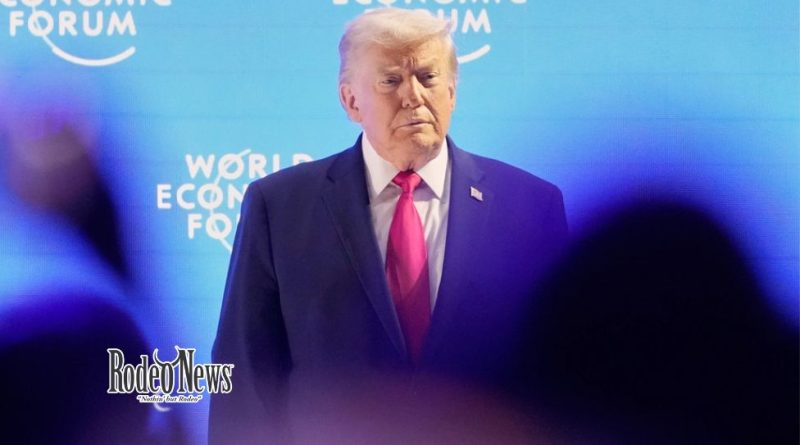
Speaking Wednesday at the World Economic Forum in Davos, Trump publicly ruled out using force to acquire Greenland from Denmark, a NATO ally. The statement helped calm European fears of a worst-case scenario and contributed to a rebound on Wall Street after days of turbulence tied to his rhetoric. Later, following a meeting with NATO’s secretary general, Trump also suggested he might soften planned tariff increases on European countries, saying a “framework” for talks over Greenland had been secured.
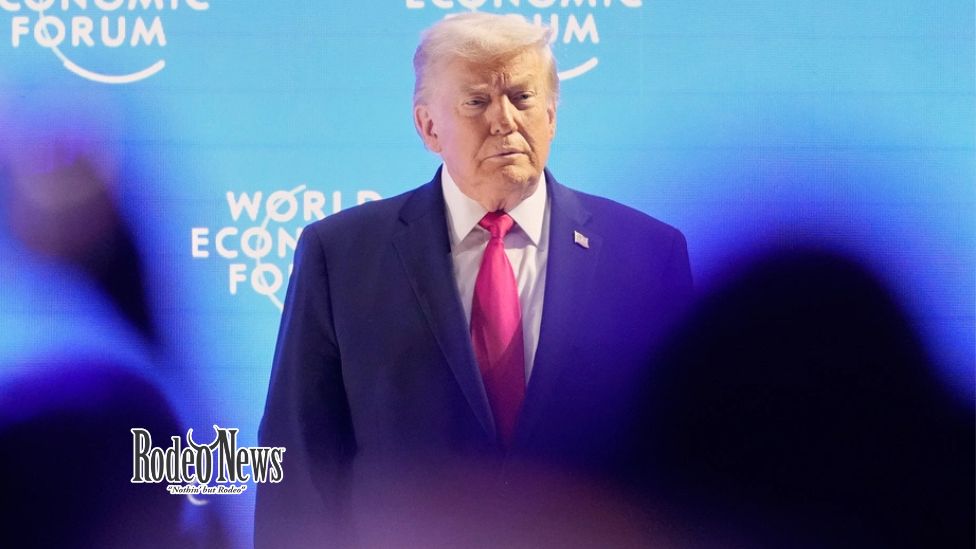
Yet even as the president stepped back from the brink, his language toward allies remained confrontational. Trump continued to deride European governments as “ungrateful” and repeated his claim that the United States deserved “ownership and title” to Greenland — dismissing the strategically vital Arctic territory as little more than “a piece of ice.”
For many European leaders, the episode marked a turning point.
“The relief is real, but so is the realization that this could happen again,” said one European official who attended Trump’s Davos remarks and spoke on condition of anonymity. “Standing up to him may work in the moment. But his scorn for Europe is consistent, and his reversals are unpredictable.”
Markets, leverage and a familiar retreat
Trump’s reversal followed a sharp market sell-off earlier this week after his administration refused to rule out military action and announced new tariff threats against European countries involved in joint military exercises in Greenland. More than $1.2 trillion in market value was wiped off the S&P 500 at the peak of the turmoil, according to market data.
The pattern was familiar. In April, Trump similarly backed away from sweeping tariff measures after financial markets reacted negatively, reinforcing a perception among allies and investors that economic pressure may be one of the few effective checks on his more aggressive impulses.
Inside the administration, the threat of force over Greenland appeared to be driven in part by senior hardliners. Deputy chief of staff Stephen Miller publicly argued earlier this month that Greenland rightfully belonged to the United States, framing global politics as a contest governed by power rather than norms.
Other officials, however, saw the rhetoric as a bargaining tactic rather than a genuine plan for military action. According to a person close to the administration, figures such as Secretary of State Marco Rubio and Vice President JD Vance would likely have pushed back forcefully had Trump moved closer to actual intervention.
A shift in Europe’s response
Still, the episode has reshaped how Europe responds to Washington.
During Trump’s first year back in office, European governments largely absorbed his demands — boosting defense spending, shouldering more responsibility for Ukraine, and accepting new trade barriers — in hopes of preserving the transatlantic alliance.
Greenland proved different.
By openly challenging Denmark’s sovereignty and entertaining the idea of seizing territory by force, Trump crossed what many European officials described as a red line. The move threatened the foundation of an alliance built over eight decades to prevent precisely the kind of imperial competition now being discussed.
“This isn’t just confusing or provocative,” said Charles Kupchan, a senior fellow at the Council on Foreign Relations. “It borders on the unthinkable. That’s why Europe’s reaction this time has been fundamentally different.”
European leaders responded publicly and privately. Trump’s social media posts announcing tariffs on countries involved in Arctic exercises drew sharp rebukes from heads of state and triggered urgent calls urging cooperation rather than coercion. Some of those messages, shared by Trump online, revealed allies scrambling to de-escalate a crisis they never anticipated.
Greenland still in Trump’s sights
Despite ruling out military force, Trump made clear he has not abandoned his goal of bringing Greenland under U.S. control. Speaking in Davos, he argued that only Washington could adequately protect and develop the resource-rich island, framing acquisition as a benefit not just to the United States but to Europe as well.
“You can say yes, and we will be very appreciative,” Trump said. “Or you can say no — and we will remember.”
Those remarks did little to reassure leaders already unsettled by polling showing that an overwhelming majority of Greenlanders oppose U.S. control. “Excluding violence doesn’t deserve applause,” another European official said. “The narrative itself is deeply troubling.”
A broader rupture
The Greenland dispute has become a symbol of a wider realignment. Canadian Prime Minister Mark Carney warned earlier this week that the rules-based international order is fading, urging democratic nations to reduce their dependence on Washington.
“We are in the midst of a rupture, not a transition,” Carney said in Davos.
Trump responded with characteristic bluntness, suggesting Canada’s security depends entirely on U.S. protection — a remark that many saw as underscoring Carney’s point. Ottawa has since accelerated efforts to diversify trade ties, including deeper engagement with China.
Europe appears to be following a similar path. The European Union recently finalized a long-delayed free trade agreement with South America’s Mercosur bloc, a move officials privately describe as insurance against future U.S. economic pressure.
An alliance transformed
Some hope remains that Trump will ultimately settle for expanded U.S. military access in Greenland rather than ownership, building on Denmark’s longstanding offer to deepen cooperation. But few in Europe now believe they can rely on restraint from Washington.
Former NATO Secretary General Anders Fogh Rasmussen has urged Europe to adopt a more self-protective stance, including stronger military capabilities and reciprocal tariffs. Others warn that abandoning soft power in favor of coercion risks eroding the very influence that made the United States dominant.
“The strength of America was never just its military,” said Jeremy Shapiro, a former U.S. diplomat now at the European Council on Foreign Relations. “It was the trust of its allies.”
For many in Europe, Trump’s Greenland gambit shattered that trust. Even as the immediate crisis fades, the message lingers: the spearhead of the postwar order now appears willing to turn inward — and against its own allies.