Trump Calls Off Europe Tariffs After Greenland Deal Framework With NATO
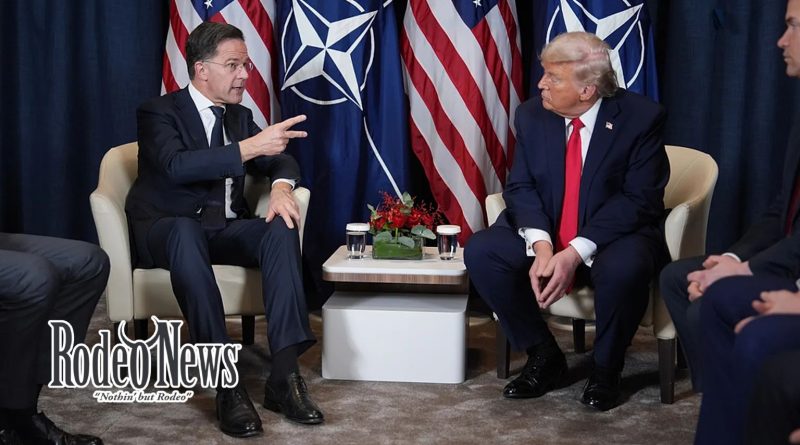
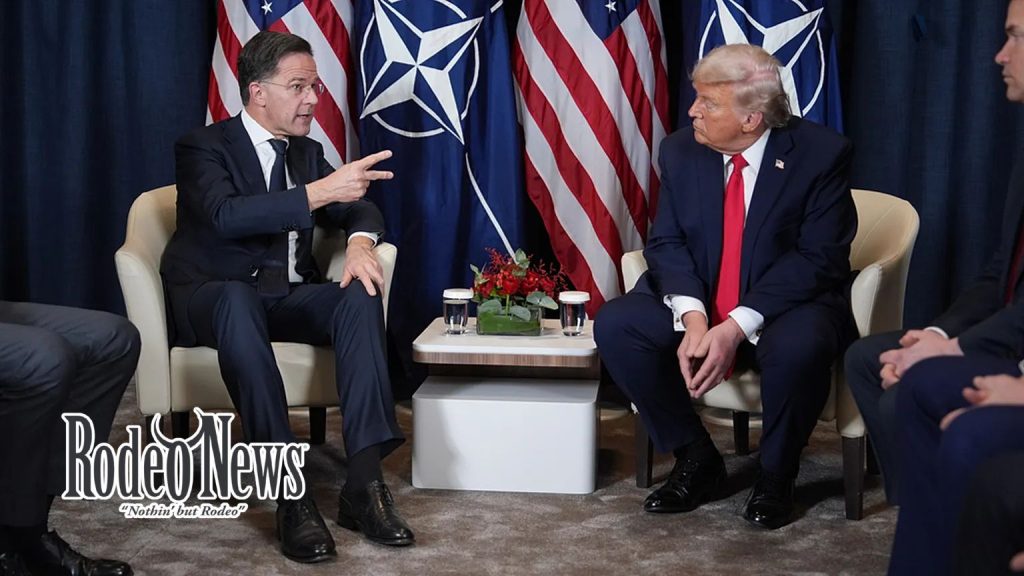
President Donald Trump on Wednesday abruptly reversed course on planned tariffs against European nations, announcing he would suspend the measures after reaching what he described as a “framework of a future deal” related to Greenland with NATO Secretary General Mark Rutte.
The announcement marked a sudden de-escalation in a trade standoff that had unsettled financial markets, strained transatlantic relations, and revived concerns about Trump’s willingness to use economic pressure against longtime allies to pursue geopolitical goals.
“This solution, if consummated, will be a great one for the United States of America, and all NATO Nations,” Trump wrote on Truth Social. “Based upon this understanding, I will not be imposing the Tariffs that were scheduled to go into effect on February 1st.”
A Rapid Reversal in Davos
Trump’s decision came shortly after his arrival at the World Economic Forum in Davos, Switzerland, where his renewed tariff threats over Greenland had dominated conversations among political leaders and investors. Only days earlier, the president had warned that the United States would impose sweeping tariffs on European countries he accused of obstructing Washington’s efforts to acquire the Danish territory.
Under Trump’s plan, the United States would levy 10 percent tariffs on goods from eight European countries beginning February 1, with rates rising to 25 percent by June 1 if no agreement was reached. The tariffs were set to apply broadly to “any and all goods” shipped to the U.S., a move European officials warned could trigger a major trade confrontation.
Markets reacted nervously, and European leaders responded by freezing progress on a pending U.S.-EU trade agreement. The European Parliament also halted its ratification process, citing concerns over Trump’s threats toward Greenland.
Greenland at the Center of the Dispute
Speaking in Davos, Trump reiterated his interest in Greenland, citing its strategic importance in the Arctic as melting ice opens new shipping routes and intensifies competition among global powers.
“We’re seeking immediate negotiations,” Trump said during a keynote address, while appearing to rule out the use of military force. “You can say yes, and we will be very appreciative, or you can say no, and we will remember.”
Those remarks underscored the transactional approach that has defined Trump’s foreign policy, blending diplomacy with economic pressure. While Trump framed the issue as a matter of mutual security and opportunity, Denmark has repeatedly rejected any suggestion that Greenland is for sale.
NATO’s Role and a Narrow Deal Framework
NATO Secretary General Mark Rutte said the breakthrough with Trump came after discussions focused on Arctic security, infrastructure, and alliance coordination in the region. While details of the “framework of a future deal” remain unclear, Rutte suggested it addressed U.S. concerns without undermining Danish sovereignty.
Trump, satisfied with the assurances, moved quickly to scrap the tariff threat, signaling that the economic pressure was intended as leverage rather than a long-term policy shift.
The White House has not released formal documentation of the agreement, and officials declined to specify whether Greenland’s political status or ownership was discussed directly.
Denmark Pushes Back
Denmark’s prime minister struck a firm tone on Thursday, emphasizing that Copenhagen would not negotiate over its sovereignty despite the U.S.-NATO understanding.
“Greenland is not for sale, and Denmark’s sovereignty is not subject to negotiation,” she said in a statement, while welcoming dialogue on Arctic security and cooperation within NATO.
Greenland, an autonomous territory within the Kingdom of Denmark, has gained increased geopolitical significance due to its location between North America and Europe and its proximity to emerging Arctic shipping lanes.
Europe Steps Back From Retaliation
Before Trump’s reversal, European capitals had been preparing a robust response. EU officials discussed imposing retaliatory tariffs on up to $108 billion worth of American products, targeting politically sensitive sectors in the United States.
Those plans now appear to be on hold. European leaders welcomed the suspension of U.S. tariffs but cautioned that trust had been damaged by the episode.
“The situation has de-escalated, but uncertainty remains,” one senior EU diplomat said, noting that future trade talks would proceed cautiously.
Trump, for his part, predicted that the Greenland dispute would not derail Europe’s pledged investments in the United States or permanently disrupt trade relations.
Legal Questions Remain at Home
As the international standoff cooled, unresolved legal questions lingered in Washington. The U.S. Supreme Court has so far declined to rule on several cases challenging the scope and legality of Trump’s global tariff authority.
The court has passed on its first three opportunities this year to issue a decision, including a case earlier this week. It remains unclear when justices may weigh in, leaving uncertainty over the durability of Trump’s tariff strategy.
A Familiar Pattern
The episode reflects a familiar pattern in Trump’s presidency: aggressive threats followed by sudden reversals once negotiations begin. Supporters argue the approach forces concessions, while critics say it injects volatility into global markets and weakens alliances.
For now, the immediate crisis has eased. But with Greenland negotiations unresolved, legal challenges pending, and trade relationships still fragile, both European leaders and investors remain wary that tensions could flare again just as quickly.