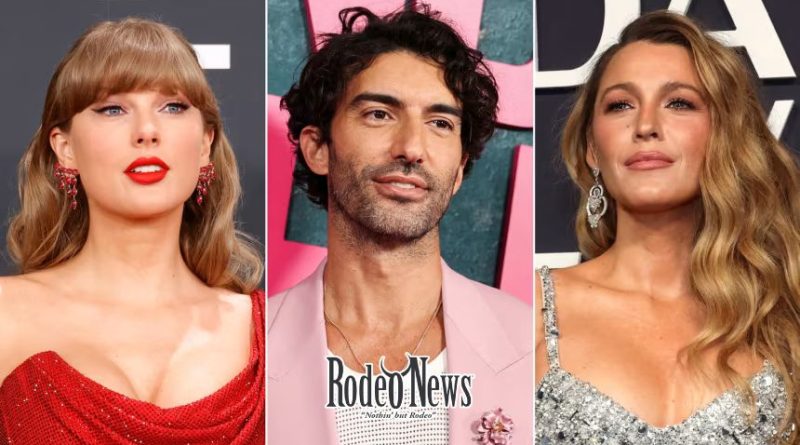
Taylor Swift Emerges as a Key Figure in Blake Lively–Justin Baldoni Legal Dispute
The ongoing legal battle between actress Blake Lively and It Ends with Us director Justin Baldoni has taken a new turn — and this time, one of pop culture’s biggest names is part of the story.
Newly unsealed court documents filed this week in U.S. District Court in Manhattan offer an intimate look at the private conversations Lively shared with close friends as tensions allegedly escalated behind the scenes of the 2024 film. Among those confidants, the records show, was longtime friend Taylor Swift.
The documents, obtained by CNN, provide fresh insight into how Lively processed what she has described as a deeply troubling experience on set — and how concerns raised in private later intersected with a highly public legal reckoning in Hollywood.
Allegations and private warnings
Lively has accused Baldoni of sexual harassment and of orchestrating a coordinated effort to damage her reputation after she raised concerns. Baldoni has repeatedly denied the allegations.
According to the newly unsealed filings, Lively communicated her discomfort to friends as early as spring 2023, during production of It Ends with Us, in which she starred opposite Baldoni, who also directed the film.
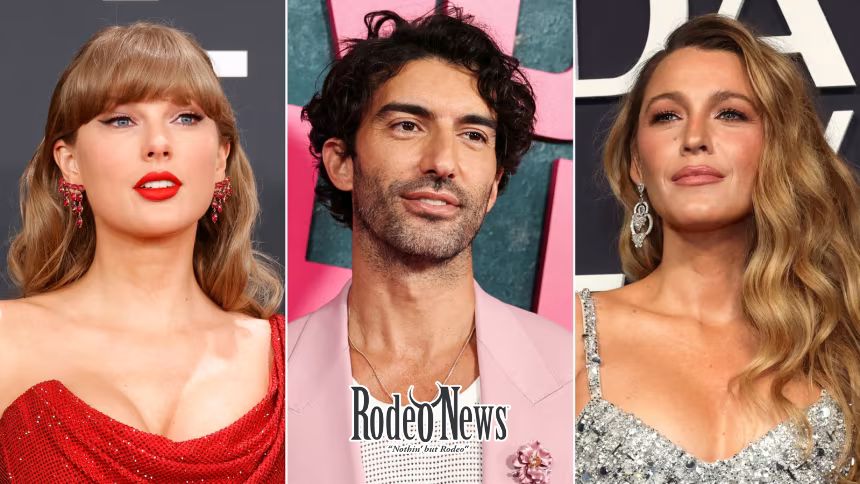
In one exchange cited in the court records, Lively referred to Baldoni as her “doofus director” while texting Swift. The filing suggests the two revisited the situation roughly a year later, as Lively anticipated a major news report that would ultimately expose the conflict to the public.
In another message included in the documents, Swift appeared to react to Baldoni’s public comments about his own past trauma.
“I think this bitch knows something is coming because he’s gotten out his tiny violin,” Swift allegedly wrote to Lively, according to the filing, referencing an Instagram post highlighted by People magazine. Swift compared the unfolding situation to “a horror film no one knows is taking place,” the documents state.
CNN has reached out to Swift’s representatives for comment.
Legal teams respond
Lively’s legal team says the newly unsealed materials reinforce their claims that concerns were raised early — and ignored.
“The newly unsealed evidence shows the concerns of Ms. Lively and others were documented in real time as early as Spring 2023, and Wayfarer understood them as ‘sexual harassment’ concerns,” said Sigrid McCawley, a member of Lively’s legal team, in a statement to CNN. “The evidence also documents how Wayfarer refused to investigate, but instead attempted to bury Ms. Lively and others who spoke up through retaliation.”
Baldoni’s attorney, Bryan Freedman, rejected that characterization.
“The evidence does not support the claims as a matter of law,” Freedman said. “A simple read of the newly released message exchanges make the truth abundantly clear. We remain confident in the legal process and clearing the names of all of the Justin Baldoni parties.”
A cascade of lawsuits
The dispute exploded into public view after The New York Times published an investigative article titled “‘We Can Bury Anyone’: Inside a Hollywood Smear Machine.” The story detailed allegations of harassment and retaliation and cited a Civil Rights Department complaint filed by Lively in December 2024.
Baldoni responded by filing suit against The New York Times, alleging the article contained inaccuracies and relied on what he described as Lively’s “self-serving narrative.” He later filed a $400 million lawsuit against Lively and her husband, actor Ryan Reynolds, accusing them of defamation and of attempting to sabotage his career.
In June 2025, a judge dismissed Baldoni’s lawsuits against Lively, Reynolds, and the newspaper. Two months later, The New York Times filed its own suit against Baldoni’s production company, Wayfarer Studios, seeking to recover legal fees.
Lively’s lawsuit against Baldoni remains active, though the trial was postponed from March 9 to May 18, 2026.
Swift’s brief legal entanglement
Swift’s connection to the case became public in May 2025, when court filings revealed that text messages referencing “Taylor” had prompted Baldoni’s legal team to subpoena the singer.
Baldoni sought to depose Swift, arguing her communications were relevant. A judge ultimately denied the request in September 2025, ruling against extending discovery to include her testimony.
While Swift is not a party to the lawsuit, the newly unsealed records underscore her role as part of Lively’s personal support network during a turbulent period.
A long-standing friendship
Swift and Lively have maintained a close friendship for more than a decade, frequently appearing together at events and family gatherings. Lively directed Swift’s 2021 music video “I Bet You Think About Me (Taylor’s Version) (From the Vault),” and Swift’s music has featured in Lively’s creative projects, including the It Ends with Us trailer, which used Swift’s song “My Tears Ricochet.”
In November 2024, Reynolds publicly confirmed that Swift is the godmother to the couple’s three daughters — James, Inez, and Betty. The couple also share a son, Olin, born in 2023.
Broader concerns on set
The unsealed filings suggest Lively was not alone in her discomfort during production. Messages attributed to actress Jenny Slate, who also appeared in It Ends with Us, were included in the documents.
In one alleged message, Slate described the experience as “a really gross and disturbing shoot,” adding that she was “one of many who feel this way,” according to the filings.
As the case moves toward trial, the emergence of private communications — particularly those involving one of the world’s most famous musicians — highlights how deeply personal disputes in Hollywood can intersect with public power, celebrity, and accountability.
For now, Swift remains on the periphery of the courtroom drama. But the documents show that long before lawsuits were filed and headlines written, the conflict played out quietly in private messages — among friends who believed something was wrong.