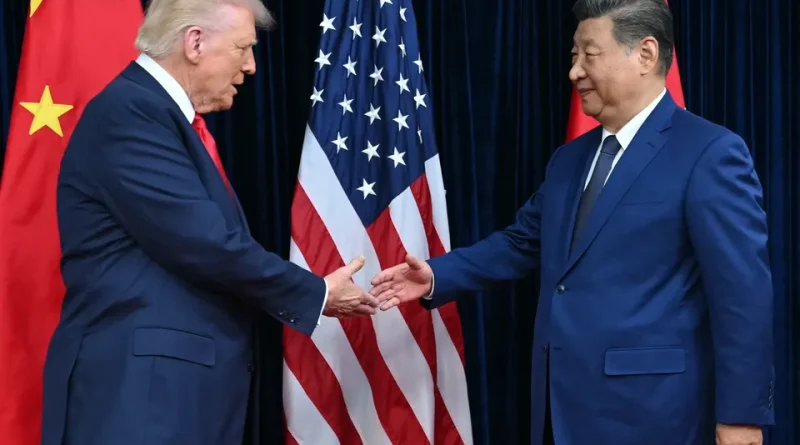
Xi Gains Leverage Ahead of Trump Summit After US Supreme Court Blocks Tariffs
Chinese President Xi Jinping enters next month’s high-stakes talks with US President Donald Trump with a subtle but unmistakable advantage: Washington’s most aggressive tariff weapon has been taken off the table.
A recent ruling by the Supreme Court of the United States invalidated the broad emergency tariffs imposed during Trump’s second term, stripping the White House of its ability to unilaterally raise duties across a wide range of imports. The decision effectively erased levies that once soared as high as 145% on Chinese goods, leaving Beijing subject to the same 15% global tariff applied to US allies — and one that is set to expire in 150 days.
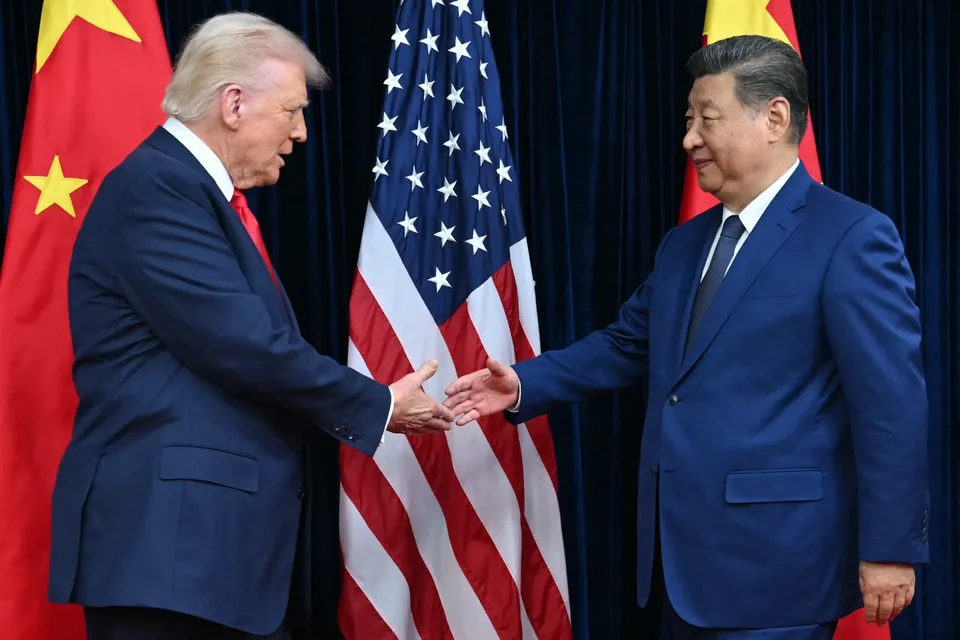
The ruling lands just weeks before Trump is scheduled to visit Beijing on March 31, marking the first trip by an American president to China since 2017. It reshapes the negotiating dynamics between the world’s two largest economies at a delicate moment for global trade.
A Shift in Bargaining Power
For years, tariff escalation formed the backbone of Washington’s pressure campaign against Beijing. Trump frequently wielded the threat of sweeping new duties to extract concessions — from soybean purchases to aviation contracts and energy imports.
With that lever curtailed, Chinese negotiators may feel less compelled to offer headline-grabbing purchase commitments. During earlier trade talks, Beijing pledged to buy roughly 25 million tons of American soybeans, a move widely interpreted as a tactical concession to ease tariff pressure. Now, analysts say that calculus has changed.
The removal of emergency tariff authority also complicates Washington’s ability to retaliate swiftly should talks stall or Beijing press for fresh demands. Among the likely Chinese priorities: expanded access to advanced semiconductors, the rollback of restrictions on Chinese technology firms, and a softening of US rhetoric and arms support for Taiwan.
Beijing considers the self-ruled island part of its territory, despite never having governed it. Any perceived shift in US policy toward Taiwan remains politically sensitive in both capitals.
Alternative Tools, Slower Timelines
The White House is not without options. Trade specialists note that Trump can still deploy tariffs under Sections 301, 232, and 122 of US trade law. However, unlike the emergency authorities struck down by the court, those mechanisms typically require investigations that can stretch for months.
China is already facing scrutiny under Section 301 for failing to meet purchase targets outlined in the Phase One trade agreement negotiated during Trump’s first term. That investigation could serve as a fallback instrument, though it lacks the immediacy of emergency measures.
The 15% global tariff currently in place falls under Section 122 authority, which allows temporary action to address trade imbalances. Yet its time-bound nature limits its utility as a long-term bargaining chip.
In the interim, businesses on both sides are recalibrating.
Markets and Manufacturers React
Mainland Chinese markets were closed for the Lunar New Year holiday when the ruling was announced, but investors are expected to respond positively upon reopening. Export-oriented firms, in particular, may benefit from the temporary reduction in tariff uncertainty.
Some exporters are already considering accelerating shipments to the United States, anticipating that alternative tariff measures could eventually replace those struck down. A similar “front-loading” dynamic occurred in earlier phases of the trade war, distorting trade flows and inventory cycles.
For manufacturers with deep exposure to US demand, the reprieve offers breathing room — though not clarity. Several factory operators in southern China say the constant shifts in policy have forced them to diversify production beyond the mainland, particularly to Southeast Asia, as a hedge against geopolitical risk.
Rare Earths and Chip Controls
Beyond tariffs, the economic contest increasingly revolves around strategic technologies and critical materials.
China’s control over rare earth minerals — essential for electric vehicles, defense systems and high-tech manufacturing — remains a potent counterweight. Beijing recently agreed to maintain flows of rare earth magnets after Washington eased certain export controls, including permitting sales of advanced chips such as Nvidia’s H200 processors.
That delicate balance underscores how trade negotiations now extend far beyond agricultural purchases or headline tariff rates. Semiconductor access, export licensing and industrial policy have become central pillars of the rivalry.
A Controlled Response in Beijing
Despite the favorable court decision, Chinese officials have responded cautiously. State media coverage has been measured, and the Foreign Ministry has refrained from overt celebration.
Analysts say that restraint reflects Beijing’s desire to ensure Trump’s visit proceeds smoothly. Public triumphalism could complicate diplomacy at a moment when both sides appear interested in stabilizing relations — or at least preventing further escalation.
Privately, however, Chinese policymakers are likely to interpret the ruling as validation of a broader narrative: that executive power in the United States faces institutional limits. The court’s decision underscores that trade policy cannot be expanded indefinitely without congressional authorization.
No Fundamental Reset
While the Supreme Court’s intervention alters the tactical landscape, few expect it to transform the structural tensions underpinning US-China relations.
National security concerns, technology competition, and geopolitical rivalry remain deeply embedded in policymaking circles in Washington and Beijing alike. Even if tariffs are temporarily restrained, export controls, investment screening and supply-chain diversification efforts will continue shaping bilateral ties.
Trump has previously threatened sweeping new duties — including, at one point, floating an additional 100% tariff on Chinese goods — ahead of negotiations. Although such proposals did not materialize, they rattled global markets and illustrated his willingness to use economic shock as leverage.
Whether a similar strategy reemerges through alternative legal channels remains to be seen.
The Road to March 31
As Trump prepares to land in Beijing, both leaders face domestic pressures. In the United States, mid-term elections loom, and congressional scrutiny of China policy remains intense. In China, economic stabilization and investor confidence are key priorities following a turbulent year.
The Supreme Court’s ruling has narrowed Trump’s immediate toolkit, but it has not ended the trade dispute. Instead, it has recalibrated the balance — giving Xi greater room to maneuver while forcing Washington to rely on slower, more procedural trade instruments.
In high-stakes diplomacy, leverage is rarely static. For now, however, the advantage appears to have shifted — just as the two presidents prepare to meet again at the center of a still-fragile global trading system.