DOJ Drops Charges Against Men Accused of Assaulting ICE Officers in Minneapolis
The Justice Department has moved to dismiss federal charges against two men accused of assaulting Immigration and Customs Enforcement officers during a chaotic confrontation in Minneapolis last month, citing newly discovered evidence that undermined the government’s original account.
In a court filing entered Thursday, U.S. Attorney Daniel Rosen requested that charges against Alfredo Alejandro Aljorna and Julio Cesar Sosa-Celis be dismissed with prejudice — a significant legal step that permanently bars prosecutors from reintroducing the same charges.
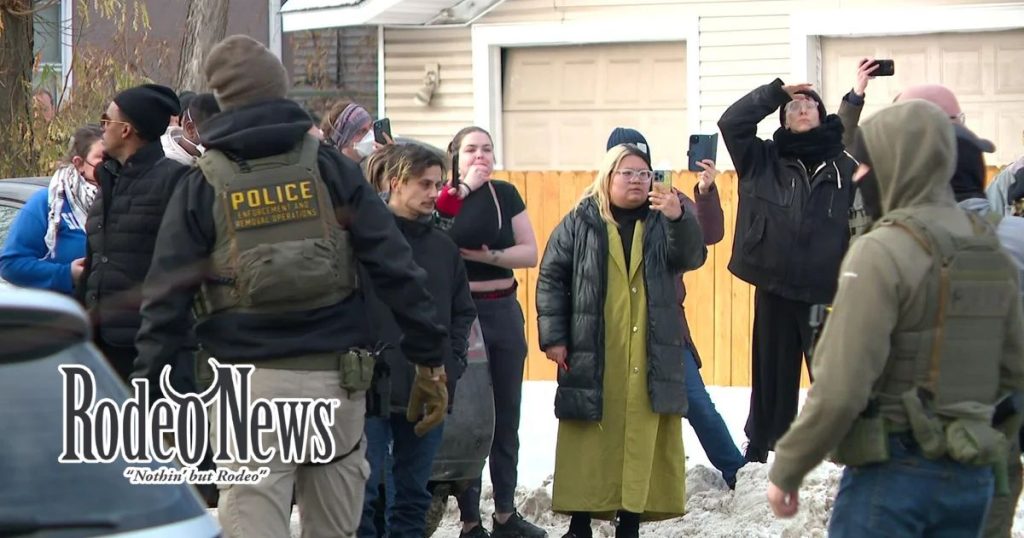
The decision marks a dramatic reversal in a case that drew national attention amid heightened immigration enforcement operations across Minnesota.
A Sudden Shift in the Case
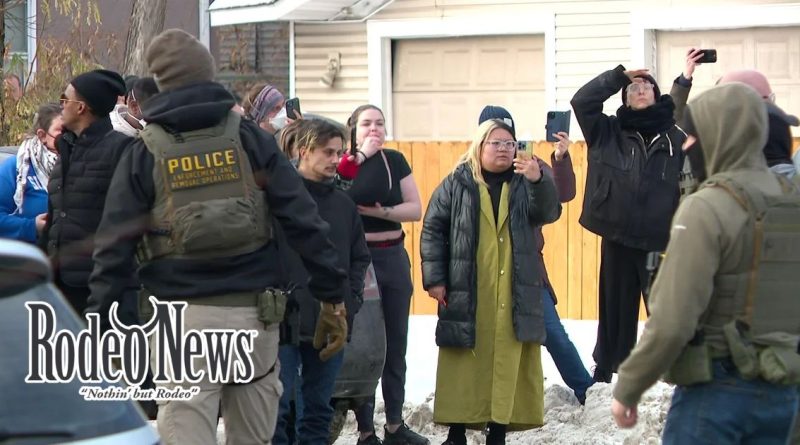
The two men were initially charged in January with forcibly assaulting, resisting, or impeding federal officers during the performance of their duties. The charges followed an incident in which Sosa-Celis, a Venezuelan national, was shot in the leg by an ICE officer during what authorities described at the time as a targeted enforcement operation.
Federal prosecutors now say that newly discovered evidence was “materially inconsistent” with the allegations that formed the basis of the complaint.
While the filing does not detail the precise nature of the evidence, it signals serious discrepancies in earlier accounts provided by law enforcement agencies.
Conflicting Narratives
In the immediate aftermath of the shooting, the Department of Homeland Security issued a statement describing a volatile scene. According to DHS, Sosa-Celis fled from a targeted traffic stop in Minneapolis, crashed into a parked vehicle, and attempted to escape on foot. When an ICE agent caught up with him, officials alleged that two men attacked the officer using a broom handle and a snow shovel. DHS claimed Sosa-Celis then broke free and joined the assault before an agent fired what was described as a “defensive shot” to protect his life.
However, a federal affidavit later filed by the FBI presented a different sequence of events.
In that version, Aljorna — not Sosa-Celis — was said to have fled in a vehicle. The affidavit alleged that Sosa-Celis initially struck the ICE officer with a broomstick while the officer attempted to detain Aljorna. Prosecutors further claimed that Aljorna then joined the altercation, using the same broomstick to attack the officer.
The affidavit also acknowledged complicating factors, noting that the officer was operating in “poor or sporadic lighting” and had difficulty clearly identifying the individuals involved.
Those discrepancies, combined with newly surfaced video evidence, appear to have weakened the government’s case.
Video Evidence Raises Questions
According to Frederick Goetz, an attorney representing Aljorna, surveillance footage contradicted the federal agent’s description of the confrontation.
“It is my understanding that the video surveillance evidence that captured the incident was materially inconsistent with the federal agent’s claims of what happened,” Goetz said in a statement, adding that the alleged assault was not supported by the available footage.
A cellphone video recorded shortly after the shooting — and later shared publicly by a state lawmaker — further complicated the narrative. In the video, a woman can be heard telling a 911 operator that her husband had been chased by ICE agents before reaching his residence and was shot outside his home in front of family members.
The Justice Department has not publicly elaborated on the precise evidentiary findings that prompted the dismissal. CBS News reported that it has sought comment from federal officials and from legal counsel representing Sosa-Celis.
Charges Dismissed With Prejudice
The decision to dismiss the charges with prejudice is particularly notable. Such dismissals are typically reserved for situations in which prosecutors determine that re-filing charges would be unjustified or legally unsustainable.
For the defendants, the ruling effectively closes the federal criminal case stemming from the confrontation.
Goetz praised the U.S. Attorney’s Office in Minnesota for what he described as a careful reassessment of the facts, despite recent internal upheaval that has reportedly led to multiple resignations within the office.
A Climate of Heightened Tension
The Minneapolis shooting occurred during a period of intense federal immigration enforcement in Minnesota, part of what authorities called “Operation Metro Surge.” The initiative involved a temporary influx of federal agents to address what officials described as escalating public safety concerns.
The confrontation involving Sosa-Celis unfolded just one week after ICE agent Jonathan Ross fatally shot Renee Good in south Minneapolis. Ten days later, two Department of Homeland Security agents fatally shot Alex Pretti in a separate incident.
Those shootings triggered large-scale demonstrations across Minnesota, with thousands of protesters taking to the streets in the Twin Cities. Civil rights advocates and community leaders questioned the scale and tactics of federal operations in the state.
At one point, President Donald Trump publicly threatened to invoke the Insurrection Act and deploy military forces to Minnesota in response to unrest — a move that would have significantly escalated federal involvement.
In the past week, federal border enforcement official Tom Homan assumed operational oversight in the region. On Thursday, he announced the conclusion of the immigration enforcement surge, citing a high number of “public safety arrests” and what he described as a reduced need for federal officers to respond to “agitators.”
Broader Implications
The dismissal of charges in the Minneapolis case underscores the complexities surrounding federal law enforcement actions during high-intensity operations. It also highlights the critical role of video evidence in scrutinizing official accounts.
Legal analysts note that inconsistencies between agency statements and sworn affidavits can have significant consequences for prosecutions, particularly when use-of-force incidents are involved.
For community members in Minneapolis, the decision may deepen scrutiny of federal operations while also renewing calls for transparency in immigration enforcement actions.
As federal officials wind down “Operation Metro Surge,” questions remain about the long-term impact of the surge — both on public safety metrics and on community trust in law enforcement institutions.
For Aljorna and Sosa-Celis, however, the legal chapter appears closed. The Justice Department’s decision ensures that the charges stemming from last month’s confrontation will not return to court.