The cancellation comes at a sensitive moment for the U.S.-South Korea alliance. Washington and Seoul are already dealing with questions about the scale of their annual military exercises, while North Korea continues to monitor changes in allied military activity closely.
South Korean officials said the United States notified them in June that its forces would not be available for the planned exercise. The explanation was linked to military demands created by the ongoing conflict involving Iran.
The move does not mean that all military cooperation between the United States and South Korea has stopped. However, the decision adds to a series of recent changes that have raised concerns about whether Washington is reducing its military focus on the Korean Peninsula.
1. What Happened to the US South Korea Drills?
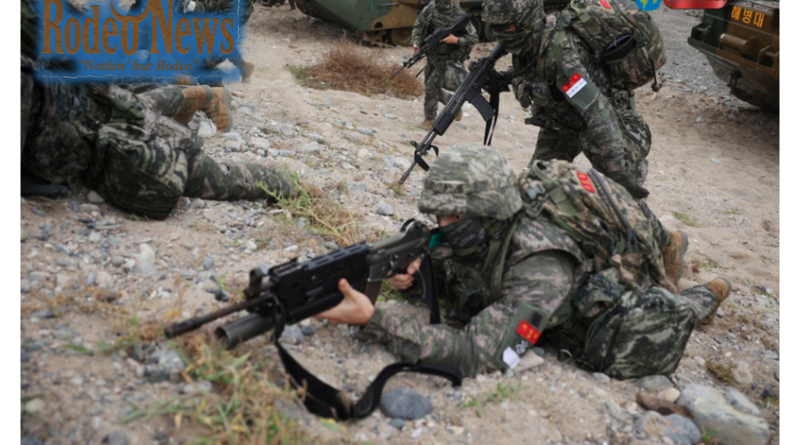
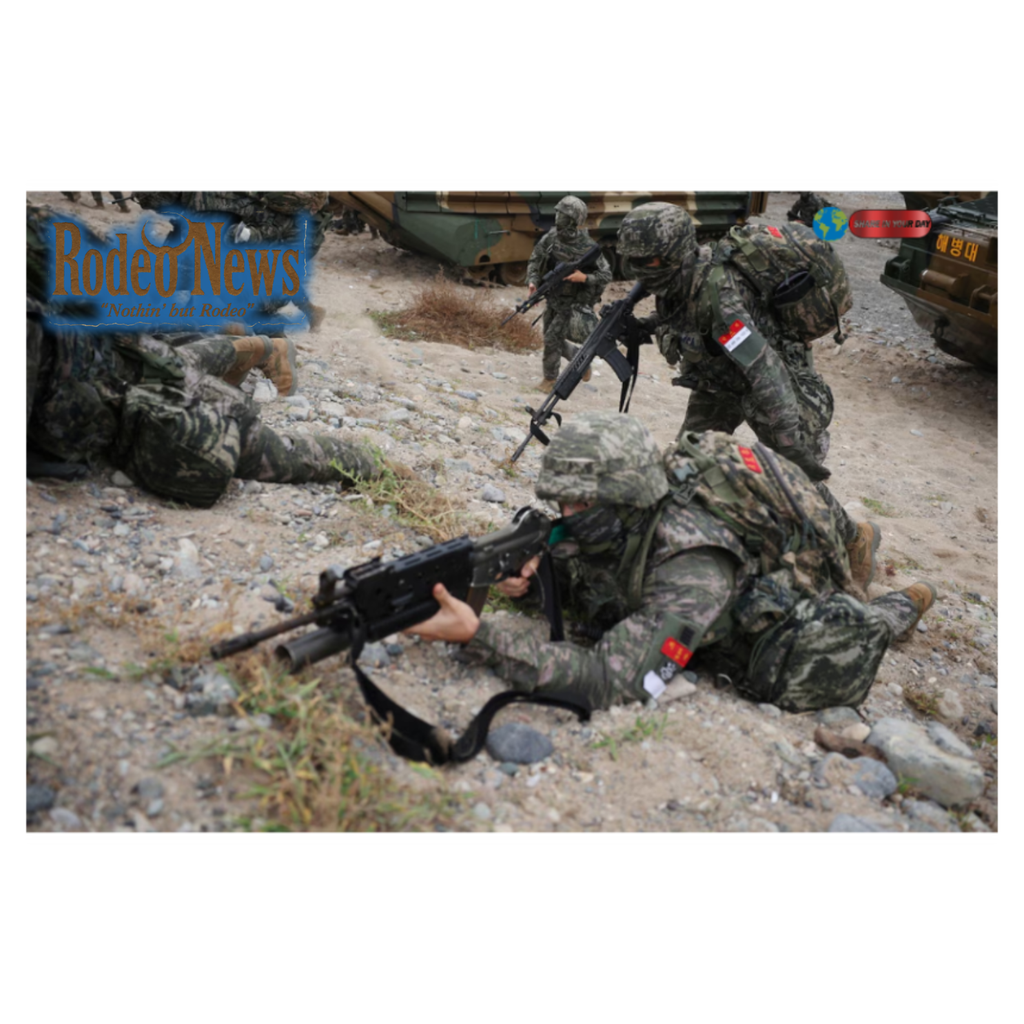
The canceled exercise is the Ssangyong amphibious landing drill, a large-scale training event designed to improve the ability of U.S. and South Korean forces to conduct complex operations.
The exercise had been scheduled for next month. South Korea’s Marine Corps confirmed that the United States would not participate because of constraints on American forces. Reuters separately reported that South Korea had been officially informed by the U.S. Marine Corps in June.
Amphibious exercises are particularly significant because they require extensive coordination between naval, air and ground forces. They can involve ships, aircraft, Marines and large numbers of supporting personnel.
For South Korea, the training provides an opportunity to practice operations that could become important during a major security crisis on the Korean Peninsula.
For the United States, the exercises also provide valuable experience for operating alongside one of its most important Asian allies.
The cancellation therefore has a practical military impact beyond the loss of a single training event.
2. Why Did Washington Cancel the Exercise?
The immediate reason is the demand for U.S. military forces in the Middle East.
The United States is currently dealing with a major military commitment related to the war in Iran. That conflict has placed additional pressure on American personnel, equipment and strategic assets.
Reuters reported that the U.S. cancellation was connected to the shortage of forces being used in the Iran war.
The development also follows other signs that American military resources are being redirected toward the Middle East.
According to reporting on the broader regional situation, more than 2,000 U.S. Marines were redeployed from Japan, while the aircraft carrier USS George Washington was also moved from the Pacific toward the Middle East.
That redistribution matters because U.S. forces in the Indo-Pacific are designed to maintain readiness across several potential flash points at the same time.
When major military assets are moved away from Asia, Washington must balance immediate operational demands with its longer-term commitments to allies such as South Korea and Japan.
3. The Cancellation Comes After Another Major Drill Was Reduced
The latest decision is particularly significant because it follows a separate reduction in the annual Ulchi Freedom Shield exercise.
President Donald Trump recently ordered the Pentagon to substantially reduce joint military exercises with South Korea. Trump argued that the exercises were expensive and described them as sending an inappropriate signal toward North Korea. He also pointed to South Korea’s refusal to participate in U.S. military action against Iran.
The annual Ulchi Freedom Shield exercise had already begun, but the training was shortened.
The United States and South Korea ultimately concluded the exercise six days earlier than originally planned. The field-training component was also reduced.
The two decisions are not identical.
The Ulchi Freedom Shield changes were ordered by the Trump administration as part of a broader policy decision. The cancellation of the Ssangyong exercise, meanwhile, has been attributed primarily to the availability of U.S. forces because of the Iran conflict.
However, taken together, the developments create a much larger strategic question.
How much joint military training will the United States and South Korea conduct while American forces are heavily committed elsewhere?
4. Why Military Exercises Matter to the Alliance
Military exercises are not simply demonstrations of military power.
They allow allied forces to practice communication, command procedures, logistics and battlefield coordination before an actual crisis occurs.
This is particularly important on the Korean Peninsula, where the United States maintains a substantial military presence alongside South Korean forces.
The two countries have spent decades developing systems that allow their militaries to operate together. Regular training helps ensure that those systems remain effective as personnel, equipment and command structures change.
The Associated Press reported that experts have raised concerns that reducing major exercises could affect readiness because military personnel and command structures change regularly.
The issue is therefore not necessarily whether the United States and South Korea can defend themselves without one particular drill.
Instead, the concern is whether repeated reductions could gradually weaken the level of familiarity and coordination built through years of joint training.
That is why the latest cancellation is attracting attention well beyond the exercise itself.
5. What Does This Mean for North Korea?
North Korea has historically viewed major U.S.-South Korea military exercises as preparations for an invasion.
Pyongyang frequently condemns the drills and has often responded with military demonstrations of its own.
Recent events suggest that reducing exercises may not automatically produce a major improvement in relations with North Korea.
After the United States and South Korea scaled back the Ulchi Freedom Shield exercise, North Korea launched 10 short-range ballistic missiles, according to reporting from Reuters and the Associated Press.
North Korean officials have also dismissed the reduction in military exercises as insufficient to satisfy Pyongyang.
That creates a difficult calculation for Washington.
One possible argument is that reducing provocative exercises could create more space for diplomacy between the United States and North Korea.
Another is that reducing training without receiving meaningful concessions from Pyongyang could weaken deterrence while failing to change North Korea’s behavior.
The Trump administration appears interested in reopening diplomatic channels with North Korean leader Kim Jong Un. Trump has previously met Kim three times, and recent policy moves have again raised speculation about renewed high-level engagement.
The Bigger Issue: U.S. Military Priorities in Asia
The cancellation of the Ssangyong exercise also reflects a broader challenge for U.S. military strategy.
American forces are expected to maintain commitments across multiple regions, including Europe, the Middle East and the Indo-Pacific.
Those commitments can compete for the same ships, aircraft, troops and logistical resources.
The Korean Peninsula is only one part of the wider Indo-Pacific security picture. Japan, Taiwan and other regional partners are also watching how Washington manages its military presence.
Recent analysis has already raised concerns among U.S. allies about whether Washington’s changing policies could affect perceptions of American reliability in Asia.
For South Korea, the situation is particularly complicated.
Seoul remains dependent on its alliance with Washington for an important part of its deterrence strategy. At the same time, South Korea has its own highly capable military and has increasingly discussed strengthening its independent defense capabilities.
The cancellation could therefore encourage additional debate in Seoul about how much military responsibility should remain dependent on U.S. forces.
Seoul Still Emphasizes Cooperation With Washington
Despite the changes to military exercises, South Korean officials have stressed that the alliance remains important.
South Korean Foreign Minister Cho Hyun and U.S. Secretary of State Marco Rubio spoke by phone on August 24. Seoul said the two sides reaffirmed the importance of close coordination on North Korea’s nuclear issue and broader alliance matters.
That communication is significant because the military cancellations could otherwise be interpreted as evidence of a rapidly deteriorating alliance.
Instead, both governments appear to be trying to separate military adjustments from the broader relationship.
The challenge will be convincing military planners, lawmakers and regional allies that temporary reductions do not represent a permanent decline in U.S. commitment.
What Happens Next?
The future of the canceled exercise remains uncertain.
Reuters reported that the two countries are discussing measures related to future training and the possibility of resuming the drills.
That means the cancellation does not necessarily represent the permanent end of the Ssangyong exercise.
Much will depend on the duration and intensity of the Iran conflict.
If U.S. forces remain heavily committed in the Middle East, Washington could face additional pressure to prioritize missions there. If the conflict decreases in intensity, some military resources could eventually become available for Indo-Pacific exercises again.
The political environment will also matter.
Trump’s approach toward North Korea has emphasized the possibility of direct diplomacy with Kim Jong Un. If Washington believes that reducing military exercises could help create an opening for negotiations, the administration may continue to favor smaller or less provocative drills.
South Korea, however, must balance diplomacy with the practical requirement to maintain readiness against North Korean military capabilities.
A Delicate Moment for the U.S.-South Korea Alliance
The cancellation of the US South Korea drills scheduled for next month is more than a scheduling change.
It demonstrates how quickly a major conflict in one region can affect American military planning in another.
For Washington, the decision reflects a straightforward resource problem: U.S. forces are heavily committed to the Iran war.
For Seoul, however, the cancellation arrives alongside reductions to another major joint exercise, creating concerns about long-term readiness and the reliability of America’s military commitment.
For North Korea, the changes offer a potential diplomatic opening but do not appear to have eliminated its military pressure.
The coming months will show whether the cancellations are temporary consequences of America’s Middle East commitments or part of a deeper transformation in U.S. security policy toward the Korean Peninsula.
For now, the central question is not simply whether another military exercise will take place.
It is whether Washington can maintain credible deterrence in Asia while simultaneously managing major military demands elsewhere.
That balance could become one of the defining security challenges for the U.S.-South Korea alliance in 2026.