Congo Ebola Outbreak: 300+ Deaths in One Week
The Congo Ebola outbreak has reached a dangerous new stage, with more than 300 people reported dead in a single week as health workers struggle to contain the rapidly spreading disease across the Democratic Republic of Congo.
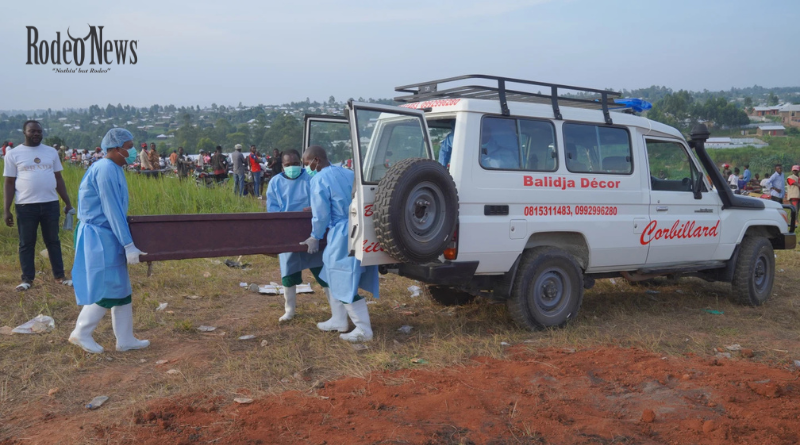
Government data cited by The Associated Press shows that the latest weekly death toll is among the highest recorded since the outbreak began. The crisis is being driven by the rare Bundibugyo virus, a form of Ebola that has historically caused far fewer outbreaks and remains far less studied than the Zaire strain.
The scale and speed of the current epidemic have alarmed public health officials. At the same time, medical teams are facing difficult conditions in several affected areas, including insecurity, weak infrastructure, misinformation and challenges reaching people who may have been exposed.
The combination is making traditional outbreak-control measures much harder to implement.
Congo Ebola Outbreak Reaches a Critical Point
The latest figures underline how quickly the situation is deteriorating.
The Democratic Republic of Congo has recorded thousands of confirmed infections and deaths during the current outbreak. The latest government figures cited by AP put confirmed cases at more than 5,500 and deaths at more than 2,600 as of Saturday, although health authorities warn that the true toll could be considerably higher because some deaths are confirmed only after significant delays.
The crisis has also expanded geographically.
Cases have been detected across multiple provinces, including areas where health systems are already under pressure. In some communities, health officials are struggling to identify people who have been in contact with infected patients.
That creates a major problem for Ebola response teams.
Contact tracing is one of the most important tools available during an Ebola outbreak. Health workers must identify people who may have been exposed, monitor them for symptoms and quickly isolate suspected cases.
When new infections appear among people who were never identified as contacts, however, it becomes much harder to determine how the virus is spreading.
Why the Bundibugyo Virus Is So Concerning
The current epidemic is caused by the Bundibugyo virus, which belongs to the Ebola virus family but differs from the Zaire ebolavirus responsible for many of the outbreaks that have received international attention.
That distinction matters.
Several vaccines and treatments have been developed specifically for Zaire ebolavirus. However, WHO says there is currently no approved vaccine or specific treatment for Bundibugyo virus.
As a result, doctors and health workers are operating with fewer proven medical tools than they would have during an outbreak caused by the Zaire strain.
Supportive medical care therefore remains essential.
Patients need careful monitoring and treatment for dehydration, shock and other complications. Early medical attention can improve a patient’s chances of survival, but providing that care is extremely difficult when hospitals are overwhelmed or communities are difficult to reach.
The absence of a licensed Bundibugyo vaccine also leaves public health officials searching for other ways to slow transmission.
Ebola Vaccine Offers a Potential New Tool
Despite the uncertainty, vaccines have entered the response.
The Democratic Republic of Congo has received more than 16,000 doses of Ervebo, a vaccine that has been widely used against Zaire ebolavirus. WHO and its partners have pledged additional doses as officials try to strengthen the response.
However, Ervebo is not specifically approved for Bundibugyo virus.
Scientists are therefore investigating whether it could provide some level of protection against the strain responsible for the current outbreak. Clinical research and vaccine trials are also being pursued to find a more targeted solution.
This creates both an opportunity and a challenge.
A vaccine that provides meaningful protection could become an important tool for protecting health workers and people at high risk. But researchers still need evidence to determine how effective the existing vaccine may be against Bundibugyo virus.
That means vaccination cannot currently replace other measures such as testing, isolation, contact tracing and infection prevention.
Health Workers Face Extraordinary Pressure
The Congo Ebola outbreak is also taking a heavy toll on the people fighting it.
Doctors, nurses, laboratory workers, ambulance teams and community health workers must operate in an environment where exposure to the virus is possible every day.
In some affected communities, health workers have also faced resistance and mistrust.
Misinformation can make the situation worse. When residents do not trust health authorities or treatment centers, they may avoid medical facilities, refuse to cooperate with contact tracers or conceal information about possible exposure.
That gives the virus more opportunities to spread.
Health workers must therefore do more than treat patients. They also have to communicate with communities, explain how Ebola spreads and build trust in public health measures.
That work can take time, especially in areas where previous conflicts and political instability have already damaged confidence in institutions.
Conflict Makes Containment Even Harder
The geography of the outbreak is another major concern.
Parts of eastern Congo have experienced years of armed conflict and instability. Some communities are difficult to access, while violence can disrupt transportation, medical services and disease surveillance.
For an Ebola response, these obstacles can have serious consequences.
Health workers need to move quickly when a suspected case is identified. Laboratories must receive samples. Medical supplies must reach treatment centers. Contacts must be monitored.
Any interruption can create delays.
Those delays matter because Ebola can spread through direct contact with infected bodily fluids, particularly as patients become increasingly sick.
The longer it takes to identify and isolate an infected person, the greater the chance that additional people will be exposed.
Misinformation Is Another Major Threat
Medical teams are also confronting misinformation.
During major disease outbreaks, rumors can spread rapidly, especially when communities are frightened or distrustful of authorities.
False information can discourage people from seeking treatment or encourage families to hide suspected cases. It can also create hostility toward health workers.
Public health experts have repeatedly emphasized the importance of community engagement.
People are more likely to cooperate with disease-control measures when they understand why those measures are necessary and when local leaders, survivors and trusted community figures are involved in communicating the message.
For the Congo Ebola outbreak, rebuilding that trust is likely to be just as important as increasing supplies of medicine and protective equipment.
Why the Latest Death Toll Matters
The latest weekly death figures are particularly concerning because they demonstrate the speed at which the epidemic is growing.
An outbreak that produces hundreds of deaths in a single week can quickly overwhelm already fragile healthcare systems.
It also makes international support more urgent.
WHO, Africa CDC and other partners are assisting the Congolese government, but the response requires sustained funding, personnel and logistical support.
The challenge is not limited to treating people who are already sick.
Authorities must simultaneously identify new cases, monitor contacts, protect medical workers, conduct laboratory testing and communicate accurate information to communities.
Each part of the response depends on the others.
What Happens Next?
The coming weeks will be critical for the Congo Ebola outbreak.
Health authorities are expected to expand surveillance, testing and treatment capacity while continuing efforts to reach communities that remain outside established response networks.
The arrival of Ervebo vaccine doses could provide another layer of protection, particularly if research confirms that the vaccine offers some cross-protection against Bundibugyo virus.
At the same time, researchers are working on candidate vaccines specifically designed to target the strain behind the current epidemic.
However, developing and testing a new vaccine takes time.
Until more evidence becomes available, public health officials will continue relying heavily on established Ebola-control measures.
These include rapid identification of suspected cases, laboratory confirmation, isolation, supportive treatment, contact monitoring, infection prevention and safe handling of bodies.
A Crisis That Requires International Attention
The scale of the current epidemic has turned the Congo Ebola outbreak into a major international health concern.
The Democratic Republic of Congo has experienced Ebola outbreaks before, including devastating epidemics in which thousands of people died. But the current crisis presents a different challenge because of the rare virus involved and the lack of an approved vaccine specifically targeting it.
The rapid increase in infections makes time a critical factor.
Every day of delayed detection can allow the virus to reach more people. Every missed contact makes tracing harder. Every disruption to healthcare services can reduce the chances of early treatment.
For that reason, experts say the response must extend beyond emergency medical care.
Communities need reliable information. Health workers need protection and support. Laboratories need supplies. Treatment centers need staff and equipment. Governments and international organizations need to maintain coordination across borders.
The Bigger Lesson From Congo
The current epidemic is a reminder that Ebola remains a serious global health threat.
Scientific progress has transformed the response to some Ebola strains, producing vaccines and treatments that were unavailable during earlier outbreaks. But the emergence or spread of a less-studied strain can expose significant gaps in preparedness.
Bundibugyo virus illustrates that problem.
There is still much scientists need to learn about the virus, including how effectively existing vaccines may protect against it and which experimental treatments could improve outcomes.
The Congo Ebola outbreak therefore represents both an immediate humanitarian crisis and an important test of global epidemic preparedness.
The priority now is to slow transmission, save lives and prevent the outbreak from expanding further.
If health authorities can combine stronger surveillance, community cooperation, improved medical care and promising vaccine research, there is still a path toward bringing the epidemic under control.
But the latest death toll shows that the window for action is narrowing.