Why Trump’s Growing Politicization of the Military Could Backfire
Trump’s Use of the Military as a Political Stage
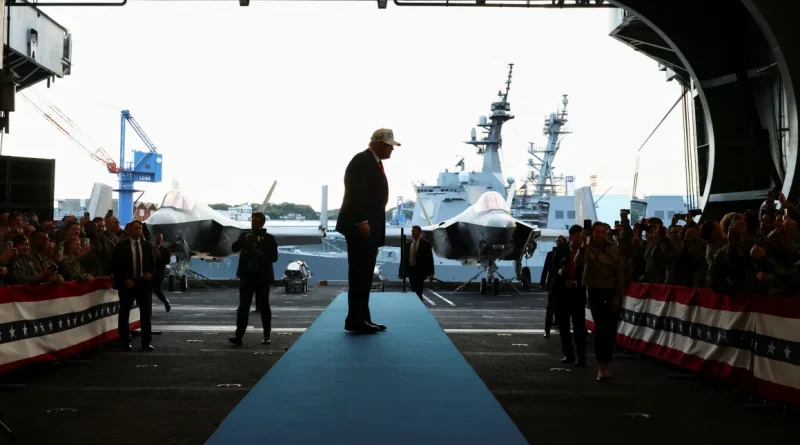
What’s the difference between the flight deck of a powerful US aircraft carrier and a MAGA rally? According to President Donald Trump, the line seems increasingly blurred. During a speech aboard the USS George Washington in Japan this week, the commander-in-chief once again blended political messaging with military imagery. His address revived false claims about the 2020 election and previewed a controversial proposal to deploy troops in U.S. cities, an act that many critics argue could violate constitutional protections.
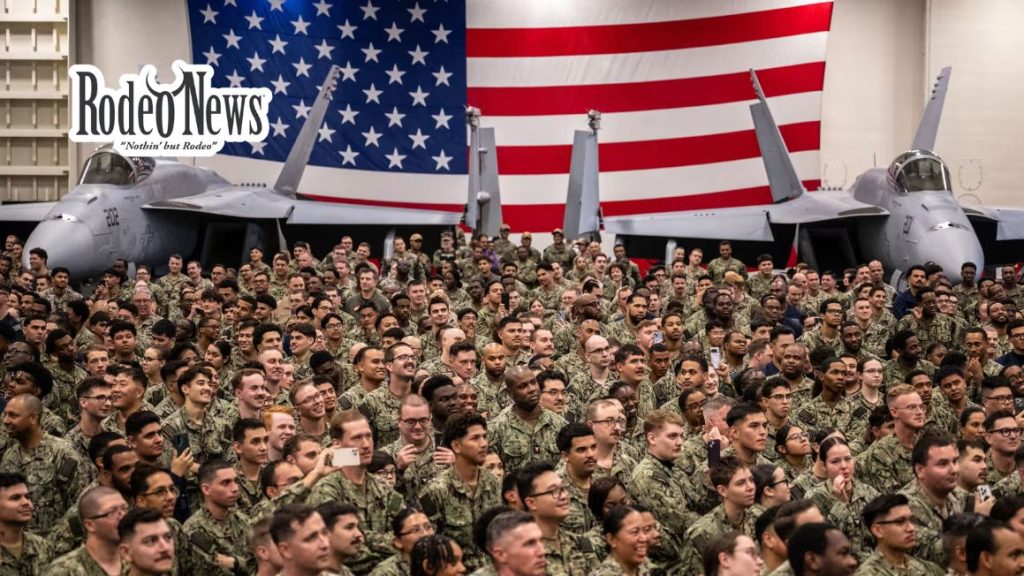
Historically, using the U.S. military as a backdrop for partisan political speech would have been seen as deeply inappropriate. Yet, in the Trump era, this form of politicization has become a pattern, sparking growing concern among military leaders and legal experts alike.
A Pattern of Political Speeches with Military Flair
Trump’s speech on the aircraft carrier wasn’t an isolated incident. The president recently made headlines for another partisan display at Fort Bragg, North Carolina, where service members cheered as he delivered an overtly political speech. Critics, including former senior military officers, found this deeply troubling. It was one of several instances where Trump appeared to use the U.S. military as a stage for campaign messaging, blurring the lines between the nonpartisan role of the military and partisan politics.
In a particularly controversial move, Trump ordered a military parade in Washington to celebrate the Army’s 250th anniversary — coincidentally falling on his birthday. A similar stunt occurred last month in Virginia when Trump delivered a rambling speech to top military brass, including a highly partisan anti-“woke” rant from Defense Secretary Pete Hegseth.
Perhaps most notably, Trump’s use of the military during the George Floyd protests in 2020 raised alarms. After demonstrators were cleared from Lafayette Square, Trump enlisted General Mark Milley to accompany him on a symbolic walk to St. John’s Church. Milley later apologized for his role in the incident, acknowledging that his involvement had inappropriately politicized the military.
Using the Military to Bolster a ‘Strongman’ Image
Trump’s recent remarks aboard the USS George Washington further exemplified his tendency to turn military settings into platforms for partisan rhetoric. After making an entrance that could have been straight out of a campaign ad — descending an elevator with military jets as a backdrop — Trump addressed topics ranging from his ambitions to become an admiral to a troubling proposal to send troops into U.S. cities to combat crime.
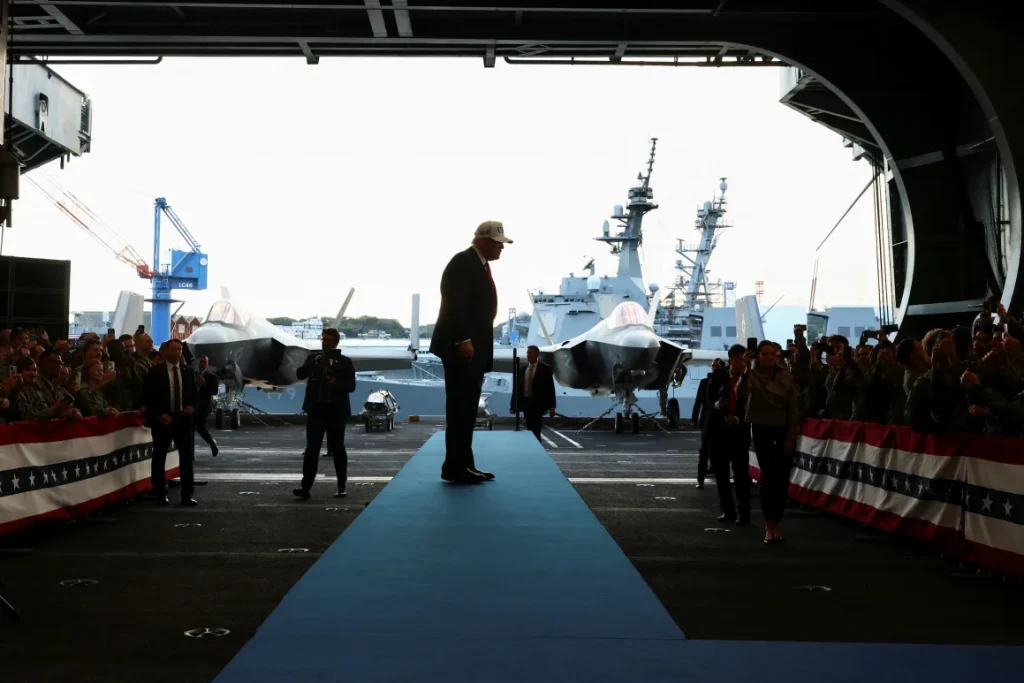
His plan, which would likely involve deploying military personnel in a law enforcement capacity, has sparked significant legal concerns. Critics argue that such actions violate constitutional limits on the use of the military for domestic policing. Despite these concerns, Trump’s remarks carried a strong political tone, positioning him as a protector of public safety — a move that appeals directly to his base.
“We have cities that are troubled,” Trump said. “We can’t have cities that are troubled and we are sending in our National Guard. And if we need more than the National Guard, we’ll send more than the National Guard because we’re going to have safe cities.”
While these remarks may resonate with certain segments of the population, the broader implications of using the military in such a way are significant, especially given the timing of his threat just days before meeting with Chinese President Xi Jinping.
The Risks of Politicizing the Military
The military, which traditionally maintains a careful distance from partisan politics, is now faced with an increasingly fraught political environment. While Trump’s actions may bolster his image among his MAGA supporters, they could ultimately undermine the integrity of the armed forces.
A key principle that underpins the U.S. military is its nonpartisan, civilian-led nature. This structure is vital not only for preserving the neutrality of the armed forces but also for ensuring that military personnel are not seen as tools of any political party. The more Trump engages the military in his political battles, the greater the risk of eroding this vital separation.
There are also practical considerations. The Pentagon, which often enjoys bipartisan support for budget requests and strategic planning, depends on the military’s perceived neutrality to function effectively. Once the military becomes a partisan entity, its role in securing national interests could be undermined by the changing tides of political power.
The Politics of Defense: A Delicate Balance
Trump is far from the first president to face criticism for politicizing the military. Former presidents have long walked a fine line between honoring military service and leveraging it for political purposes. However, Trump’s actions stand out because of their scale and frequency.
For example, some critics argue that former President Bill Clinton’s decision to launch airstrikes in Iraq during the Monica Lewinsky scandal was an effort to distract the public. Similarly, President George W. Bush’s speeches to troops ahead of the Iraq War were viewed by some as political tools to rally support for an increasingly unpopular conflict. More recently, President Joe Biden was criticized by Republicans for staging a speech with two Marines flanking him during a political address in Philadelphia.
But Trump’s use of the military has arguably surpassed these precedents, both in frequency and in the overt political nature of his messages.
Could the Military’s Role Become More Divisive?
As Trump continues to use the military as a political tool, the potential for long-term consequences grows. While it’s clear that some service members share Trump’s political views, the broader impact on military cohesion remains uncertain. Ultimately, the military must remain unified, regardless of which party holds power, in order to preserve its role in protecting national security.
The increasing politicization of the military — particularly under Trump’s leadership — raises profound questions about the future of U.S. defense policy and the integrity of a nonpartisan armed forces.