Nvidia RTX Spark: 5 Ways It Could Transform PCs
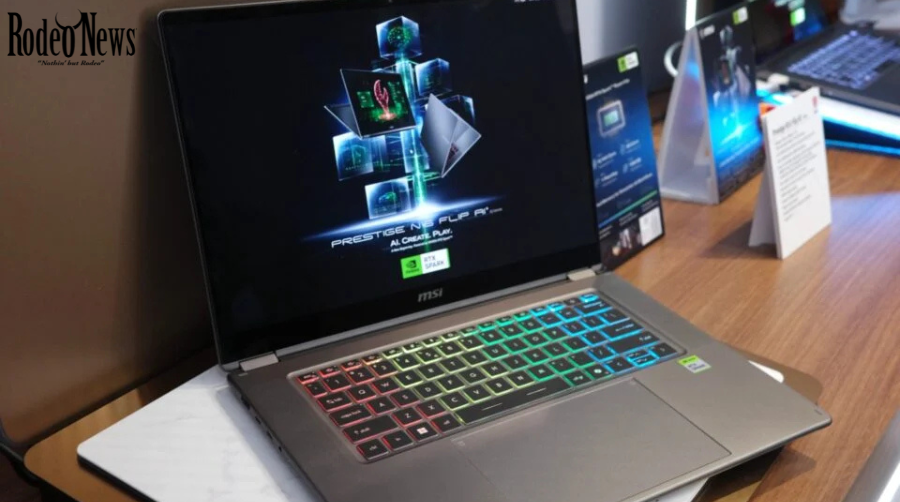
The Nvidia RTX Spark platform could mark an important turning point for Windows computers by bringing advanced artificial intelligence, powerful graphics processing, and large amounts of shared memory into a single chip architecture. Rather than relying exclusively on cloud-based AI services or conventional laptop processors paired with separate graphics cards, Nvidia wants to make more demanding computing tasks possible directly on personal devices.
The technology arrives as PC manufacturers look for new ways to differentiate their products in an increasingly competitive market. AI-powered applications are becoming more sophisticated, creators need additional processing power, and consumers expect laptops to deliver strong performance without sacrificing portability.
However, the RTX Spark is not a guaranteed revolution. Its potential depends on several factors, including real-world performance, software compatibility, memory configurations, power efficiency, and the prices manufacturers charge for finished computers.
With new systems arriving from multiple PC brands, the platform represents a significant attempt by Nvidia to expand beyond its traditional graphics-card business. Here are five important ways the Nvidia RTX Spark could change personal computing—and the challenges that could determine whether it succeeds.
1. Nvidia RTX Spark Combines CPU and GPU Power
One of the most important features of the Nvidia RTX Spark platform is its integrated approach to computing.
Traditional Windows laptops commonly use a processor from Intel or AMD, with graphics handled either by integrated graphics or a separate GPU. High-performance models may include dedicated Nvidia graphics cards to accelerate gaming, rendering, and AI workloads.
RTX Spark takes a different approach by combining an Arm-based CPU with Nvidia Blackwell graphics technology in a unified system-on-chip design.
According to Nvidia’s official announcement, the platform can offer up to 128GB of unified memory and up to one petaflop of AI computing performance under the company’s specified operating conditions. The flagship configuration includes 20 CPU cores and 6,144 GPU cores.
This combination is designed to support demanding applications without requiring a conventional discrete graphics card.
For creators, that could mean greater flexibility when editing video, rendering complex scenes, or working with graphics-intensive software. Developers could also benefit from having CPU resources, GPU acceleration, and substantial memory available within one system.
Nevertheless, core counts alone do not establish how fast a computer will perform. Cooling, power limits, software optimization, and workload characteristics all influence the final result.
The RTX Spark architecture therefore represents a different design philosophy rather than an automatic replacement for every high-performance laptop.
2. Nvidia RTX Spark Could Make Local AI More Practical
Artificial intelligence is central to Nvidia’s strategy for the platform.
Many popular AI services currently rely on remote data centers. Users submit requests over the internet, and powerful servers process the information before returning results. Although this approach provides access to substantial computing resources, it can introduce subscription costs, network dependence, latency, and privacy considerations.
The Nvidia RTX Spark aims to make more AI processing possible directly on the computer.
Local AI can be particularly valuable for people who work with confidential documents, proprietary business information, private creative projects, or sensitive development data. When applications can process information entirely on-device, less information may need to be transmitted to external services.
However, local processing does not automatically guarantee privacy. Applications may still transmit information to cloud services, so users must understand the settings and data policies of the software they use.
Memory capacity is another critical consideration.
Nvidia says the platform can support large language models containing up to 120 billion parameters in appropriate configurations. That capability could interest AI developers, researchers, and advanced users who want to experiment with models without depending entirely on cloud infrastructure.
Actual performance will depend on model architecture, quantization, context length, available memory, and software support. A model that technically fits into memory may still run too slowly for practical everyday use.
Furthermore, not every RTX Spark computer will offer the same capabilities. Entry-level configurations have less unified memory, while premium systems can provide substantially more.
Buyers interested primarily in local AI should therefore examine the exact memory configuration rather than assuming every computer carrying the RTX Spark name can run the same models.
3. Unified Memory Could Benefit Creators and Developers
Memory is becoming an increasingly important factor in AI computing.
In a traditional PC with a discrete graphics card, system memory and graphics memory are generally separate pools. Large AI models and complex creative projects can place significant demands on both, making memory capacity and movement of data important performance considerations.
The Nvidia RTX Spark uses unified memory, allowing the CPU and GPU to access a shared memory pool.
This arrangement can be useful for workloads involving large datasets, neural networks, complex visual assets, and AI-assisted creative applications. Instead of being restricted by a small dedicated graphics-memory pool, suitable configurations can allocate substantial shared capacity to demanding tasks.
For example, a developer experimenting with a large language model could benefit from additional memory when loading model weights and processing longer prompts. A visual artist could also find the architecture useful when working with complex scenes or AI-assisted production tools.
Nvidia has highlighted potential applications including large 3D scenes, high-resolution video editing, and generative AI workflows.
However, unified memory should not be confused with unlimited graphics performance. Memory capacity and memory bandwidth are different specifications, and both matter. A system with substantial memory can accommodate larger workloads without necessarily rendering every scene faster than a discrete-GPU workstation.
The overall result will depend on the software, the memory subsystem, the processor’s power budget, and how effectively applications use the hardware.
For professional users, these distinctions are important when comparing RTX Spark computers with conventional workstations and other AI-focused systems.
4. Nvidia RTX Spark Faces a Major Software Compatibility Test
The platform’s Arm-based CPU introduces an important challenge: Windows software compatibility.
Most traditional Windows applications were developed for x86 or x64 processors, the architecture commonly associated with Intel and AMD PCs. Arm-based computers use a different instruction set, which means some existing applications need translation through an emulation layer.
Microsoft’s Prism technology helps Windows on Arm run many applications designed for x86 and x64 processors.
That compatibility layer is important because a powerful processor is only useful if people can run the software they need. Office applications, creative tools, games, utilities, and business programs must work reliably for the platform to appeal to mainstream buyers.
Emulation nevertheless introduces potential trade-offs.
Some applications may run efficiently, while others could experience reduced performance, compatibility problems, or limitations involving specific drivers and system components. Programs that depend heavily on CPU performance may be especially sensitive to the additional work required to translate instructions.
Gaming presents another challenge. Nvidia’s graphics technology, including its upscaling and frame-generation features, can help supported games achieve higher displayed frame rates. However, generated frames do not eliminate every underlying performance limitation, and results vary by game.
Anti-cheat systems, specialized peripherals, professional plugins, and older applications also deserve attention.
Before buying an RTX Spark computer, users should check whether their essential programs are supported natively or through emulation. Businesses should be particularly cautious about applications that depend on specialized drivers or tightly controlled enterprise environments.
The platform’s long-term success will depend not only on Nvidia’s silicon but also on the strength of Microsoft’s software ecosystem and developers’ willingness to optimize their applications for Arm.
5. Nvidia RTX Spark Could Change the Laptop Market
The Nvidia RTX Spark is arriving at a time when manufacturers are rethinking the balance between performance, battery life, portability, and AI capability.
Nvidia’s integrated approach could encourage more manufacturers to develop laptops that combine serious graphics and AI resources with designs traditionally associated with thin, portable computers.
Microsoft, Asus, HP, Lenovo, Dell, and other manufacturers have been associated with the broader RTX Spark rollout. Their products can differ in memory capacity, storage, cooling, screen design, and intended audience.
That variety could make the platform relevant to more than one category of buyer.
Content creators may prioritize rendering and video workflows. Developers may focus on local AI models and memory capacity. Business users may value on-device processing, while some gamers could be attracted by the combination of graphics acceleration and portable hardware.
However, the price of entry remains a significant concern.
The Gizmodo report highlighted a starting price of approximately $2,600 for Microsoft’s Surface Laptop Ultra, with premium configurations reaching about $5,900. Such prices put these systems in the premium market, where buyers have several alternatives.
A traditional gaming laptop with a discrete GPU may deliver better performance for certain games. A workstation may provide more predictable support for specialized professional applications. Meanwhile, other AI-focused processors may offer competitive memory capacities or different performance advantages.
RTX Spark will need to demonstrate that its particular combination of features justifies its cost.
The most compelling systems may be those that allow users to combine several demanding workloads—such as development, content creation, and local AI—on a single computer instead of purchasing separate machines for different tasks.
Nvidia RTX Spark vs. Traditional PCs: What Buyers Should Know
The differences between RTX Spark and conventional computers depend on the precise models being compared, but several general distinctions can help buyers understand the trade-offs.
AI processing: RTX Spark is designed around substantial on-device AI capability. Traditional PCs can also run local AI, particularly when equipped with powerful GPUs, but their practical limits depend on hardware and software.
Graphics performance: RTX Spark integrates Blackwell graphics into a unified platform. A conventional laptop with a powerful discrete GPU may still outperform it in particular gaming or rendering workloads, especially when the dedicated GPU has a higher power budget.
Memory: RTX Spark configurations can offer up to 128GB of unified memory. Conventional PCs may use separate system RAM and dedicated graphics memory, which can be advantageous for some workloads but more restrictive for others.
Software compatibility: Arm-based RTX Spark systems depend on native Arm applications and Windows emulation for much existing software. Conventional x86 PCs generally run x86 and x64 Windows programs natively.
Portability and efficiency: The integrated design could help manufacturers balance power and portability, but battery life and sustained performance must be assessed through independent testing of individual computers.
Price: RTX Spark computers occupy a premium segment at launch. Buyers should compare actual prices and measured performance rather than relying solely on manufacturer claims.
The most suitable option ultimately depends on what the computer needs to do. Someone who mainly browses the web, writes documents, and streams videos may not benefit enough to justify the premium. A developer or creator who regularly works with demanding local AI models could have a stronger reason to consider the platform.
Nvidia RTX Spark and the Future of AI Computing
The broader significance of the Nvidia RTX Spark goes beyond a single generation of laptop hardware.
For years, much of the AI industry has concentrated on building increasingly powerful data centers. Those systems remain essential for training large models and operating services at scale, but the growing capabilities of personal computers create another opportunity: moving selected AI tasks closer to the people who use them.
A powerful local AI computer could reduce reliance on remote processing for certain tasks, provide faster responses when models run efficiently, and allow users to retain more control over their working environment.
It could also encourage software developers to create applications that combine conventional interfaces with local AI agents capable of helping users complete multi-step tasks.
Yet this future is not guaranteed.
Local models can require substantial memory and computing power. Some applications will continue to depend on cloud services, and organizations will need to consider security, maintenance, cost, and reliability. Developers must also make their software easy to install and use.
Nvidia faces competition from AMD, Qualcomm, Intel, and other companies pursuing different approaches to AI-capable personal computing. Apple has also demonstrated the potential of tightly integrated processors, memory, and software in its own computers.
Consequently, RTX Spark’s influence may be measured not just by sales but by whether it encourages broader improvements across the PC industry.
If manufacturers deliver compelling performance, useful AI applications, reliable compatibility, and better efficiency at competitive prices, the platform could help make local AI a more practical part of everyday computing.
If the systems remain too expensive or struggle with essential software, adoption could be limited to enthusiasts and specialized professionals.
What Consumers Should Check Before Buying
Anyone considering an Nvidia RTX Spark computer should focus on several practical questions before making a purchase.
First, check the amount of unified memory. This is particularly important if the main goal is running local AI models. A low-memory configuration may not provide the same experience as a premium model.
Second, verify application compatibility. Confirm that the programs, games, plugins, and peripherals you depend on work properly on Windows on Arm.
Third, look for independent performance tests. Benchmark results should cover the workloads that matter to you, including sustained performance rather than short bursts of speed.
Fourth, compare battery life and cooling. Integrated hardware does not automatically guarantee quiet operation or long battery life under demanding workloads.
Finally, compare the total price against alternatives. A conventional gaming laptop, workstation, or different AI-capable PC may offer better value for a particular set of tasks.
These checks can help buyers distinguish between headline specifications and practical benefits.
Final Verdict: A Promising Shift, Not an Instant Revolution
The Nvidia RTX Spark represents an ambitious effort to bring powerful AI computing and graphics capabilities into a more integrated Windows PC platform.
Its combination of an Arm-based CPU, Blackwell GPU technology, and up to 128GB of unified memory could appeal to developers, creators, and professionals who want to run demanding workloads locally. It also gives Nvidia a more direct role in the broader personal-computing market.
However, the technology still faces meaningful challenges. Software compatibility, emulation overhead, gaming performance, memory configurations, and premium pricing will all influence its appeal.
For buyers who need substantial local AI capability alongside creative and graphics workloads, RTX Spark could be worth serious consideration. For users who prioritize conventional gaming performance, legacy software, or affordability, other systems may remain more appropriate.
The real test will come from everyday use rather than specifications alone. If RTX Spark delivers a balanced experience across performance, efficiency, compatibility, and price, it could help shape the next generation of personal computers. If it fails to meet those expectations, its impact may be more limited than Nvidia hopes.
Either way, the platform highlights a major shift in the industry: the future of AI computing will not depend exclusively on remote servers. Increasingly capable personal devices are likely to play an important role, and Nvidia is positioning RTX Spark as one contender in that transition.
Suggested External Links
- NVIDIA Newsroom: RTX Spark and Microsoft’s Windows AI strategy
- NVIDIA Blog: Local AI agents and RTX technology
Suggested Internal Links
Replace these suggestions with relevant articles already published on your website:
- A guide to the best AI laptops in 2026
- Nvidia Blackwell GPU architecture explained
- Local AI vs. cloud AI: Key differences
- Windows on Arm: Compatibility and performance guide
WordPress SEO Checklist
- Focus keyword in the SEO title
- Focus keyword in the meta description
- Focus keyword in the URL slug
- Focus keyword in the opening paragraph
- Keyword included in relevant subheadings and article content
- Related keywords used naturally
- External sources provided
- Internal-link suggestions provided
- Image suggestion and keyword-rich ALT text included
- Short paragraphs and descriptive headings
- SEO title under 60 characters
- Slug under 75 characters
- Meta description under 160 characters
SEO note: These checks are designed to support strong on-page SEO. Actual plugin scores can vary depending on your WordPress settings, chosen focus keyword, link configuration, image insertion, and readability analysis.