US Pushes for Ukraine-Russia Peace Amid Scandal-Fueled Political Crisis
LONDON — As the United States renews its diplomatic efforts to broker peace in Ukraine, the country’s leadership faces a political crisis that threatens both its internal stability and its ongoing war effort against Russia.
This week, a high-ranking U.S. military delegation, led by Army Secretary Daniel P. Driscoll and Chief of Staff Gen. Randy George, arrived in Kyiv to advance Washington’s stalled peace push. The delegation’s mission: to engage Ukrainian President Volodymyr Zelenskyy in talks about a new 28-point peace plan drawn up in coordination with Moscow. But as the U.S. made its move, Ukraine was embroiled in a sprawling corruption scandal that is rapidly destabilizing Zelenskyy’s administration.
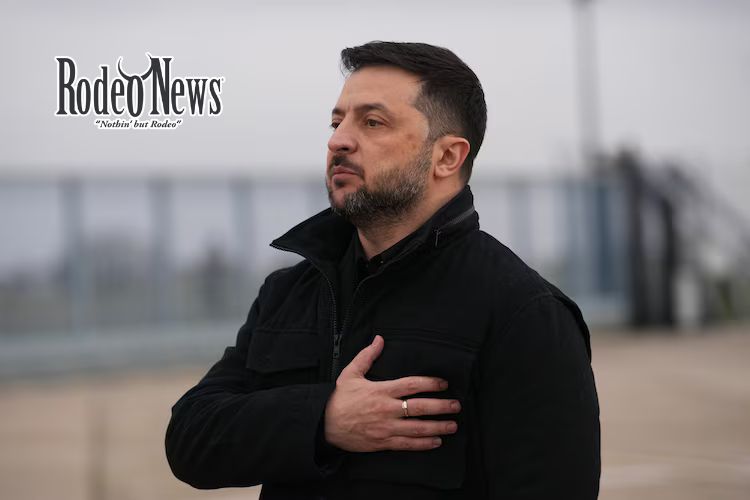
Corruption Scandal Unravels Zelenskyy’s Government
The scandal, centered around Ukraine’s state-owned nuclear energy company Energoatom, has reportedly uncovered kickbacks worth an estimated $100 million. As investigators from the National Anti-Corruption Bureau (NABU) move forward with the case, the fallout has been severe. The scandal led to the dismissal of key officials, including Deputy Prime Minister Oleksiy Chernyshov, and raised serious questions about the integrity of Zelenskyy’s closest allies.
Zelenskyy, whose administration has long prided itself on fighting corruption, now finds himself navigating an existential political crisis. The pressure has led to protests in Ukraine’s parliament, the Rada, and growing calls for a national unity government, with opposition figures demanding more drastic political change.
Oleksandr Merezhko, head of the foreign affairs committee in Ukraine’s parliament and a member of Zelenskyy’s party, warned ABC News that the country was entering a “serious political crisis,” and he hinted that the scandal could lead to sweeping political changes. “We might be on the threshold of serious political shifts,” Merezhko added.
A Fragile Moment for Zelenskyy
The timing of the U.S. peace push is viewed by some as deliberate, coinciding with Zelenskyy’s growing vulnerability. Many observers in Kyiv have suggested that the U.S. may be using the scandal to pressure Zelenskyy into accepting peace terms that would otherwise be unthinkable. The new peace plan, which includes provisions that would see Ukraine cede large swaths of territory to Russia, has already been met with resistance from Ukrainian officials who argue that its terms are tantamount to capitulation.
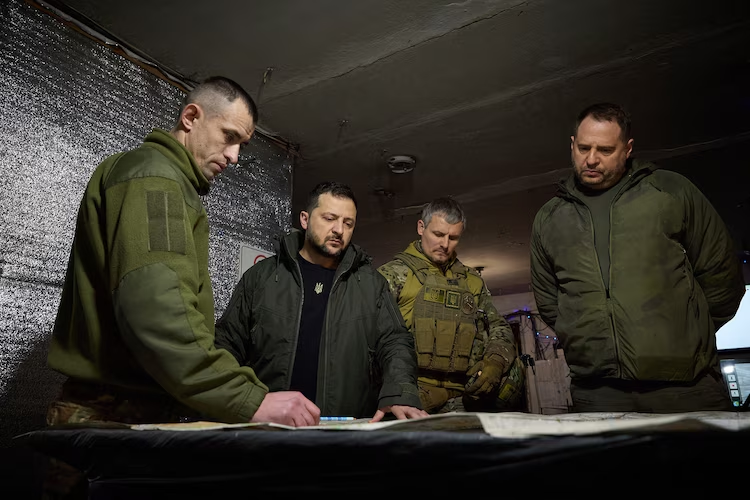
In a televised address, Zelenskyy reaffirmed Ukraine’s desire for peace but emphasized that any agreement must respect the country’s sovereignty and territorial integrity. “Since the first days of the war, we have taken one, extremely simple position: Ukraine needs peace,” he said. “And a real peace – one that will not be broken by a third invasion.”
Maximalist Demands in US Plan
According to U.S. officials familiar with the new peace proposal, the plan includes several demands that Moscow has long sought, such as the reduction of Ukraine’s armed forces by more than half and the cession of territory that remains beyond Russia’s current military control. In exchange, Moscow would likely retain its hold over Crimea and the territories it has occupied since its invasion began in 2022.
For Zelenskyy, this represents a dilemma: accept these terms and risk political fallout at home, or reject the proposal and potentially alienate the U.S. and other Western allies.
Zelenskyy’s Struggle with Corruption Allegations
While Zelenskyy himself has not been personally implicated in the corruption scandal, the crisis has already shaken public confidence in his leadership. Investigators have focused on figures close to Zelenskyy, including Timur Mindich, a businessman and long-time associate of the president, who is co-owner of the media production company Kvartal 95, founded by Zelenskyy prior to his presidency.
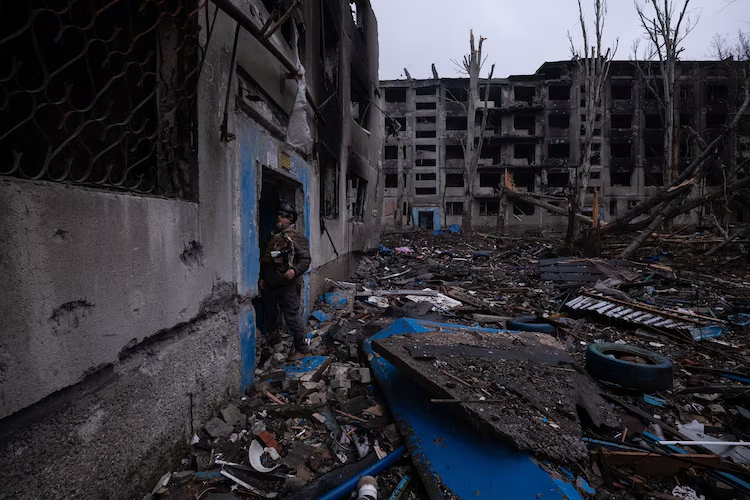
The scandal also points a finger at Andriy Yermak, Zelenskyy’s powerful chief of staff, whose involvement has sparked widespread speculation. Yermak, while not formally implicated, has come under suspicion due to his role in controlling Ukraine’s anti-corruption agencies, including those investigating the Energoatom case.
“If Yermak appears in NABU records as a potential suspect in a corruption scheme… his dismissal will become almost inevitable,” political analyst Volodymyr Fesenko warned. The loss of Yermak would be a devastating blow to Zelenskyy, who has relied heavily on his chief of staff for key negotiations and diplomacy.
Political Fallout and Russian Maneuvers
Zelenskyy’s opponents have seized on the scandal as evidence of his failure to address corruption within his government. The opposition has called for his resignation, arguing that his administration’s inaction on the issue has compromised Ukraine’s ability to withstand Russia’s ongoing aggression.
The Kremlin, for its part, has been quick to amplify the crisis, with former Russian president Dmitry Medvedev mocking Zelenskyy as a “hero” whose reputation is now “disfigured.” Russian state media also seized on the scandal as a potential reason to question Western support for Ukraine, with Kremlin spokesperson Dmitry Peskov suggesting that the ongoing corruption investigations should force Ukraine’s allies to reconsider their financial and military aid.
Despite these challenges, many Ukrainians have expressed optimism that the investigations demonstrate Ukraine’s ability to root out high-level corruption, which has long been a requirement for continued Western support.
The Path Forward for Zelenskyy and Ukraine
As the peace talks with the U.S. unfold, Ukraine’s future remains in a precarious balance. Zelenskyy will need to address both the corruption scandal and the U.S. peace proposal while maintaining the political cohesion necessary to continue fighting against Russia.
The outcome of these intersecting crises could ultimately shape Ukraine’s path forward in the war and in its relations with the West. For now, Zelenskyy’s ability to navigate both domestic and international pressures will be tested like never before.