Madagascar Military Seizes Power Amid Anti-Government Protests
ANTANANARIVO, Madagascar — Madagascar’s military has taken control of the government, marking a dramatic turning point after weeks of escalating protests that have gripped the island nation.
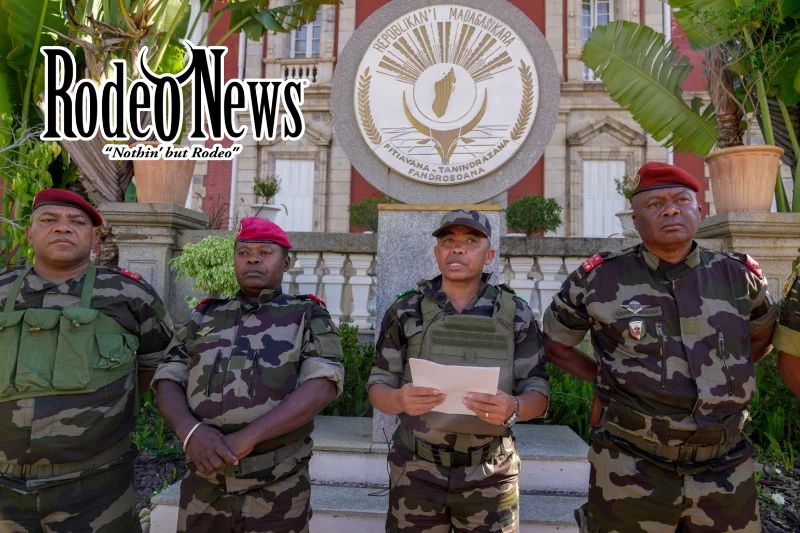
Colonel Michael Randrianirina, a commander in the elite CAPSAT unit, announced on Tuesday that the armed forces had assumed control of the government. He stated that a joint committee of military and police leaders would oversee the transition and swiftly install a civilian administration.
“We are in control. A civilian government will be established quickly to restore order and serve the people,” Randrianirina said in a televised statement.
The announcement came just minutes after Madagascar’s parliament voted overwhelmingly to impeach President Andry Rajoelina, accusing him of abandoning his post. Rajoelina had reportedly fled the capital over the weekend, citing threats to his life.
President Flees Amid Impeachment
President Rajoelina, who addressed the nation from an undisclosed location via social media on Monday, claimed he had gone into hiding for his safety. His attempt to dissolve the lower house of parliament the same day failed to halt the impeachment process. Lawmakers proceeded with the vote, returning 130 ballots in favor of removing him, with only one abstention.
The presidential office, via its official Facebook page, condemned the military’s move as a “coup d’état” and insisted Rajoelina remained the country’s legitimate leader.
Weeks of “Gen Z” Protests
The crisis was precipitated by weeks of youth-led protests, driven by deep frustration over deteriorating public services. Known as the “Gen Z protests,” thousands of young Madagascans flooded the streets of the capital, Antananarivo, demanding Rajoelina’s resignation.
Protesters cited years of water shortages and electricity blackouts — many said they hadn’t had running water for up to six years, yet continued to be billed for it.
“We are tired. We’re angry. We just want the basics: water, power, dignity,” one protester told local media.
Over the weekend, the CAPSAT military unit declared it would not intervene to suppress the protests, calling the demonstrators “our brothers and sisters.” Shortly afterward, Rajoelina fled — reportedly aboard a French aircraft, though that claim remains unverified. Several senior officials are believed to have escaped to Mauritius.
Military Denies “Coup”, Claims Popular Support
Despite widespread international concern, the military insists its intervention was not a coup. Col. Randrianirina emphasized that the takeover was temporary and aimed at stabilizing the nation, not consolidating power.
“This is not about dictatorship. It is about restoring the people’s voice,” he said.
Protesters on the ground largely welcomed the military’s move.
“The army is the only neutral institution that can get us back on track,” said Sariaka, a 25-year-old demonstrator. “To me, it’s not a coup. It’s a popular revolution.”
Fanilo, a 21-year-old medical student, echoed the sentiment:
“We are deeply relieved. We are no longer oppressed. As long as the military follows through with its promise to transfer power, we support this.”
A Coup Repeats History
This isn’t the first time Madagascar has seen a military-backed political transition. In fact, Rajoelina himself came to power via a coup in 2009 — aided by the same CAPSAT unit — before later winning democratic elections twice.
However, his popularity has waned dramatically. Once dubbed the “baby-faced president,” the 51-year-old leader has faced growing criticism for alleged corruption, mismanagement, and a failure to improve living conditions in the nation of 31 million people.
Attempts to defuse the protests — including sacking his cabinet — failed to calm public anger. The United Nations estimates that over 20 people were killed during clashes between protesters and security forces in recent weeks.
International Response Pending
As of Tuesday evening, major international actors, including the African Union and the United Nations, had not issued formal statements on the power shift. Analysts warn the situation remains fragile, with the potential for further unrest if the promised civilian government is not swiftly implemented.
For now, many in Madagascar see the military as both the problem and the solution — a complex role it has played before.
Tags: Madagascar, Military Coup, Andry Rajoelina, Gen Z Protests, African Politics, CAPSAT, Political Crisis, 2025 News