Felix Auger-Aliassime US Open Exit: Shocking Scare
Felix Auger-Aliassime’s US Open exit became one of the most unexpected moments of the 2026 tournament after the Canadian third seed was beaten by Karen Khachanov in the second round. The defeat was made even more concerning by Auger-Aliassime’s revelation that he became dizzy and started seeing spots during the match.
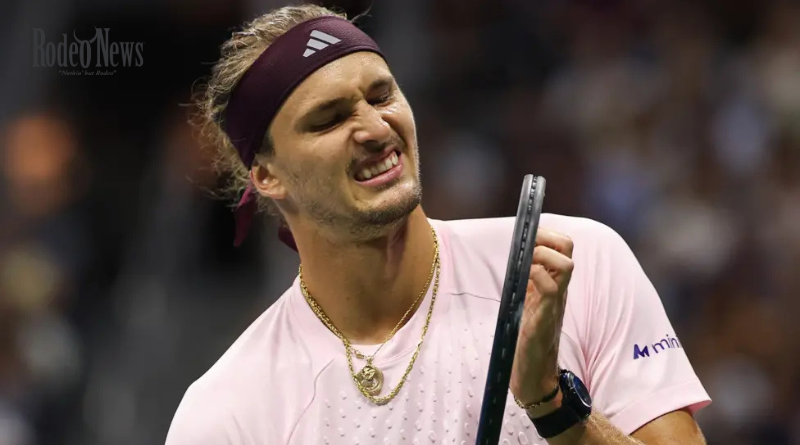
Khachanov eventually completed a four-set victory, winning 6-7(5), 6-3, 6-2, 6-2 at Louis Armstrong Stadium in New York. The Russian recovered from losing a tight opening set and then took control as Auger-Aliassime struggled physically.
For Auger-Aliassime, the result was a dramatic early exit from a Grand Slam where he arrived as the No. 3 seed. For Khachanov, it was a major opportunity seized with composure and persistence.
Felix Auger-Aliassime US Open Exit Follows Sudden Problems
The most striking aspect of the Felix Auger-Aliassime US Open exit was not simply the result. It was the physical problem that appeared during the contest.
Auger-Aliassime explained afterward that he began feeling unwell roughly a set and a half into the match. He described dizziness and problems with his vision and said the sensation did not disappear as the match continued.
The Canadian reportedly considered whether he should stop playing. Instead, he decided to continue and attempted to compete through the difficult situation.
That decision ultimately produced a dramatic contrast between the opening set and the remainder of the match. Auger-Aliassime won the first set in a tiebreak, but Khachanov steadily gained control afterward.
The match then moved sharply in the Russian’s favor.
Khachanov Turns the Match Around
Khachanov’s victory was not simply a result of his opponent’s physical struggles. The Russian still needed to take advantage of the opportunity, and he did so effectively.
After dropping the opening set, Khachanov immediately increased the pressure. He won the second set 6-3 before taking the third 6-2. By the fourth set, Auger-Aliassime was unable to reverse the momentum, and Khachanov closed out another 6-2 set to secure his place in the third round.
The turnaround was particularly impressive because the opening set had been extremely competitive.
Auger-Aliassime had shown enough quality to edge the tiebreak and move within one set of what could have been a straightforward progression. Instead, the match changed dramatically.
Khachanov stayed patient. He kept applying pressure and avoided allowing the match to return to the level seen in the first set.
That discipline proved decisive.
A Difficult Day for the Third Seed
The Felix Auger-Aliassime US Open exit represents a major disappointment because of his seeding and expectations.
As the third seed, Auger-Aliassime entered the tournament among the players expected to make a deep run. A second-round defeat was therefore far earlier than anticipated.
Grand Slam seeding does not guarantee success, of course. Tennis can change quickly when physical issues enter the equation. However, the circumstances of this defeat made the result particularly difficult for the Canadian to process.
Rather than losing a conventional four-set battle, he found himself trying to compete while dealing with symptoms he said he had not previously experienced.
That uncertainty is likely to make the aftermath of the defeat more important than the result itself.
Auger-Aliassime Says He Had Never Felt This Way Before
Auger-Aliassime’s comments after the match added another layer to the story.
According to reports from the tournament and tennis media, he said he had never experienced this type of problem before. He was dizzy, was seeing spots and could not recover as the match continued. He also indicated that there had been no obvious warning beforehand.
Those comments are important because they underline the uncertainty surrounding what happened.
At this stage, the symptoms should not be treated as a specific diagnosis. Auger-Aliassime himself did not provide a definitive explanation, and reports indicate that he planned to undergo further tests.
That distinction matters.
Seeing spots or experiencing dizziness during intense exercise can have many possible causes. Only qualified medical professionals who assess the player can determine what happened.
For that reason, the focus should remain on Auger-Aliassime’s health and recovery rather than speculation.
Felix Auger-Aliassime US Open Exit Changes the Tournament Picture
The early elimination also changes the men’s draw.
Auger-Aliassime was one of the highest-ranked players remaining in the tournament, and his departure adds to an increasingly unpredictable US Open. Other major names have also faced difficult moments during the opening rounds, creating additional opportunities for players outside the original group of favorites.
Khachanov now moves forward with confidence after removing one of the tournament’s top seeds.
The Russian’s victory could also give him considerable momentum. Beating a third seed at a Grand Slam can transform the trajectory of a tournament, particularly when the player has demonstrated the ability to recover after losing the opening set.
For Khachanov, the next challenge will be maintaining that level.
A major upset can create attention and momentum, but it does not automatically guarantee a deep run. The third round will provide a fresh test against another opponent with different strengths and tactics.
What Khachanov Did Right
One of the clearest lessons from the match was Khachanov’s ability to remain composed after losing the first set.
The Russian could have become frustrated after narrowly missing out on the opening set. Instead, he stayed in the contest and waited for opportunities.
That patience became increasingly valuable as Auger-Aliassime’s physical problems became more apparent.
Khachanov also benefited from the psychological shift that followed the second set. Once he had leveled the match, the pressure moved heavily onto Auger-Aliassime.
The Canadian now had to find a way to recover physically while also preventing Khachanov from building further momentum.
He could not do it.
The third set quickly moved away from him, and Khachanov entered the fourth with the confidence of a player who knew he was close to a major upset.
A Grand Slam Reminder About Physical Readiness
The match also highlighted one of the toughest realities in professional tennis.
Players can spend months preparing for a Grand Slam. They can arrive in excellent form, receive a favorable draw and carry high expectations. Yet a physical problem can change everything within a few hours.
Tennis is especially demanding because players compete individually. There is no substitute who can take over when something goes wrong.
Once a match begins, the player must make difficult decisions.
Auger-Aliassime faced precisely that situation.
He had to decide whether he could continue while experiencing symptoms that affected his vision and balance. Ultimately, he chose to finish the match.
That decision should be viewed primarily through the lens of player welfare. Competitive determination is admirable, but health has to remain the priority.
What Comes Next for Auger-Aliassime?
The immediate priority for Auger-Aliassime will be understanding what caused the symptoms.
His second-round defeat ends his 2026 US Open campaign, but it does not define his season or his career. At his best, the Canadian remains one of the most dangerous players on the ATP Tour.
The bigger question is whether the incident was an isolated problem or something that requires additional attention.
Further medical evaluation should provide more clarity.
Until then, it would be premature to draw conclusions about the cause or predict how quickly he will return to competition.
For a player who arrived in New York as the third seed, the disappointment will be significant. But the most important outcome is that he receives the appropriate care and can return to the court safely.
Khachanov Moves Forward After Stunning Upset
While much of the attention naturally remains on Auger-Aliassime’s condition, Khachanov deserves credit for the way he handled the match.
He entered the second round facing one of the tournament’s highest seeds. After losing the opening set, he could have allowed the occasion to overwhelm him.
Instead, he produced three increasingly convincing sets.
His 6-3, 6-2, 6-2 finish showed the scale of the turnaround. The official US Open report confirmed that Khachanov advanced to the third round following the four-set victory.
That result gives him a valuable opportunity to go deeper into the tournament.
It also adds another unpredictable element to a men’s draw that has already produced several notable results.
Why the Felix Auger-Aliassime US Open Exit Matters
The Felix Auger-Aliassime US Open exit matters for more than one reason.
First, it is a major sporting upset. A third seed has been eliminated before reaching the second week of the tournament.
Second, the circumstances surrounding the defeat make it a story about player health as much as tennis.
Third, Khachanov has gained a significant boost by defeating one of the tournament’s leading seeds.
And finally, the result adds to the sense that the 2026 US Open remains wide open.
The tournament’s early rounds have already demonstrated how quickly expectations can change. Players who were expected to challenge for the title are disappearing from the draw, while others are finding unexpected opportunities.
For Auger-Aliassime, however, the result is less important than what comes next.
The Canadian will now leave New York with questions about what happened physically during the match. Further evaluation should help provide answers.
Until those answers are available, speculation should be avoided.
What is clear is that Auger-Aliassime’s US Open campaign ended in dramatic fashion. He won a thrilling opening set, then struggled physically as Khachanov took control and completed one of the tournament’s most significant early upsets.
Khachanov’s reward is a place in the third round.
Auger-Aliassime’s priority is different: recovery, evaluation and a safe return to competition.
The US Open moves on, but the unexpected events surrounding the Canadian’s defeat will remain one of the defining stories of the tournament’s opening week.