Beyond Bipolar: Why the China-US Rivalry Defies the Cold War Model
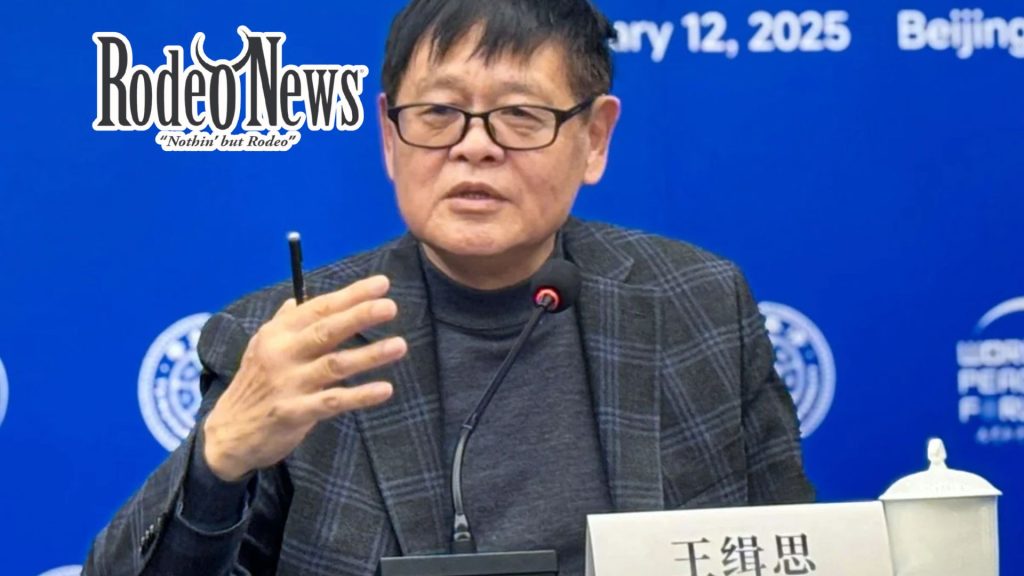
Veteran Chinese scholar Wang Jisi argues that the strategic competition between China and the United States cannot be accurately described as a new Cold War. In a recent virtual discussion hosted by the University of Hong Kong’s Centre on Contemporary China and the World, Wang said the global order today is not a simple binary of two opposing superpowers but a more complex system of “two superpowers and many strong powers,” with rising risks of friction and conflict.
Wang’s critique centers on how the United States frames its approach to China. He noted that the recently released US National Security Strategy (NSS) reflects contradictory priorities: while it identifies great-power competition with China, it also portrays a nation increasingly focused inward on domestic issues like immigration and drug trafficking. This inward turn marks an unusual shift from traditional US strategic emphasis on Asia and global leadership.
According to Wang, the NSS broadens the concept of national security to include economic, technological, and homeland vulnerabilities. Rather than offering a clear, coherent strategy toward China, it underscores the uneasy balance the United States is trying to strike between competition, cooperation, and internal priorities.
A World Beyond Bipolar Competition
Unlike the Cold War era — defined by a bipolar rivalry between the United States and the Soviet Union with minimal economic or cultural exchange — today’s China-US relationship is deeply intertwined geopolitically, economically, and technologically. Scholars and analysts widely acknowledge that this intertwining complicates any direct comparison with the mid-20th century superpower standoff.
Modern global power dynamics include a spectrum of influential states and actors. Middle powers in Europe, Asia, and elsewhere pursue independent paths that can offset strict alignment with either Beijing or Washington. This multipolar character means nations are less compelled to choose sides than they were during the Cold War, when most states faced stark alignment pressures.
Structural Competition and Persistent Interdependence
The strategic competition between the United States and China spans multiple arenas — from technology and trade to military presence and alliances — yet both countries remain deeply economically interconnected. This interdependence is a key reason why many scholars argue the rivalry is not a classic Cold War, which historically featured near-complete economic and cultural separation between rivals.
Furthermore, analysts point out that in contrast to an ideological clash between competing universalisms — as with the US and Soviet Union — China and the United States today do not embody equally universal visions that directly seek global conversion or exclusion. Instead, their competition is shaped by pragmatic interests, domestic political pressures, and evolving global challenges that resist neat categorization.
Looking Ahead
Wang’s perspective reflects a broader scholarly and policy debate: while the US and China are locked in strategic competition, the framework for understanding their relationship must account for a multipolar world, deep economic links, and shared global risks. Applying the Cold War model without nuance risks oversimplifying a complex and unprecedented international environment