Cambodia Protests Thai Military Reoccupation of Thmar Da Area in Renewed Border Tensions
Cambodia has issued a strong diplomatic protest after Thai military forces reinstalled razor-wire barricades around homes and commercial properties in the Thmar Da area of western Pursat province, reigniting tensions along a historically sensitive stretch of the Cambodia–Thailand border.
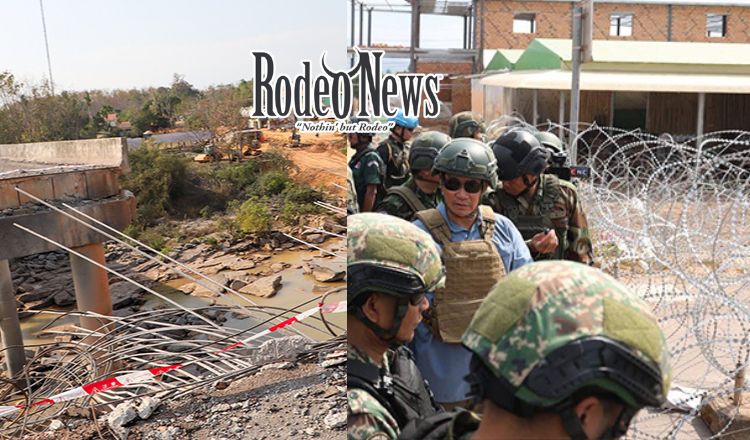
In a statement released over the weekend, Cambodia’s Ministry of Foreign Affairs and International Cooperation said the actions by Thai forces had altered security conditions near civilian areas, undermined ongoing de-escalation efforts, and raised serious concerns over national sovereignty and territorial integrity.
The ministry said the installation of barbed wire near the Thmar Da International Point of Entry contradicted commitments made by both countries to reduce tensions and restore normal civilian life following a series of border incidents late last year.
“These actions directly undermine de-escalation efforts and hinder the safe and dignified return of civilians to their homes and properties,” the statement said, calling on Thailand to fully implement bilateral agreements reached through joint border mechanisms.
Razor Wire Around Civilian Homes
According to Cambodian authorities, Thai naval forces reinstalled razor-wire barriers around houses and shops owned by Chinese businessmen in the Thmar Da area—properties that Cambodian officials say are located within Cambodian territory but have been reoccupied by Thai troops.
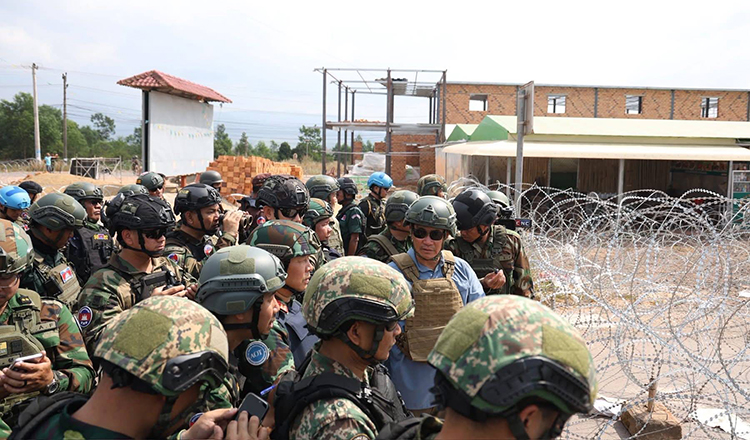
The move reportedly followed the removal of earlier barriers by the property owners, prompting Thai forces to reassert control over the area by fencing off civilian buildings and posting warning signs declaring the zone under Thai military authority.
Cambodia’s Foreign Ministry said the actions disrupted the return of civilians who had been displaced during earlier standoffs and risked creating new complications at a time when both sides had publicly committed to calming tensions.
Violation of Joint De-escalation Commitments
Phnom Penh said the installation of razor wire violated provisions outlined in the Joint Statement from the 3rd Special Meeting of the General Border Committee (GBC), held on December 27 in Kuala Lumpur.
That agreement, Cambodian officials said, was intended to serve as a comprehensive framework for de-escalation, civilian protection, and the restoration of normal livelihoods—not to entrench military presence near populated areas.
In particular, Cambodia cited Point 4 of the joint statement, which affirms that civilians living in affected border areas should be allowed to return “as soon as possible, without hindrance and in safety and dignity,” to their homes within their own territory.
“The purpose of the agreement was to reduce tensions and protect civilians, not to surround their homes with barbed wire,” the ministry said.
ASEAN Observer Visit
On January 15 and 16, Cambodia’s Ministry of National Defence facilitated a visit by the ASEAN Observer Team (AOT) to the Thmar Da area. The team conducted on-site inspections following complaints from Cambodian authorities that Thai forces had expanded their footprint in several locations.
Pursat Provincial Governor Khoy Rida said the situation should not be characterised as a border dispute but as a case of encroachment and continued occupation of Cambodian territory.
“This is not a temporary clash,” Rida said. “It is a sustained occupation in four locations that has caused serious harm to civilians and public infrastructure.”
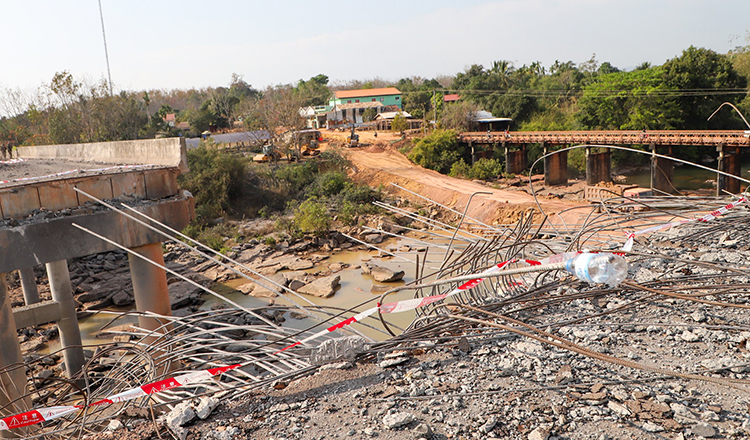
He identified the affected sites as Chor 1, Victory Bridge—also known as the Met Toek Bridge—Phluk Damrei, and Chey Chumneas, or Gate 56, an area designated as a special economic zone.
Civilian Impact and Displacement
Local authorities say more than 80 families have been directly affected by the Thai military presence, including at least 39 households whose homes have been lost or rendered inaccessible.
While about 900 families were initially relocated to safer areas, most have since returned. However, 84 families remain displaced because their homes are surrounded by or located adjacent to razor-wire fences installed by Thai forces.
Damage has been reported to administrative buildings at frontline posts, hospitals and health centres, commercial properties, and public infrastructure—most notably the Met Toek Bridge, a critical transport link in the area.
“The Thai military has surrounded the homes of 39 Cambodian families,” Rida said. “We made it clear to the ASEAN observers that Cambodia is not threatening or invading anyone. The reality on the ground shows otherwise.”
Allegations of Property Destruction and Looting
Cambodian officials have also accused Thai soldiers of destroying civilian homes and looting private property in occupied villages.
According to local authorities, video clips allegedly filmed by Thai soldiers themselves show the removal of vehicles, motorbikes, bicycles, household items, and even pets from Cambodian homes.
Similar incidents have been reported across several provinces, including Banteay Meanchey, Preah Vihear and Oddar Meanchey, where Thai soldiers are accused of cutting locks, entering private residences and seizing civilian property.
“These were not battle zones,” a Cambodian official said. “They were private residences protected under international humanitarian law.”
Cambodian officials argue that the repeated nature of the incidents points to a systemic issue rather than isolated misconduct.
Appeal to the United Nations
The Cambodian Human Rights Committee (CHRC) has issued an urgent appeal to the United Nations, calling for immediate international attention to what it described as ongoing abuses by Thai armed forces despite a ceasefire and joint declarations for peace.
In a formal letter sent by Ambassador Dara In, Cambodia’s Permanent Representative to the UN in Geneva, to UN High Commissioner for Human Rights Volker Türk, Cambodia urged sustained monitoring of what it said were serious and continuing violations inside Cambodian territory.
“These actions have resulted in the burning and destruction of civilian homes, the dismantling of community and religious structures, and the appropriation and pillage of civilian property indispensable to survival,” the letter said.
It also noted that Thai forces had erected barbed wire and shipping containers to block access to villages, effectively sealing off civilian communities and prolonging displacement.
Government Stance
Prime Minister Hun Manet has reaffirmed that Cambodia remains committed to resolving border issues through peaceful means and in accordance with international law and existing bilateral agreements.
At the same time, the government has stressed that it will not make concessions that compromise national sovereignty or territorial integrity.
“The border between Cambodia and Thailand remains clearly defined by existing treaties and conventions,” Hun Manet said, adding that borders must not be altered by force.
Cambodian leaders say the government and citizens have mobilised their political, diplomatic and moral resources to protect sovereignty while addressing the humanitarian needs of affected civilians.
As diplomatic efforts continue, Cambodian officials have warned that restoring trust along the border will depend on concrete actions on the ground—starting with the removal of military barriers around civilian homes and the full implementation of agreed de-escalation measures.