UBS Capital Requirements Enter a Critical New Phase
UBS capital requirements have become the center of a growing political battle in Switzerland after lawmakers moved to soften the government’s proposed rules for the country’s largest bank.
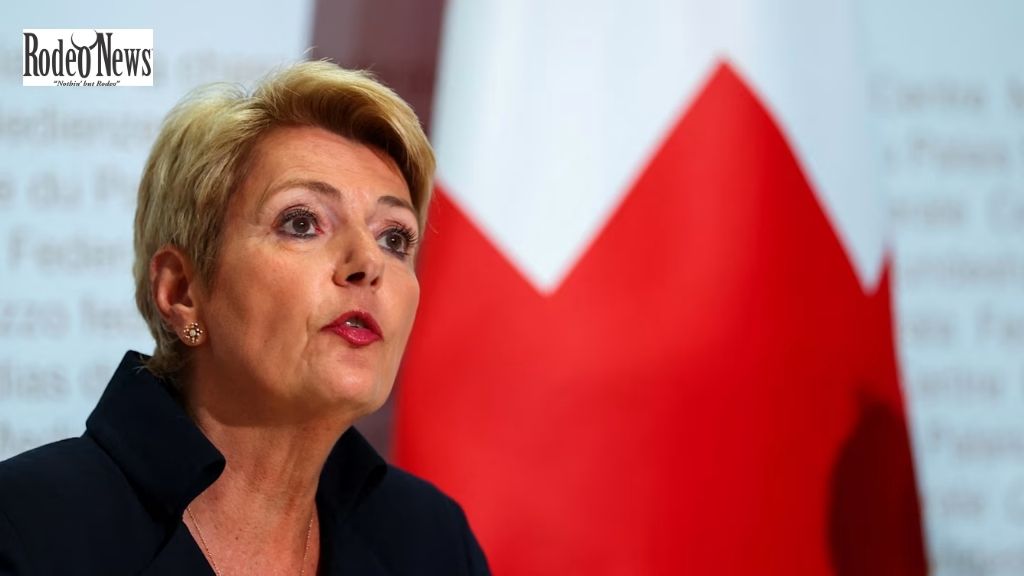
Swiss Finance Minister Karin Keller-Sutter has strongly criticized the parliamentary compromise, arguing that weaker requirements could leave Swiss taxpayers exposed if UBS were ever to experience a crisis on the scale of Credit Suisse.
The dispute comes more than three years after UBS took over its former rival Credit Suisse in an emergency transaction backed by Swiss authorities. The rescue created a banking giant whose global balance sheet and international operations have made the question of capital adequacy especially sensitive for Switzerland. FFinancial Times+1
At stake is potentially tens of billions of dollars in additional capital, as well as a broader question: How much protection should Switzerland demand from a bank that is considered too important to fail?


Suggested article image: UBS headquarters in Zurich.
UBS Capital Requirements: What Changed?
The Swiss government has proposed a significant overhaul of the country’s banking rules following lessons from the Credit Suisse crisis.
One of the most important measures would require systemically important Swiss banks to provide full capital backing for their foreign subsidiaries. For UBS, the measure is particularly significant because of the bank’s large international operations.
Under the government’s proposal, those foreign participations would effectively have to be backed entirely with Common Equity Tier 1, or CET1, capital.
CET1 is considered the highest-quality form of bank capital because it consists primarily of common equity and retained earnings. It provides banks with a strong buffer against losses and does not carry the same repayment characteristics as debt instruments.
The Swiss government estimates that the proposal could require UBS to add roughly $20 billion in CET1 capital. FFinancial Times+1
However, lawmakers on a parliamentary economic affairs committee have proposed a less demanding approach.
Under their compromise, UBS would only need to back 50% of its foreign subsidiaries with CET1 capital. The remaining 50% could be covered by cheaper Additional Tier 1, or AT1, capital.
That change could reduce the immediate capital burden considerably.
UBS estimates that the parliamentary proposal would require approximately $13 billion of additional Tier 1 capital, compared with about $20 billion in additional CET1 capital under the government’s approach. FFinancial Times+1
Why Switzerland Wants Tougher UBS Capital Rules
The government’s position is closely linked to the collapse of Credit Suisse.
In March 2023, Credit Suisse suffered a dramatic loss of confidence that ultimately resulted in UBS acquiring the bank in a state-supported emergency transaction.
The episode exposed weaknesses in Switzerland’s existing too-big-to-fail framework and raised difficult questions about how authorities could handle a future crisis involving an even larger combined institution.
The Swiss Federal Council has subsequently argued that the regulatory framework needs to be strengthened to reduce risks to the state, taxpayers and the wider economy. FFederal Department of Finance+1
The government says stronger capital requirements would give UBS a larger financial cushion if its foreign operations suffered severe losses.
The logic is relatively straightforward.
If a major subsidiary gets into trouble, a heavily capitalized parent bank has more resources to absorb losses without requiring extraordinary government assistance.
That matters particularly for Switzerland because UBS is enormous relative to the domestic economy.
The Swiss National Bank has also backed stronger requirements. SNB Vice Chairman Antoine Martin recently argued that robust capital levels are necessary to strengthen financial resilience and protect taxpayers. He also noted that UBS now represents a much larger concentration of the Swiss banking system following the Credit Suisse takeover. RReuters+1
UBS Capital Requirements and the AT1 Compromise
The biggest technical issue in the parliamentary proposal is the role of AT1 capital.
Additional Tier 1 instruments are a form of bank capital designed to absorb losses while generally costing banks less than common equity.
That lower cost is precisely why the compromise is attractive to UBS.
From the bank’s perspective, replacing some of the government’s proposed CET1 requirement with AT1 instruments could reduce the economic burden of complying with the new rules.
But AT1 capital is not viewed as equivalent to ordinary common equity.
That distinction is at the heart of Keller-Sutter’s criticism.
The finance minister has argued that the parliamentary proposal favors UBS at the expense of taxpayers. She has also pointed to concerns raised by experts from the Swiss National Bank and financial regulator FINMA, who reportedly believe the compromise could create legal uncertainty and practical problems. RReuters
The parliamentary committee, however, argues that its proposal represents an attempt to balance financial stability with Switzerland’s competitiveness as a global financial center.
That debate is unlikely to disappear quickly.
Why UBS Opposes the Government’s Proposal
UBS has consistently argued that excessively high capital requirements could make the bank less competitive internationally.
The concern is not simply the amount of money that would have to be raised.
More capital can also affect the returns available to shareholders and potentially influence decisions about dividends, share buybacks, investment and business expansion.
UBS has therefore pushed back against what it considers an unnecessarily expensive regulatory framework.
Following the parliamentary committee’s latest decision, UBS acknowledged the effort to consider alternatives to the government’s proposal but warned that even the compromise would significantly increase its costs. FFinancial Times
The bank has also warned that overly restrictive regulation could force it to reconsider its global strategy.
Senior UBS executives have privately raised the possibility that Switzerland’s regulatory environment could eventually make the country less attractive as the bank’s headquarters. That possibility has added another layer of political sensitivity to the debate. FFinancial Times+1
For Switzerland, losing or weakening the country’s most important global bank would have major economic and reputational consequences.
For UBS, however, the issue is whether maintaining its Swiss base should come with regulatory costs substantially higher than those faced by international competitors.
UBS Capital Requirements Put Switzerland’s Competitiveness at Risk
The dispute illustrates a difficult problem for Switzerland.
The country wants to remain one of the world’s most important financial centers. At the same time, it wants to ensure that taxpayers never again face the prospect of rescuing a major bank under emergency conditions.
Those objectives can conflict.
A very strong capital framework can make a banking system more resilient. But if regulations become significantly more expensive than those imposed in competing financial centers, banks could argue that their international businesses are being placed at a disadvantage.
The Swiss Bankers Association has supported a more flexible approach, warning that excessive regulation could make Switzerland less competitive while other financial centers move toward deregulation. RReuters
The government takes a different view.
Swiss authorities argue that strong capitalization can itself be a competitive advantage because customers and investors value financial stability.
The official Federal Council proposal says that, after implementation of the planned measures, UBS’s pro forma group CET1 ratio could reach around 15.5%, approximately 1.1 percentage points above its fourth-quarter 2025 level. FFederal Department of Finance
That figure illustrates the government’s broader argument: Switzerland is not simply demanding more capital for political reasons. It believes a stronger balance sheet is necessary for a bank whose size and international complexity create exceptional risks.
The Credit Suisse Lesson Still Shapes UBS Capital Requirements
The Credit Suisse collapse remains the central reference point in this entire debate.
Before its collapse, Credit Suisse had substantial capital and liquidity. Yet regulators and policymakers ultimately concluded that capital alone was not enough to prevent a crisis.
Weaknesses in governance, risk management, confidence and crisis preparedness all played important roles.
That creates a difficult question for Swiss policymakers.
Should UBS be forced to hold substantially more capital even though its current financial position is stronger?
The government’s answer is essentially yes.
The Federal Department of Finance says the review of the Credit Suisse crisis showed that Switzerland’s too-big-to-fail regime needed improvement. Its reforms are designed to reduce risks to the state and economy if a systemically important bank runs into severe difficulties. FFederal Department of Finance+1
UBS, meanwhile, has argued that the Credit Suisse failure was not simply a story about insufficient capital.
This difference in interpretation explains why negotiations have become so contentious.
UBS Capital Requirements Could Trigger a Referendum
The political consequences could become even more significant.
Keller-Sutter has suggested that the dispute could eventually lead to a public referendum if parliament adopts a version of the legislation that she considers inadequate.
She has also expressed confidence that the parliamentary committee’s compromise will not ultimately survive the legislative process. FFinancial Times
That means the committee’s decision is not the final word.
The proposed legislation must still pass through further parliamentary debate, where it could face additional resistance. Reuters reported that the final regulatory framework may not become clear until late 2026 or potentially 2027. RReuters+1
The next stages could therefore produce additional amendments.
Lawmakers may ultimately settle somewhere between the government’s 100% CET1 proposal and the committee’s 50% CET1 compromise.
What Investors Are Watching
Investors are watching the political process because the final capital rules could affect UBS’s future profitability.
The initial reaction has already demonstrated the sensitivity of the issue.
UBS shares fell around 1.8% during trading after the latest developments, according to the Financial Times. FFinancial Times
For shareholders, the central question is not necessarily whether UBS can meet the new rules.
The bank is expected to remain financially capable of raising additional capital.
The bigger issue is opportunity cost.
Every additional dollar of capital tied up to satisfy regulators is capital that cannot be used elsewhere.
That could affect shareholder distributions, acquisitions, investment plans and the bank’s ability to maximize returns.
At the same time, investors must weigh those costs against the possibility that stronger capitalization could reduce the probability and severity of a future crisis.
What Happens Next for UBS Capital Requirements?
The immediate next step is further parliamentary debate.
The upper house is expected to consider the banking reforms before the legislation moves through additional stages of the Swiss parliamentary process. The lower house could prove more difficult for the compromise because some lawmakers remain concerned about weakening the government’s original proposal. RReuters+1
Several outcomes remain possible.
The government could maintain its push for full CET1 backing.
Parliament could adopt the committee’s 50% CET1 and 50% AT1 compromise.
Alternatively, lawmakers could develop another model somewhere between the two positions.
There is also the possibility that additional safeguards will be introduced for AT1 capital. The committee’s proposal includes mechanisms intended to make AT1 more reliable during periods of financial stress, including restrictions on distributions if UBS’s CET1 ratio falls below a specified trigger. RReuters
This means the final cost to UBS cannot yet be determined with certainty.
The Bigger Question Behind the UBS Capital Requirements Debate
Ultimately, the argument over UBS capital requirements is about more than one bank.
It is about how Switzerland wants to manage systemic financial risk after the country’s biggest banking failure in decades.
UBS is now Switzerland’s dominant global banking institution. That makes its financial health critically important to the country, but it also gives UBS considerable economic and political influence.
For Keller-Sutter and other supporters of tougher rules, the lesson from Credit Suisse is clear: taxpayers should not once again be placed in a position where they must rescue a giant financial institution.
For UBS and its supporters, the opposite concern is equally important: Switzerland cannot protect its financial system by imposing rules that make its leading international bank less competitive.
The parliamentary compromise represents an attempt to find the middle ground.
Whether that compromise is ultimately strong enough for regulators — or flexible enough for UBS — will determine the next chapter of Switzerland’s post-Credit Suisse banking reforms.
For investors, customers and taxpayers, the most important issue will be the same: whether Switzerland can build a stronger UBS without making the bank less capable of competing on the global stage.
External Sources
- Financial Times — Swiss finance minister hits out at UBS capital plans
- Reuters — Swiss finance minister criticises parliamentary step to soften UBS rules
- Swiss Federal Department of Finance — Too Big To Fail reforms
- Swiss Federal Council — Banking Act and Capital Adequacy reforms
Internal Link Suggestions:
Because no target website/domain was supplied, actual internal URLs cannot be generated without inventing links. Recommended internal-link anchors are:
- Credit Suisse collapse explained
- What is CET1 capital?
- What is AT1 bank capital?
- Switzerland’s too-big-to-fail banking rules
Image ALT Text
UBS capital requirements and Swiss banking regulation at UBS headquarters in Zurich
SEO note: The article uses the focus keyword in the title, meta description, slug, opening paragraph, multiple subheadings and body copy. Exact Yoast/RankMath green status can only be confirmed inside the specific WordPress SEO plugin because those plugins also evaluate site-specific settings, internal links and other configuration.