Tulsi Gabbard Criminal Referral: 5 Key Revelations
The Tulsi Gabbard criminal referral has ignited a new political firestorm in Washington, reopening debates over the controversial 2019 impeachment of former President Donald Trump. The move, which involves a formal request to the Department of Justice (DOJ) to investigate individuals linked to the impeachment process, marks a significant escalation in ongoing political tensions.
The development raises critical questions about the integrity of past investigations, the role of intelligence officials, and the broader implications for the U.S. political system.
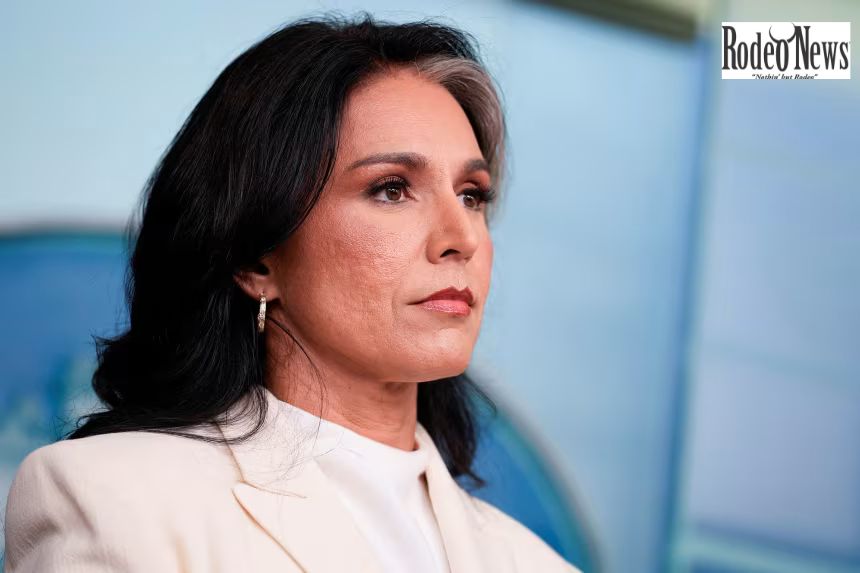
What Is the Tulsi Gabbard Criminal Referral?
The Tulsi Gabbard criminal referral refers to a formal request submitted by the Office of the Director of National Intelligence (DNI), currently led by Gabbard, urging the DOJ to examine potential criminal wrongdoing tied to the origins of the Trump impeachment.
A criminal referral does not automatically lead to charges. Instead, it signals that officials believe there is enough concern or evidence to justify further investigation by federal prosecutors.
According to reports, the referral focuses on actions taken by certain intelligence officials and a whistleblower whose complaint played a central role in triggering the impeachment inquiry.
Background: The Trump Impeachment Revisited
To understand the weight of the Tulsi Gabbard criminal referral, it is important to revisit the 2019 impeachment.
The impeachment stemmed from a phone call between then-President Donald Trump and Ukraine’s president. A whistleblower alleged that Trump pressured Ukraine to investigate a political rival, sparking an inquiry in the House of Representatives.
The House ultimately voted to impeach Trump, but the Senate later acquitted him, allowing him to remain in office.
At the time, the impeachment was widely viewed as one of the most consequential political events in modern U.S. history. However, it has remained deeply divisive, with critics and supporters offering sharply different interpretations.
1. New Allegations of Misconduct
One of the most striking aspects of the Tulsi Gabbard criminal referral is the claim that the impeachment process may have been influenced by improper actions within the intelligence community.
Gabbard’s office suggests that newly reviewed or declassified materials raise concerns about how intelligence procedures were handled. These concerns include whether established protocols were followed and whether any individuals acted outside their authority.
While specific details remain limited, the allegations have intensified scrutiny over the internal workings of intelligence agencies during politically sensitive investigations.
2. Focus on Whistleblower and Officials
The referral reportedly targets multiple individuals, including:
- The whistleblower who initiated the complaint
- A former intelligence community inspector general
The Tulsi Gabbard criminal referral raises questions about whether these individuals adhered to legal standards or engaged in misconduct.
Supporters of the referral argue that no one should be above the law, regardless of their role. Critics, however, warn that targeting whistleblowers could discourage future reporting of potential wrongdoing.
This tension highlights the delicate balance between accountability and protection within the intelligence system.
3. Political Reactions Intensify
The Tulsi Gabbard criminal referral has triggered strong reactions across the political spectrum.
Some political figures have welcomed the move, arguing that it could uncover long-standing issues within the intelligence community. They see it as an opportunity to restore trust and ensure transparency.
Others have sharply criticized the referral, describing it as politically motivated. They argue that revisiting the impeachment could deepen divisions and distract from current governance priorities.
The polarized response underscores how the legacy of the Trump impeachment continues to shape American politics years later.
4. Legal Experts Urge Caution
Legal analysts emphasize that a criminal referral is only the beginning of a potentially lengthy process.
The DOJ will need to evaluate whether the claims presented in the Tulsi Gabbard criminal referral meet the threshold for launching a formal investigation. This involves reviewing evidence, assessing credibility, and determining whether any laws may have been violated.
Experts caution against drawing conclusions too early. Without concrete findings, the referral remains an allegation rather than proof of wrongdoing.
This distinction is critical in maintaining the integrity of the legal system.
5. Broader Implications for U.S. Institutions
Beyond the immediate controversy, the Tulsi Gabbard criminal referral carries broader implications for U.S. institutions.
If the DOJ decides to pursue the case, it could set a precedent for how intelligence-related disputes are handled in the future. It may also influence how whistleblowers are treated and how internal oversight mechanisms function.
On the other hand, if no action is taken, the referral could still leave a lasting impact by fueling ongoing political narratives and mistrust.
In either scenario, the situation reflects deeper challenges facing democratic institutions in an era of intense political polarization.
The Role of the Department of Justice
The Department of Justice now faces a critical decision.
Officials must carefully review the claims outlined in the Tulsi Gabbard criminal referral and determine whether further action is warranted. This process is expected to take time, as it involves complex legal and factual considerations.
The DOJ’s response will likely be closely watched, not only in the United States but also internationally, as it could influence perceptions of the rule of law and institutional independence.
Public Trust and Political Accountability
At its core, the Tulsi Gabbard criminal referral touches on fundamental issues of public trust and accountability.
Supporters argue that revisiting past actions is necessary to ensure justice and transparency. Critics worry that such moves could erode confidence in institutions if perceived as politically driven.
This debate highlights the ongoing challenge of balancing accountability with stability in democratic systems.
What Happens Next?
The next steps in the Tulsi Gabbard criminal referral process remain uncertain.
Possible outcomes include:
- The DOJ launches a formal investigation
- Authorities determine that no action is necessary
- Additional information emerges, prompting further review
Each scenario carries different implications for the political and legal landscape.
For now, the situation remains fluid, with developments likely to unfold in the coming weeks and months.
Conclusion
The Tulsi Gabbard criminal referral represents a significant moment in the continuing aftermath of the Trump impeachment.
By calling for a DOJ review of key figures involved in the original inquiry, the move has reignited debates over accountability, transparency, and political influence within the intelligence community.
While the ultimate outcome remains uncertain, the referral underscores the enduring impact of past political events on present-day governance.
As the story develops, it will serve as a critical test of institutional processes and the resilience of democratic norms.