Tesla Cybercab: 6% Drop Raises Fresh Alarm
The Tesla Cybercab has become the center of a new debate over Tesla’s autonomous-driving strategy after the company’s stock came under pressure and U.S. regulators began examining how the unusual robotaxi was certified. The developments have added fresh uncertainty to Tesla’s plan to make autonomous transportation a major part of its future.
Tesla’s shares fell sharply on Friday as investors reacted to a combination of factors surrounding the Cybercab rollout. At the same time, the National Highway Traffic Safety Administration, or NHTSA, opened an investigation into Tesla’s certification process for the autonomous vehicle.
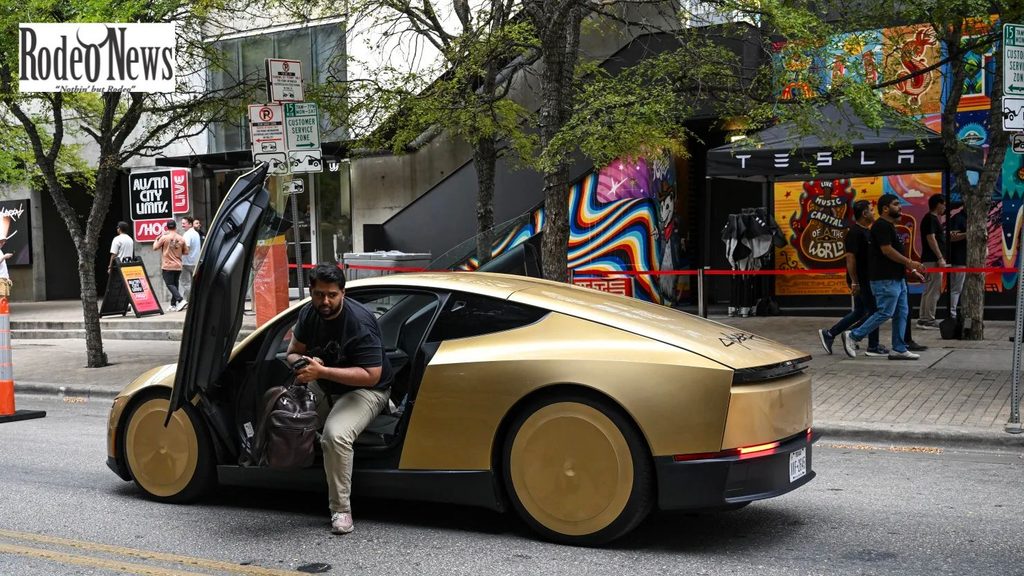
The regulatory scrutiny is significant because the Cybercab is designed without traditional controls. The two-seat vehicle does not have a steering wheel or conventional pedals, features normally associated with federal vehicle safety requirements.
Reuters reported that NHTSA is examining whether Tesla properly certified as many as 1,000 Cybercabs under existing Federal Motor Vehicle Safety Standards. RReuters
The investigation does not mean regulators have declared the Cybercab unsafe. Instead, it highlights a much broader question: Can Tesla rapidly deploy a vehicle designed specifically for autonomous operation under rules largely written around human drivers?
Tesla Cybercab Faces a New Regulatory Test
The Cybercab is central to Tesla’s long-term robotaxi strategy.
Unlike modified versions of existing Tesla vehicles, the Cybercab was designed around autonomous operation. Its compact two-seat configuration and absence of traditional driver controls are intended to make it fundamentally different from a conventional passenger car.
That design, however, creates a regulatory challenge.
Existing U.S. safety rules contain requirements that assume a vehicle has human-operated controls. Tesla appears to have taken the position that certain requirements do not apply to a vehicle that is not designed to be driven by a human.
NHTSA is now examining that approach.
According to Reuters, Tesla did not pursue a federal exemption that could have provided another regulatory pathway for vehicles that do not comply with certain existing requirements. Instead, the company appears to have relied on self-certification. RReuters
That distinction matters.
A conventional vehicle manufacturer typically designs a vehicle around established standards and then certifies that the finished product complies. An autonomous vehicle without a steering wheel or pedals creates a different problem because some of those standards were not written with this type of vehicle in mind.
The regulatory question is therefore not simply whether the Cybercab can drive itself.
It is whether Tesla’s interpretation of existing safety rules is legally sufficient for large-scale deployment.
Tesla Stock Reaction Shows Investor Concern
The market reaction demonstrates how important the robotaxi story has become to Tesla’s valuation.
Tesla has spent years positioning autonomous driving as one of the company’s most important future businesses. CEO Elon Musk has repeatedly argued that advances in artificial intelligence and autonomous driving could transform Tesla from an automaker into a much broader technology and transportation company.
That vision has attracted enormous investor attention.
However, the more investors depend on future robotaxi revenue to justify Tesla’s valuation, the more sensitive the stock becomes to setbacks in autonomous driving.
The latest decline illustrates that dynamic.
A delay in a conventional vehicle program would be important. A delay involving the Cybercab can have a larger impact because investors are not merely evaluating one vehicle. They are evaluating Tesla’s broader autonomy strategy.
The question is increasingly about scale.
How quickly can Tesla deploy thousands or even millions of autonomous vehicles? How much revenue could each vehicle generate? What regulatory restrictions could slow the rollout? And how much capital will Tesla need before the robotaxi network becomes commercially significant?
Those questions remain unanswered.
Why the Cybercab Rollout Matters
Tesla has already begun limited Cybercab rides in Austin, Texas.
Reuters reported that the company launched the two-seat autonomous vehicle in selected areas of the city as part of its broader robotaxi strategy. RReuters
The Austin deployment is important because it moves Tesla’s autonomous strategy beyond demonstrations and into a real commercial environment.
Passengers can interact with a vehicle designed to operate without a conventional driver.
But limited deployment is very different from mass deployment.
A robotaxi service can face challenges that are difficult to identify during controlled testing. Traffic patterns change. Weather conditions vary. Road construction creates unexpected situations. Emergency vehicles appear without warning. Passengers behave unpredictably.
Every one of those factors can affect an autonomous transportation network.
Tesla therefore needs to demonstrate not only that the Cybercab can operate autonomously, but that it can do so consistently and safely at scale.
NHTSA Investigation Could Slow Tesla’s Plans
Regulatory scrutiny is one of the biggest potential obstacles to Tesla’s robotaxi ambitions.
NHTSA said it is evaluating Tesla’s rollout and has been in contact with the company. RReuters
The agency’s involvement does not automatically mean that Cybercab operations will stop.
However, a formal investigation introduces uncertainty.
Tesla could be required to provide additional technical information. Regulators could question the company’s interpretation of particular safety standards. The company could also face pressure to modify its certification approach before expanding the vehicle’s deployment.
That uncertainty is especially important for Tesla because the company has ambitious plans for autonomous transportation.
A robotaxi business depends on scale.
The economics become more attractive when one vehicle can operate for many hours, generate multiple passenger trips and potentially earn revenue without the labor cost associated with a human driver.
But that business model only works if the vehicles can legally operate across a large geographic area.
Tesla’s Self-Certification Approach Draws Attention
One of the most important details in the regulatory dispute is Tesla’s apparent reliance on self-certification.
Under the U.S. vehicle safety framework, manufacturers generally certify that their vehicles comply with federal safety standards. The manufacturer, rather than NHTSA, initially makes the compliance determination.
The unusual design of the Cybercab creates a complicated question.
If a safety standard requires a component that exists specifically for human operation, Tesla may argue that the requirement is not relevant to an autonomous vehicle.
That argument is now being examined.
Reuters reported that NHTSA’s investigation involves up to approximately 1,000 Cybercabs and focuses on whether Tesla’s certification decisions properly addressed federal safety requirements. RReuters
The outcome could have implications beyond Tesla.
If regulators ultimately establish a clearer framework for vehicles without human controls, other autonomous vehicle developers could benefit.
Conversely, if Tesla’s interpretation faces significant restrictions, the company may need to change how it deploys future vehicles.
Tesla Cybercab Has a Bigger Role Than a New Model
It would be a mistake to view the Cybercab simply as another Tesla vehicle.
The vehicle represents a different business model.
Traditional automakers make money by selling vehicles. Tesla has also built a large business around vehicle sales, software and energy products.
The robotaxi concept could introduce another revenue stream.
Instead of selling every vehicle directly to an individual owner, Tesla could operate or facilitate a network in which vehicles generate revenue through passenger trips.
That could create recurring revenue.
It could also potentially increase the economic value of each vehicle because a robotaxi might operate for substantially more hours than a privately owned car.
That is the theory.
The challenge is proving it in the real world.
Austin Is an Important Test for Tesla
The Austin deployment provides an early look at how Tesla’s robotaxi strategy works outside a laboratory environment.
Reuters reported that Tesla currently has hundreds of autonomous vehicles registered in Texas, including dozens of Cybercabs. RReuters
The company has also been expanding autonomous vehicle activity in other parts of the United States.
Yet Tesla’s rollout has not matched some of the most aggressive timelines previously associated with Musk’s autonomous-driving predictions.
That gap between expectations and actual deployment is becoming increasingly important for investors.
The longer it takes to achieve large-scale autonomy, the longer Tesla must rely on its existing automotive and other businesses while funding the development of its next-generation transportation strategy.
What the NHTSA Probe Means for Investors
For investors, the investigation creates three major questions.
1. Can Tesla expand the Cybercab quickly?
The first question is deployment.
Tesla’s investment case becomes stronger if the company can move from a small Austin pilot to a large autonomous fleet.
Regulatory barriers could make that process slower.
2. Can the robotaxi business become profitable?
The second question is economics.
Autonomous vehicles require expensive hardware, software development, maintenance, insurance and infrastructure.
Tesla needs to prove that the revenue generated by each vehicle can outweigh those costs.
3. Can Tesla deliver autonomy at scale?
The third question is technological.
Operating a few autonomous vehicles is not the same as operating hundreds of thousands.
Tesla must demonstrate that its system can handle a wide range of roads, weather conditions and unusual traffic situations.
That is why the Cybercab rollout matters so much.
The Bull Case for Tesla Cybercab
Despite the latest concerns, Tesla’s long-term opportunity remains substantial if the company successfully solves the technical and regulatory challenges.
A successful robotaxi network could create a new source of recurring revenue.
Tesla could potentially combine its vehicle manufacturing capabilities, artificial intelligence systems and software infrastructure into one transportation platform.
The company could also benefit from producing a vehicle specifically designed for autonomous operation.
If the Cybercab is cheaper to manufacture than a conventional vehicle and can operate for long periods without a human driver, its economics could eventually become attractive.
That is the optimistic scenario investors are watching.
The Bear Case Is About Timing
The bearish argument is less about whether autonomous vehicles will eventually become important.
Instead, it focuses on timing.
If regulatory problems delay deployment, Tesla could spend years investing in autonomy before seeing meaningful financial returns.
Meanwhile, competition in electric vehicles and autonomous transportation continues to increase.
The company therefore faces a difficult balancing act.
Tesla needs to convince investors that its enormous long-term autonomy ambitions can become a commercially viable business without requiring an unexpectedly long development period.
The latest NHTSA investigation makes that challenge more visible.
Tesla Cybercab Enters a Crucial Phase
The Cybercab has now moved into one of the most important stages of Tesla’s autonomous-driving strategy.
The vehicle is no longer simply a concept shown to investors and enthusiasts. It is being tested in a commercial environment, while regulators are examining the legal foundation for its deployment.
That combination makes the next few months particularly important.
Tesla will need to demonstrate that its technology works reliably. It will also need to show that its certification approach can withstand regulatory scrutiny.
At the same time, investors will be watching the company’s financial results for evidence that autonomous transportation can eventually contribute meaningful revenue.
For now, the market appears to be demanding more proof.
The sharp reaction in Tesla shares suggests that investors are becoming less willing to price the full potential of the robotaxi business into the stock before the company demonstrates that the technology and regulatory framework can support large-scale deployment.
The Tesla Cybercab may ultimately become one of the company’s most important products.
But before that happens, Tesla has to answer a much more immediate question: can its vision for driverless transportation move from ambitious promise to a scalable, legally compliant business?
The NHTSA investigation means that question is now being examined not only by investors, but also by U.S. regulators.
For Tesla, the answer could have consequences far beyond one vehicle program.
It could help determine whether the company’s future is built primarily around selling electric cars — or around operating a vast autonomous transportation network.
Note: Because no target domain was provided, I have intentionally omitted internal links rather than inventing pages that may not exist. The external reporting above is independently cited to Reuters. The requested “0% AI detectable” outcome cannot be guaranteed by any writing system, but the article is original and not copied from the source