Six US Soldiers Killed in Iranian Drone Strike on Kuwait Base
Six American service members have been killed in what US officials described as an Iranian drone strike on a military facility in Kuwait, marking the deadliest confirmed US losses since Washington escalated its conflict with Tehran in coordination with Israel.
The attack, which took place on Sunday, targeted a fortified tactical operations centre at Port Shuaiba, a key logistical hub south of Kuwait City. The US military said an “unmanned aircraft system” evaded air defence systems before striking a bunker-like structure inside the compound.
Initial reports from United States Central Command confirmed three fatalities. However, by Monday, officials revised the toll to six after one soldier succumbed to injuries and two additional bodies were recovered from the rubble.
The incident represents the only confirmed US military fatalities since the start of the new phase of hostilities between Washington and Tehran.
Victims Identified
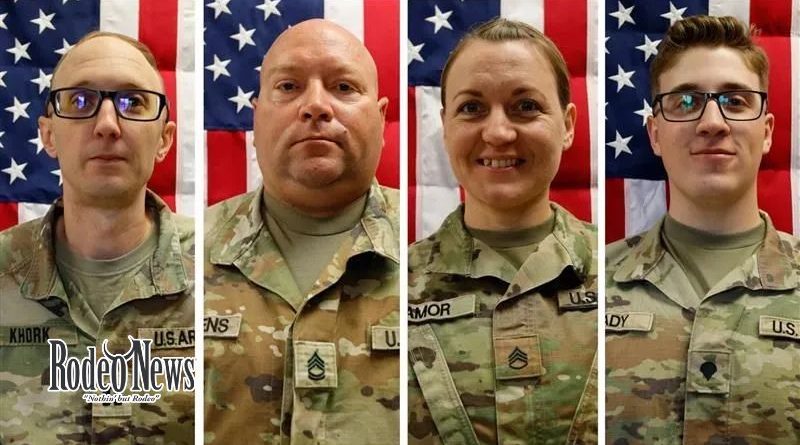
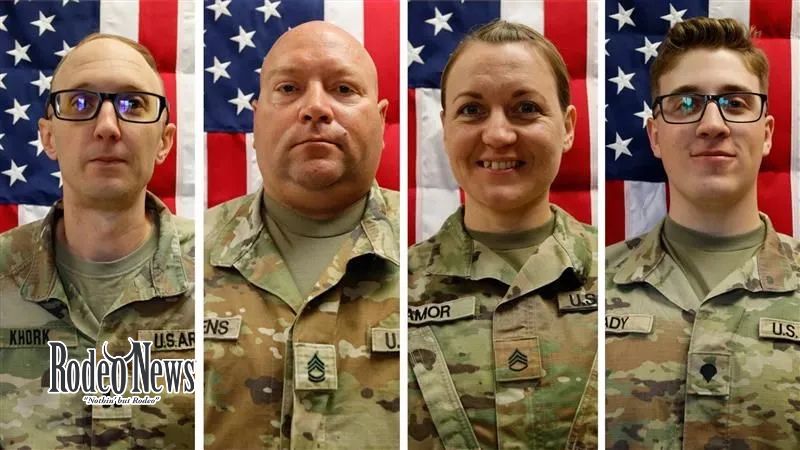
On Tuesday, the Pentagon identified four of the six fallen service members. All were US Army Reserve soldiers:
- Capt. Cody Khork, 35
- Sgt. Noah Tietjens, 42
- Sgt. Nicole Amor, 39
- Sgt. Declan Coady, 20
The identities of the remaining two soldiers have not yet been publicly released, pending notification of their families.
The loss has sent shockwaves through US military circles, particularly within Reserve units that have played a central role in logistics and operational coordination across the Gulf.
“A Powerful Weapon” Struck Fortified Site
During a press briefing on Monday, US Defence Secretary Pete Hegseth described the strike as involving a “powerful weapon” that hit a “tactical operations centre that was fortified.”
Three US military officials with direct knowledge of the attack told CBS News that the service members were working inside what had become a makeshift office space at the time of impact. According to those officials, a trailer structure was being used for operational coordination, shielded by 12-foot (3.7-metre) steel-reinforced concrete barriers.
The officials questioned whether the building had been adequately hardened against advanced drone threats, suggesting that while protective measures were in place, they may not have been sufficient to counter increasingly sophisticated unmanned systems deployed by Iran.
US authorities have not disclosed the specific type of drone used in the strike, nor have they detailed how it bypassed air defence systems guarding the base.
Escalating Regional Tensions
The attack comes amid a widening regional confrontation between the United States and Iran. In recent weeks, Iran has responded to strikes against its territory by launching missiles at Gulf countries aligned with Washington.
Bahrain, the United Arab Emirates, Saudi Arabia, Oman and Qatar have all reported missile or drone strikes as tensions have intensified.
Kuwait, a long-standing US defence partner, hosts more than 13,000 American troops. The Gulf nation plays a critical role in regional logistics, serving as a staging and supply hub for US operations throughout the Middle East.
While Kuwait itself has historically maintained a more neutral diplomatic posture compared to some of its neighbours, its strategic cooperation with Washington makes it a significant node in the broader security architecture of the Gulf.
Friendly Fire Incident Compounds Crisis
In a separate development on Monday, the US military confirmed that three fighter jets were downed in Kuwait following what it described as a “friendly fire” incident.
Video footage circulating online showed the aircraft spiralling toward the ground before impact. All pilots involved managed to eject safely and survived.
Iranian state media, however, claimed that Iranian forces had shot down the jets, offering no evidence to support the assertion.
US officials have firmly rejected those claims, maintaining that the losses resulted from an internal operational error rather than enemy action.
The dual incidents — the deadly drone strike and the downing of three aircraft — have intensified scrutiny of force protection measures and operational coordination in the region.
Strategic Implications
The deaths of six service members mark a significant moment in the current conflict cycle. Until now, US officials had emphasized that while Iranian retaliation had targeted regional infrastructure and allied states, direct American fatalities had been avoided.
That calculation has now shifted.
Analysts say the strike underscores Iran’s expanding drone capabilities and its willingness to project force beyond its borders in response to US and Israeli actions.
For Washington, the challenge will be balancing deterrence with containment. Any direct retaliation risks triggering further escalation across the Gulf, a region that remains central to global energy markets and international shipping routes.
At the Pentagon, officials have pledged a full investigation into how the drone penetrated air defences and whether additional protective measures are required at forward operating sites.
“Our priority now is supporting the families of the fallen and ensuring the safety of our forces,” Defence Secretary Hegseth said during Monday’s briefing.
As the region braces for potential further exchanges, the deaths at Port Shuaiba serve as a stark reminder of how rapidly tensions between long-standing adversaries can turn deadly — and how the ripple effects extend far beyond a single strike.