ALS Brain Implant Breakthrough Revealed: 1 Man Speaks Again
A groundbreaking ALS brain implant has restored the ability to communicate for a man who had lost his voice to a devastating neurodegenerative disease. The development marks a major leap in medical technology, blending neuroscience, artificial intelligence, and human resilience into a powerful story of innovation and hope.
The case centers on a patient diagnosed with amyotrophic lateral sclerosis (ALS), a condition that progressively destroys nerve cells responsible for muscle movement. Over time, ALS robs individuals of their ability to speak, move, and eventually breathe. However, thanks to a cutting-edge brain-computer interface (BCI), one man has regained the ability to “speak” again—using only his thoughts.
What Is an ALS Brain Implant?
An ALS brain implant is part of a broader category of devices known as brain-computer interfaces. These systems are designed to read neural activity directly from the brain and translate it into commands that can control external devices or generate speech.
In this case, researchers implanted tiny electrodes into the region of the brain responsible for speech. These electrodes capture electrical signals produced when the patient attempts to form words—even if their body can no longer physically do so.
The signals are then processed using artificial intelligence, which decodes the intended speech and converts it into audible language through a synthesized voice.
This technology builds on decades of research aiming to restore communication for people with paralysis or severe neurological conditions.
A Personal Story of Loss and Recovery
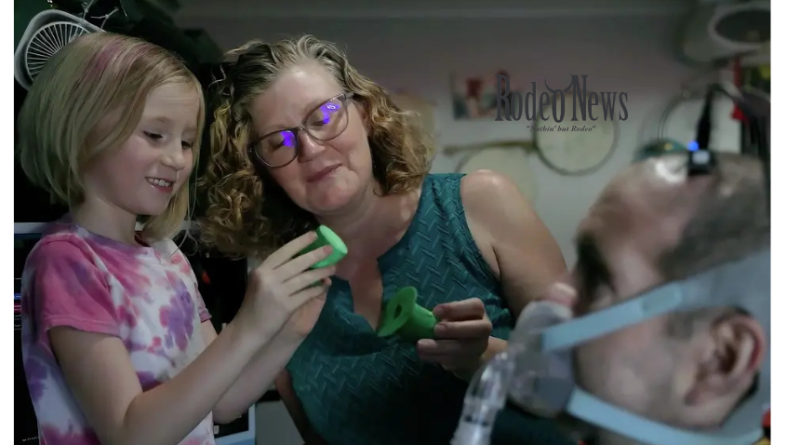
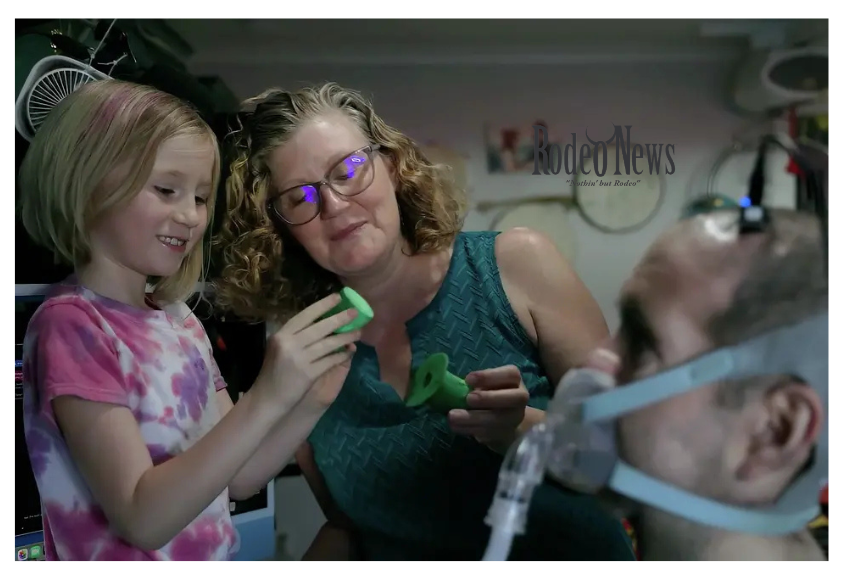
The patient at the center of this breakthrough is a 45-year-old man who was diagnosed with ALS several years ago. As the disease progressed, it gradually stripped him of his independence—first affecting his mobility, then his ability to speak.
Eventually, he could no longer communicate with his young daughter, creating an emotional barrier that was as devastating as the physical limitations of the disease.
That changed when he enrolled in an experimental clinical trial involving an ALS brain implant.
After undergoing a complex surgical procedure, the implant was successfully placed in his brain. Recovery was challenging, but once the system was activated, something remarkable happened: he began forming words again—using only his thoughts.
Though the speech output is generated through a computer, it is modeled on recordings of his real voice from before the disease took hold. This means his daughter doesn’t just hear words—she hears her father again.
How the Technology Works
The ALS brain implant used in this case is part of an advanced research initiative known as BrainGate, a long-running project focused on developing neural interfaces for people with paralysis.
Here’s how the system functions:
1. Neural Signal Capture
Tiny electrode arrays are implanted into the brain’s speech centers. These electrodes detect patterns of neural activity associated with speech.
2. Signal Processing
The captured signals are transmitted to a computer, where machine learning algorithms analyze and decode them.
3. Speech Generation
The decoded signals are converted into text or spoken words using voice synthesis technology.
4. Voice Personalization
In this case, the system uses pre-recorded samples of the patient’s voice to create a personalized, realistic output.
This combination allows the patient to communicate in a way that feels natural and emotionally meaningful.
Why This Breakthrough Matters
The implications of this ALS brain implant go far beyond a single patient. For decades, scientists have struggled to develop reliable ways to restore speech for people who are “locked in” due to neurological conditions.
Recent advancements have accelerated progress dramatically.
Researchers have demonstrated that brain-computer interfaces can now reproduce not only words but also elements of natural speech, such as tone and pitch.
This means future systems could enable users to express emotion, ask questions, or emphasize certain words—bringing communication closer to normal human interaction.
For ALS patients, this could transform quality of life in profound ways:
- Restoring communication with family
- Reducing social isolation
- Enabling independence in daily activities
- Improving mental health and emotional well-being
The Role of Artificial Intelligence
Artificial intelligence is at the heart of this innovation. Without AI, interpreting complex brain signals in real time would be nearly impossible.
Modern machine learning models can analyze vast amounts of neural data and identify patterns associated with specific words or sounds. Over time, these systems improve, becoming faster and more accurate.
In this case, AI enables the system to convert thoughts into speech at a usable pace—though it is still slower than natural conversation.
Researchers are optimistic that continued improvements will lead to near real-time communication in the future.
Ethical and Social Concerns
While the ALS brain implant represents a major technological achievement, it also raises important ethical questions.
The patient himself has expressed concerns about the potential misuse of such technology, particularly in areas like:
- Data privacy
- Surveillance
- Commercial exploitation of neural data
As brain-computer interfaces become more advanced, ensuring that users retain control over their thoughts and data will be critical.
There are also questions about accessibility. Currently, these systems are expensive and experimental, meaning they are not widely available to most patients.
Challenges Ahead
Despite its promise, the ALS brain implant is not yet a mainstream solution.
Several challenges remain:
Limited Availability
The technology is still in clinical trial stages and is only accessible to a small number of participants.
Surgical Risks
Implanting electrodes in the brain is a complex procedure that carries inherent risks.
Speed and Accuracy
While impressive, the system is still slower than natural speech and requires training.
Cost
Development and implementation costs are high, limiting widespread adoption.
However, researchers believe these obstacles can be overcome with continued investment and innovation.
A Glimpse Into the Future
The success of this ALS brain implant signals a turning point in how we approach neurological diseases.
Scientists envision a future where:
- Brain implants are minimally invasive
- Communication is instantaneous
- Devices are widely available and affordable
- Patients regain not just speech, but full digital interaction
Some companies and research institutions are already pushing the boundaries of what’s possible, exploring applications that go beyond communication—such as controlling prosthetic limbs or interacting with computers directly through thought.
The Human Impact
Beyond the science and technology, the most powerful aspect of this story is deeply human.
For the patient and his family, the ALS brain implant has restored something that once seemed lost forever: connection.
Being able to speak to his daughter again—even through a computer-generated voice—represents a profound emotional breakthrough.
It’s a reminder that innovation is not just about advancing technology, but about improving lives.
Conclusion
The ALS brain implant breakthrough represents one of the most promising developments in modern medicine. By enabling a man to speak again using only his thoughts, it demonstrates the incredible potential of combining neuroscience and artificial intelligence.
While challenges remain, the progress achieved so far offers hope to millions of people living with ALS and other conditions that impair communication.
As research continues, this technology could redefine what it means to lose—and regain—your voice.