Andy Williams Death: Shocking Loss at 48
The Andy Williams death has sent shock waves through both the music and professional wrestling communities. Williams, the founding rhythm guitarist of influential metalcore band Every Time I Die and professional wrestler known as “The Butcher,” has died at 48.
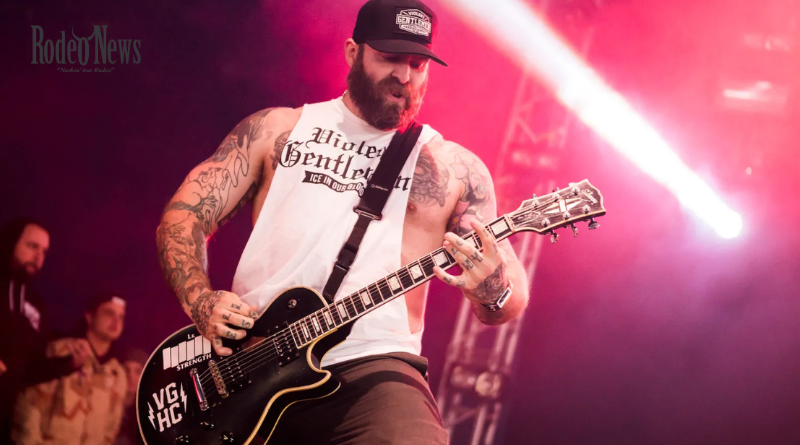
Williams died Saturday, Sept. 5, 2026, after collapsing following a tag-team match at an Enjoy Wrestling event in Millvale, Pennsylvania. According to reports, medical personnel at the venue immediately responded and performed CPR before an ambulance arrived. The Allegheny County Medical Examiner’s Office later confirmed his death. A cause of death was not immediately announced.
His death marks a devastating loss for two very different but closely connected worlds. For more than two decades, Williams helped shape Every Time I Die’s distinctive sound. Later, he built a second career in professional wrestling, eventually becoming one of the most recognizable crossover figures between heavy music and the wrestling industry.
Read the original Rolling Stone report
Andy Williams death follows final wrestling match
Williams’ death came shortly after what became his final professional wrestling match.
He was competing with longtime tag-team partner Jesse “The Blade” Guilmette at an Enjoy Wrestling event at Mr. Smalls Theatre in Millvale. Williams collapsed near the end of the match, prompting the medical team to intervene immediately.
Enjoy Wrestling said doctors on staff treated Williams and administered CPR while waiting for emergency responders. The event was subsequently stopped following the medical emergency.
The sudden nature of the incident made the news particularly difficult for fans and colleagues to process. Williams remained active in both music and wrestling, and his death came at a time when he was still involved in creative projects outside the ring.
The news was confirmed publicly on Sunday, with All Elite Wrestling also issuing a statement mourning the wrestler and musician.
Every Time I Die guitarist leaves a lasting legacy
Long before he became known as The Butcher, Williams was a central figure in Every Time I Die.
The Buffalo, New York, band was formed in 1998, with Williams serving as its founding rhythm guitarist. Over the course of the group’s 24-year career, he appeared on all nine of Every Time I Die’s studio albums.
That catalog included the band’s final studio album, Radical, released in 2021. The record became a major late-career statement for the group and reinforced Every Time I Die’s reputation as one of metalcore’s most influential and inventive bands.
Williams’ guitar work helped give the band its heavy, chaotic and groove-driven character. While frontman Keith Buckley often commanded attention onstage, the instrumental foundation created by Williams and his bandmates was essential to Every Time I Die’s identity.
The band eventually broke up in 2022 following internal tensions. Even after the split, however, Williams remained closely connected to the heavy music community.
His contribution to Every Time I Die represents one of the most important parts of his artistic legacy.
Andy Williams brought music into professional wrestling
Williams’ second career was almost as unexpected as it was successful.
While still active with Every Time I Die, he began pursuing professional wrestling. He trained and competed on the independent circuit before eventually reaching one of the biggest wrestling promotions in the United States.
Williams adopted the ring name The Butcher and became a regular tag-team partner of Jesse Guilmette, better known as The Blade.
The duo eventually joined All Elite Wrestling, where they debuted in 2019. Their partnership became one of Williams’ defining identities during the second half of his career.
AEW’s official tribute to Andy Williams
AEW described Williams as a “trailblazing musician” who successfully transitioned into professional wrestling. The company also emphasized the respect he earned from people both inside and outside the ring.
Williams remained associated with AEW for approximately seven years, including time connected with its sister promotion Ring of Honor. That run concluded in June 2026, according to Rolling Stone.
The Butcher became Andy Williams’ second identity
For wrestling fans, it became increasingly difficult to separate Williams the musician from The Butcher.
His imposing presence and physical wrestling style made the character immediately recognizable. He frequently appeared alongside The Blade, with their partnership becoming a familiar part of AEW’s tag-team landscape.
AEW’s archives show The Butcher competing against and alongside many prominent names during his run with the promotion. His matches included appearances against wrestlers such as Darby Allin, Cody Rhodes, Mark Briscoe and others.
That wrestling career was remarkable because Williams did not abandon music when he entered the ring. Instead, he developed a second professional identity while remaining connected to the creative community that had helped establish his reputation.
Few musicians have successfully made that transition at such a high level.
Andy Williams was still making music
The Andy Williams death is especially painful for fans because his musical career had not simply ended with Every Time I Die.
After the band’s breakup, Williams became involved with Atomic Rule, a project that included former members of The Acacia Strain. The group released its three-song EP With Skull-Crushing Force in 2025.
Williams was also still working on new material shortly before his death.
According to reports, he posted about Atomic Rule’s progress just hours before his passing, telling fans that the group had written and recorded new demos. The band had also been scheduled to perform shows with GWAR in November.
That detail has added another painful layer to the reaction surrounding his death. Williams was not simply looking back at his musical career. He was actively creating new work.
His final public connection with Atomic Rule therefore serves as a reminder that his artistic life was still developing.
Music and wrestling communities mourn Andy Williams
Tributes quickly spread across both communities following news of Williams’ death.
Wrestlers and musicians remembered him not only for his talent but also for his personality. Fellow performers described Williams as kind, funny and deeply supportive of his friends and colleagues.
His AEW colleagues were among those paying tribute. Matt Hardy remembered Williams as a talented musician and wrestler, while other wrestlers and musicians also expressed their grief publicly.
Musicians from the heavy music world also reflected on their experiences with Williams.
That response illustrates the unusual reach of his career. Williams was not simply someone who briefly crossed between music and wrestling. He established meaningful relationships in both industries.
For fans, that made him difficult to categorize — and impossible to forget.
A career that crossed two worlds
The story of Andy Williams is ultimately about more than one band or one wrestling character.
He represented a rare bridge between hardcore and metal culture and professional wrestling. Those communities have shared audiences for decades, but Williams lived at the intersection of both.
His background in heavy music informed his wrestling persona, while his experience as a performer helped shape the confidence he brought into the ring.
Williams once compared wrestling with writing a song, explaining that he eventually began to understand wrestling in terms of structure, including elements resembling an introduction, chorus and ending.
That perspective helps explain why the transition worked so naturally for him.
Both music and wrestling rely heavily on timing, performance and audience connection. Williams understood those similarities and turned them into a second career.
Andy Williams’ impact on Every Time I Die
Every Time I Die left a major mark on modern metalcore, and Williams was there from the beginning.
The band’s music combined aggressive hardcore energy with Southern-rock influences, unusual structures and a willingness to experiment. Williams remained a constant member throughout the band’s entire recording career.
His nine-album discography with the group spans more than two decades of changes in heavy music.
For longtime fans, that longevity is an important part of his legacy.
Williams was not a replacement guitarist who appeared during the band’s later years. He was one of the musicians who helped build its sound from the ground up.
That makes his passing particularly significant for fans who followed Every Time I Die from its earliest releases through Radical.
The legacy of Andy Williams
The most fitting way to remember Williams may be through the two careers he built.
As a guitarist, he helped create music that influenced generations of metalcore listeners. As The Butcher, he proved that a musician could successfully step into professional wrestling and establish a genuine second identity.
His career was unusual, energetic and relentlessly creative.
The Andy Williams death therefore represents a loss that extends far beyond one industry. Metal fans have lost a founding member of a highly influential band. Wrestling fans have lost a distinctive performer. Friends and colleagues have lost someone they repeatedly described as funny, generous and supportive.
Williams was 48.
His career may have taken him from Buffalo rehearsal rooms to major stages and eventually to professional wrestling arenas, but the common thread remained performance. He built a life around creating experiences for other people — first through music, then through wrestling, and finally through both at once.
As tributes continue to emerge, Andy Williams’ legacy is likely to remain strongest in the communities he connected.
He was a guitarist.
He was The Butcher.
And for fans of Every Time I Die and professional wrestling, he was one of a kind.