
Starbucks Store Closures Will Affect About 250 Coffeehouses
Starbucks store closures are set to accelerate the coffee giant’s ongoing turnaround strategy, with approximately 250 coffeehouses across North America scheduled to close later this week.
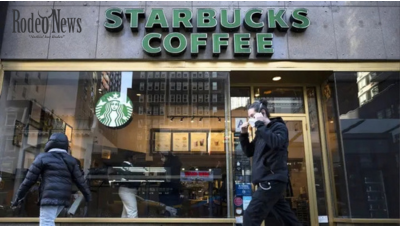
Starbucks announced the decision on September 24, 2026, saying the affected locations were identified during a detailed review of its North American coffeehouse portfolio. The company said the closures involve locations where it does not believe it can consistently provide the experience expected by customers and employees, or where there is no clear path to acceptable financial performance.
The announcement represents roughly 1% of Starbucks’ more than 18,000 North American coffeehouses. While the number is significant, Starbucks emphasized that the majority of its locations continue to perform well and that the company remains committed to expanding its North American store base over the long term.
The latest Starbucks store closures are part of CEO Brian Niccol’s broader “Back to Starbucks” strategy, an effort focused on improving the customer experience, strengthening store operations and rebuilding the company’s traditional coffeehouse identity.
Why Starbucks Is Closing 250 Stores
Starbucks Chief Operating Officer Mike Grams announced the closures in a message to employees Thursday.
According to Grams, the company conducted a comprehensive review of its North American coffeehouse portfolio. That process identified locations that were struggling to deliver the type of customer and employee experience Starbucks wants to provide.
The company also considered financial performance.
Starbucks said some coffeehouses continue to underperform despite efforts by employees and management. Rather than continuing to operate those locations without a sustainable financial path, the company decided to close them.
“Closing any coffeehouse is a difficult decision,” Grams said in the company announcement, acknowledging that the decision will affect employees, customers and communities.
The closures are therefore being presented by Starbucks as part of portfolio management rather than a retreat from North America.
The company said it routinely opens and closes locations as part of managing its store network. At the same time, Starbucks said it continues to see substantial long-term growth opportunities in North America and is developing a pipeline of new coffeehouses.
Starbucks Store Closures Come as the Company Changes Its Strategy
The latest Starbucks store closures come nearly two years after Brian Niccol began leading the company’s turnaround effort.
Niccol’s “Back to Starbucks” strategy has sought to restore some of the characteristics that historically defined the brand: welcoming coffeehouses, stronger connections between baristas and customers, improved service and spaces where people can spend time rather than simply pick up an order.
Starbucks has also been investing heavily in remodeling existing stores.
The company said Wednesday that more than 1,000 coffeehouses across the United States and Canada have received redesigns since late 2025. Starbucks plans to complete at least 1,500 coffeehouse “uplifts” by the end of fiscal 2026, with additional work planned for fiscal 2027.
The redesigned locations feature softer seating, artwork, greenery, warmer materials and local design elements. Starbucks says the goal is to make its stores feel more comfortable and welcoming while encouraging customers to stay longer.
Other changes include expanded power outlets, condiment bars, ceramic cups and glassware for customers who choose to stay in the coffeehouse, and the company’s Green Apron Service initiative.
The contrast is notable: while Starbucks is closing hundreds of locations, it is simultaneously investing in thousands of others.
Starbucks Says North America Is Still a Growth Market
Starbucks does not describe the latest closures as a broad withdrawal from the North American market.
In its September 24 announcement, the company said its North American business had returned to strong growth and that the improved performance was providing a clearer picture of which individual coffeehouses were succeeding and which were continuing to struggle.
That distinction is important for understanding the Starbucks store closures.
The company is not announcing that it plans to abandon a particular region or dramatically shrink its entire North American footprint. Instead, Starbucks says it is attempting to make its store portfolio more productive by removing locations that do not meet its operating and financial expectations while continuing to invest in other stores.
Starbucks’ second-quarter fiscal 2026 results also showed the scale of its North American operation. The company reported 18,385 stores in the North America segment at the end of the quarter, compared with 18,627 a year earlier. Starbucks said seven stores were closed during the quarter as part of its “Back to Starbucks” restructuring plan.
The newly announced closures would represent a much larger single wave than those seven locations, although Starbucks continues to describe the broader portfolio as a long-term growth opportunity.
What Will Happen to Starbucks Employees?
The closures will also affect Starbucks employees, whom the company refers to as “partners.”
Starbucks said it is communicating directly with workers at the affected coffeehouses. The company plans to offer transfers to other Starbucks locations whenever possible.
For employees who cannot be placed in another coffeehouse, Starbucks said it will provide severance support.
The approach reflects a broader emphasis Starbucks has placed on staffing and employee support during the turnaround.
The company has argued that better staffing levels can improve service times and create a better experience for customers and workers. At the same time, the closures show the financial limits of maintaining every location in a large retail network.
For employees, the practical impact will depend heavily on whether a nearby Starbucks has available positions and whether a transfer is feasible.
Starbucks Is Closing Some Stores While Remodeling Others
One of the most important elements of the current strategy is the difference between closing a coffeehouse and transforming an existing one.
Starbucks has been spending money to upgrade thousands of locations. The company says its redesigned stores are intended to provide warmer interiors, more comfortable seating and stronger connections with surrounding communities.
The company recently highlighted remodeled stores in cities including Atlanta, Austin, Dallas, Houston, Miami, Nashville, Orlando, Seattle and Washington, D.C. Starbucks is also working on upgrades in Canadian cities such as Toronto, Vancouver and Calgary.
This means Starbucks is effectively pursuing two strategies at once.
Some locations are being closed because they do not meet the company’s financial or operational expectations. Other locations are receiving significant investment because Starbucks believes they can perform better with improved layouts, staffing and customer service.
That approach is central to the company’s broader turnaround effort.
The Bigger Picture Behind Starbucks Store Closures
The latest Starbucks store closures follow a period of major changes at the company.
Starbucks has spent the past two years attempting to address concerns about customer traffic, service speed, store design and operational complexity. The company has also been simplifying parts of its business while increasing its focus on the in-store experience.
Reuters reported earlier this month that Niccol’s turnaround had helped Starbucks reverse a prolonged period of declining comparable sales, although the company still faced pressure to translate improved customer traffic into stronger margins.
That challenge helps explain why store-level financial performance remains important.
A coffeehouse can have strong brand recognition and still face difficulties if its sales do not justify rent, labor, utilities and other operating expenses. For a company with more than 18,000 North American locations, even a relatively small percentage of underperforming stores can represent a meaningful financial burden.
At the same time, closing stores can create its own challenges, particularly when those locations have loyal customers or serve as gathering places within local communities.
What Customers Should Expect
Customers affected by the closures will be directed toward nearby Starbucks locations, according to the company.
Starbucks said it wants customers to be able to continue their routines and connections by using other nearby coffeehouses.
The company has not indicated in the announcement that all 250 closures will occur in a single geographic region. Instead, the closures are part of the broader North American portfolio review.
For customers, the most noticeable effect will likely be the loss of individual neighborhood locations rather than a major reduction in Starbucks’ overall presence.
The company also continues to open and develop new coffeehouses. Starbucks said it is actively building a pipeline of new locations even as the closures move forward.
What Comes Next for Starbucks
The next phase of Starbucks’ turnaround will test whether the company can successfully balance growth with financial discipline.
On one side, Starbucks is investing in redesigned stores, staffing, service improvements and new coffeehouse concepts. On the other, it is eliminating locations that management believes cannot deliver the expected customer experience or financial results.
The company’s September announcement makes clear that the 250 closures are intended to support its broader “Back to Starbucks” strategy rather than replace it.
Starbucks says its goal is to make every remaining coffeehouse a place customers enjoy visiting and employees are proud to work.
Whether that strategy can produce sustained financial improvement will depend on how successfully the company converts its investments in customer experience into stronger sales and profitability.
For now, the immediate development is clear: approximately 250 Starbucks coffeehouses across North America are scheduled to close later this week, affecting customers, employees and communities across the company’s extensive retail network.
The move marks another significant step in Starbucks’ ongoing transformation under Brian Niccol, as the coffee chain reshapes its store portfolio while continuing to invest in locations it believes have stronger long-term potential.