
US Jobs Report Revealed: 115K Jobs Added in April
The latest US jobs report delivered an unexpected boost to confidence in the American economy after employers added 115,000 jobs in April 2026. The unemployment rate remained unchanged at 4.3%, offering another sign that the labor market continues to show resilience despite mounting geopolitical and economic pressures.
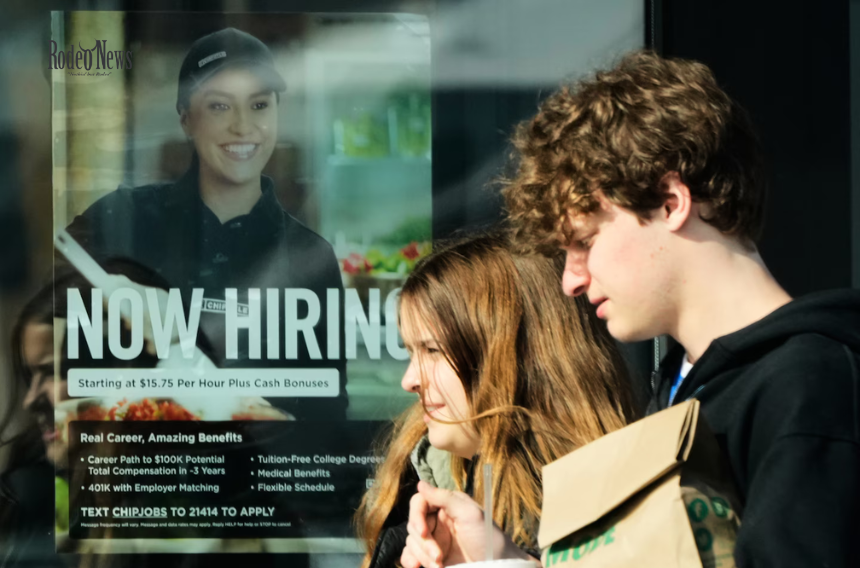
Economists had expected significantly weaker hiring numbers amid rising fuel prices, ongoing global tensions, and concerns surrounding inflation. Instead, the April employment figures exceeded expectations and eased fears of an immediate labor market slowdown.
The stronger-than-expected report is likely to influence upcoming Federal Reserve decisions on interest rates while also shaping investor sentiment heading deeper into 2026.
April Hiring Beats Expectations
According to the Labor Department, nonfarm payrolls increased by 115,000 jobs during April. Analysts surveyed before the release had forecast gains closer to 60,000–70,000 jobs, making the latest figure a positive surprise for financial markets.
March job growth was also revised upward to approximately 185,000 jobs, reinforcing the narrative that the labor market remains stable despite widespread uncertainty.
The April gains may not represent explosive economic growth, but they indicate that employers are still hiring at a healthy pace. That stability is especially notable given concerns over slowing consumer spending and elevated energy prices.
Healthcare and Retail Led Job Growth
Several industries played a major role in supporting April’s employment gains.
Healthcare remained one of the strongest sectors, adding roughly 32,000 to 37,000 jobs depending on revised estimates. Transportation and warehousing also posted solid gains, reflecting continued demand across logistics and supply chains. Retail trade contributed another 22,000 jobs as consumer activity remained relatively steady.
Social assistance employment also increased, highlighting ongoing demand for care-related services throughout the country.
However, not every industry experienced growth.
Manufacturing employment declined slightly during the month, while federal government payrolls continued to shrink. Information-sector jobs also weakened amid continued restructuring and technology-sector layoffs.
Unemployment Rate Holds at 4.3%
The unemployment rate remained unchanged at 4.3% in April, a level many economists still consider historically low.
Although hiring slowed compared with stronger months earlier in the year, the stable unemployment rate suggests layoffs remain relatively contained across the broader economy.
At the same time, labor force participation declined to 61.8%, its lowest level since 2021. Analysts say demographic trends, retirements, and stricter immigration policies may be contributing to a smaller available workforce.
This reduced labor supply means the economy may need fewer monthly job additions to keep unemployment from rising significantly.
Wage Growth Continues to Slow
Average hourly earnings rose 3.6% year-over-year in April, while monthly wage growth increased only modestly.
Although wage increases remain positive, economists noted that inflation continues to erode purchasing power for many households.
Some analysts believe slowing wage growth could eventually help the Federal Reserve control inflation pressures. Others warn that stagnant real wages may reduce consumer spending later this year.
The Economic Policy Institute noted that nominal wage growth has weakened in recent months, raising concerns about whether workers can maintain spending momentum if inflation remains elevated.
Energy Prices Remain a Major Economic Threat
One of the biggest concerns surrounding the April US jobs report is the continued rise in energy prices linked to global geopolitical tensions.
The ongoing Iran conflict has disrupted oil markets and pushed gasoline prices sharply higher across the United States. Analysts warn that sustained increases in fuel costs could pressure both consumers and businesses in the months ahead.
Higher transportation and operating costs may eventually lead companies to reduce hiring or delay expansion plans if economic uncertainty persists.
Several economists believe the labor market has remained surprisingly durable so far because businesses still expect the broader economic disruption to be temporary. However, sentiment could change quickly if inflation accelerates further.
Federal Reserve Likely to Hold Interest Rates
The stronger labor market data may reduce pressure on the Federal Reserve to cut interest rates anytime soon.
Following the report’s release, market analysts increasingly predicted that the Fed would maintain its current monetary policy stance while continuing to monitor inflation trends.
Federal Reserve officials have repeatedly emphasized that inflation remains their primary concern despite slower economic growth in some sectors.
A resilient labor market gives policymakers more flexibility to keep rates elevated for longer if needed. However, weaker wage growth and softer hiring momentum could still open the door for policy adjustments later in the year.
Labor Market Shows Mixed Signals
Despite the positive headline numbers, economists caution that the labor market is not entirely healthy beneath the surface.
Recent revisions showed that job creation over the past several months has been uneven. Some months experienced strong gains, while others recorded disappointing losses.
Additionally, part-time employment for economic reasons increased sharply in April, indicating that some workers are struggling to secure full-time opportunities.
Layoffs across the broader economy remain relatively low, but hiring enthusiasm among employers appears weaker than in previous years.
Many companies are also reassessing workforce strategies as artificial intelligence and automation continue reshaping industries.
Consumer Confidence Faces Pressure
While hiring remains stable, consumer confidence has weakened amid rising living costs.
Higher gasoline prices, elevated housing costs, and persistent inflation continue to weigh on household budgets. Small businesses and retailers have already begun reporting softer consumer demand in certain categories.
If consumer spending slows significantly later this year, hiring momentum could weaken as companies react to lower sales volumes.
Still, economists note that strong tax refunds and relatively stable employment conditions have helped support spending during the first half of 2026.
What the April Jobs Report Means for the Economy
The April employment report suggests that the American economy remains resilient even as several risks continue to build.
The combination of stable unemployment, steady hiring, and moderate wage growth points toward a labor market that is cooling gradually rather than collapsing.
That outcome could support hopes for a “soft landing,” where inflation slows without triggering a severe recession.
However, major uncertainties remain.
Energy market volatility, geopolitical instability, inflation pressures, and slower global growth could still impact employment trends later in 2026. Economists will closely watch upcoming labor reports for signs that hiring momentum is either stabilizing further or beginning to weaken.
For now, the latest US jobs report offers a cautiously optimistic picture of the labor market — one that continues to outperform expectations despite growing economic challenges.