US Flight Chaos: Cable Cut Triggers Airport Shutdown
A major US flight chaos event disrupted air travel across the northeastern United States after a telecommunications failure and an accidentally severed backup fibre cable affected an air traffic control facility in Philadelphia. The disruption forced the Federal Aviation Administration to impose ground stops and traffic restrictions at several major airports, leaving thousands of passengers facing delays, cancellations and diversions.
The incident happened Monday, September 21, as New York was preparing to host the annual United Nations General Assembly, adding another layer of pressure to an already heavily used airspace. About 130 world leaders and numerous ministers were arriving in the city for the high-level gathering.
At the centre of the problem was the Philadelphia Terminal Radar Approach Control facility, known as Philadelphia TRACON. According to FAA Administrator Bryan Bedford, a primary telecommunications circuit failed, while a backup fibre line was subsequently found to have been damaged by a construction crew in New Jersey.
The combination left air traffic controllers with serious communications problems and forced officials to restrict incoming flights until they could establish that the affected airspace was safe.
US Flight Chaos Spreads Across Major Airports
The disruption quickly expanded beyond Philadelphia.
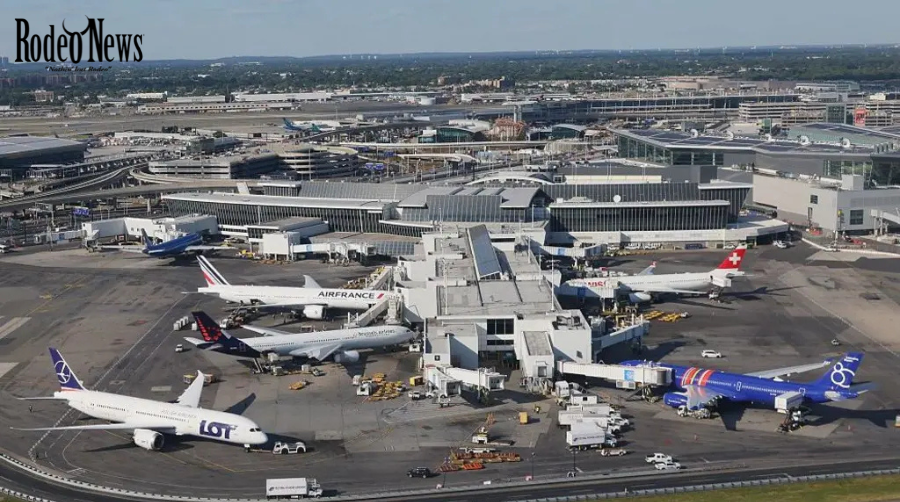
Ground stops were imposed at several airports serving the New York and Philadelphia metropolitan areas, including Newark Liberty International Airport, Philadelphia International Airport, John F. Kennedy International Airport, LaGuardia Airport, Teterboro Airport and Westchester County Airport. Boston was also affected by the resulting traffic buildup.
Newark was among the airports hit particularly hard because of its importance as a major United Airlines hub. Philadelphia, meanwhile, is a major hub for American Airlines.
At one stage, incoming flights were halted at all three major New York-area airports, as well as Philadelphia and Boston. Some aircraft were diverted to other airports while airlines worked to manage the rapidly changing situation.
Flight-tracking data showed the scale of the disruption. Reuters reported that thousands of flights across the United States were delayed or cancelled, while more than 100 flights were diverted. ABC News Australia, citing Reuters, reported that more than 5,600 flights had been delayed or cancelled, including about 1,200 at the three major New York-area airports.
The exact totals continued to change as airlines and airports updated their schedules.
What Caused the Air Traffic Control Outage?
The initial failure involved a telecommunications circuit at Philadelphia TRACON.
Air traffic control facilities depend on reliable communications systems to coordinate aircraft movements. When the primary circuit failed, the system was supposed to switch to a backup connection.
Instead, officials discovered that the backup fibre line had also been damaged.
FAA Administrator Bryan Bedford said the backup fibre had apparently been cut accidentally by a construction crew in New Jersey. The damage occurred along a fibre route near an Amtrak rail line. Verizon said its fibre cable had been cut and that it was working to repair the connection.
The situation illustrates how multiple systems can become interconnected. A physical construction accident several miles away was able to contribute to a major disruption in aviation communications because the damaged fibre connection was part of the backup infrastructure.
According to Bedford, the damaged backup line could take approximately 13 hours to repair, although another replacement circuit was also being prepared for installation.
FAA Moves Carefully as Flights Resume
Although the outage created widespread disruption, FAA officials stressed that flights would not simply resume everywhere until they were confident that the airspace was safe.
That meant airports could see different levels of service at different times.
Flights began resuming at some airports, including New York’s JFK and LaGuardia, while restrictions remained at other locations. Boston also lifted a ground stop after initially restricting arrivals because of traffic spilling over from other airports.
The FAA’s cautious approach reflected the importance of reliable communications between controllers and aircraft.
Even when an airport’s own runways and terminals are functioning normally, an air traffic control communications problem can prevent aircraft from being safely routed into the surrounding airspace.
For passengers, however, that distinction offered little immediate relief. A flight can remain delayed even when the airport itself has no physical damage.
Newark and Philadelphia Among Hardest Hit
Newark and Philadelphia were particularly affected because both airports are closely connected to the Philadelphia TRACON system.
Newark is one of United Airlines’ major hubs, while Philadelphia is a major American Airlines hub. Disruption at either airport can therefore affect a large number of connecting passengers and aircraft movements.
Reuters reported that more than 1,000 flights at Newark had been delayed or cancelled during the disruption, while overall US delays approached 4,000 and cancellations reached about 500 at one point in the day.
Flight-tracking services also showed significant delays at Newark and Philadelphia.
Flightradar24 reported that Newark delays were averaging more than 100 minutes during the disruption, while FlightAware data showed hundreds of flights delayed at Newark and Philadelphia.
Because airline networks are interconnected, the effects can continue even after the original technical problem has been addressed.
An aircraft arriving late at one airport may be scheduled to operate another flight later in the day. When the first flight is delayed, the aircraft, crew and passengers may all be out of position for subsequent services.
That can create a chain reaction across an airline’s network.
UN General Assembly Adds Pressure to New York Airspace
The timing of the disruption was particularly significant.
New York was preparing for the annual United Nations General Assembly, one of the city’s busiest international diplomatic periods. World leaders and government officials from around the globe were arriving in the city for the high-level meeting.
That meant the region was already handling substantial international travel demand.
The combination of scheduled commercial traffic, international arrivals and heightened diplomatic activity placed additional pressure on the region’s aviation network.
However, the cable failure itself was not reported as being connected to the United Nations event.
Instead, officials attributed the immediate aviation disruption to the telecommunications failure and damaged backup fibre infrastructure.
A New Warning About America’s Aging Air Traffic System
The latest disruption has also renewed attention on the condition of America’s air traffic control infrastructure.
The US air traffic system has faced years of criticism over aging technology, staffing shortages, congestion and recurring technical problems.
In 2025, Congress approved $12.5 billion for upgrades to the system and efforts to increase controller staffing. The funding was part of a broader effort to modernize infrastructure following repeated complaints about delays and technology failures.
Transportation Secretary Sean Duffy has argued that additional funding is needed to complete the modernization effort.
Reuters reported that Duffy said Congress should provide another $17.5 billion for the work, describing the situation as unacceptable.
The latest incident does not by itself establish that aging infrastructure caused the fibre cable to be cut. The immediate trigger identified by officials was the loss of a primary telecommunications circuit followed by the discovery that the backup fibre had been damaged.
However, the incident highlights the importance of redundancy.
A backup system is designed to keep essential operations functioning when the primary system fails. When both primary and backup connections become unavailable, even a localized technical problem can have consequences across a large region.
Similar Problems Have Hit the Region Before
The latest outage is not the first time the Philadelphia-area air traffic control system has experienced communications problems.
In May 2025, the facility responsible for guiding air traffic in and out of Newark Airport experienced significant communications outages. The FAA also previously reported that a telecommunications outage had affected communications and radar displays at Philadelphia TRACON.
Those previous incidents have contributed to concerns about the resilience of the infrastructure supporting one of the busiest aviation regions in the United States.
The newest incident is different in its immediate cause because officials identified a construction-related fibre cable cut as part of the failure.
Nevertheless, repeated disruptions have put renewed attention on how air traffic control systems respond when critical communications links fail.
What Passengers Should Expect
For passengers travelling through the affected airports, the most important issue is that flight information can change rapidly.
A flight that appears to be operating normally may later be delayed because an incoming aircraft is being held elsewhere. Likewise, a flight can be cancelled after an airline determines that the disruption has made it impossible to reposition an aircraft or crew.
Passengers travelling through Newark, Philadelphia, JFK, LaGuardia and other affected airports should therefore check directly with their airline before travelling to the airport.
Airport websites and flight-tracking services can also provide updated information, but airlines remain the most relevant source for individual booking changes.
Travellers with connecting flights should pay particular attention because delays at one airport can affect subsequent segments of a journey.
Why a Single Cable Can Affect Thousands of Flights
The episode provides a clear example of how modern transportation depends on communications infrastructure.
Air traffic control is not isolated from telecommunications networks. Controllers need dependable systems to communicate and coordinate aircraft, while airports and airlines depend on a broader network of digital systems to manage flights.
When a fibre connection is damaged, the effect depends on what role that connection plays.
A cable used for ordinary commercial communications might cause relatively limited disruption. A cable forming part of a critical backup network can have much larger consequences.
That is what made the New Jersey cable cut significant.
The construction work itself was not an aviation operation, yet the accidental damage to the fibre infrastructure contributed to restrictions affecting major airports across the northeastern United States.
The Broader Infrastructure Question
The incident also raises broader questions about infrastructure resilience.
Modern aviation depends on layers of interconnected systems. Airports rely on telecommunications providers, telecommunications providers rely on physical fibre networks, and those networks can run alongside railways, roads and construction zones.
That means infrastructure protection increasingly requires coordination between industries that may appear unrelated.
A construction project may be working near a fibre line without directly interacting with aviation. Yet damage to that line can eventually affect aircraft thousands of feet above the ground.
The lesson from the disruption is therefore not simply about one damaged cable.
It is also about redundancy, maintenance, mapping of critical infrastructure and the ability of essential services to continue operating when multiple systems fail at once.
US Flight Chaos Highlights the Cost of Network Disruption
The latest US flight chaos demonstrates how quickly a technical failure can spread through the aviation network.
What began with a telecommunications failure at an air traffic control facility was compounded when a backup fibre line was found to have been accidentally severed in New Jersey. The resulting communications problems forced the FAA to restrict traffic at some of the busiest airports in the country.
Some flights resumed as officials restored capacity and installed replacement equipment, but the effects were expected to continue as airlines worked through delayed aircraft, crews and passengers.
The incident also arrives amid a broader modernization effort for the US air traffic control system.
For travellers, the immediate priority remains checking flight status directly with airlines and allowing additional time for journeys through affected airports.
For aviation authorities, telecommunications providers and infrastructure planners, the episode provides another example of why reliable primary systems and genuinely independent backup systems are essential to keeping the country’s airspace moving.