Macron France Protests: 5 Signs of a Deepening Crisis
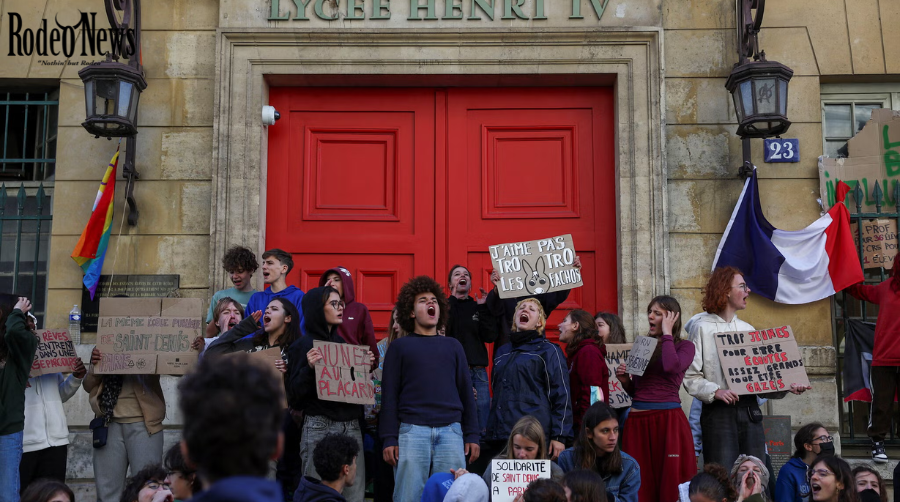
The Macron France protests have become a striking symbol of the challenges confronting France as President Emmanuel Macron approaches the end of his presidency. Nationwide student demonstrations over deteriorating school conditions, teacher shortages and inadequate funding are adding to mounting pressure on a government already struggling with economic concerns and political divisions.
The unrest is about more than conditions inside classrooms. It reflects a broader debate over public services, the cost of government commitments and whether France’s political leadership can deliver meaningful improvements in people’s daily lives.
On October 13, 2026, French students returned to the streets as demonstrations continued across the country. Swedish climate activist Greta Thunberg joined students outside a high school in Saint-Denis, north of Paris, bringing additional international attention to the movement.
Reuters
+1
The demonstrations present Macron’s government with a difficult challenge. Authorities must respond to students’ concerns while maintaining public order, protecting schools and staff, and managing limited public finances.
With the next presidential election approaching in 2027, the political consequences could extend beyond the education system.
1. Macron France Protests Reveal Growing Frustration With Public Services
The first major sign of France’s deepening crisis is the growing frustration among students who believe their schools are not receiving the resources they need.
Demonstrations initially emerged around complaints about insufficient staffing and poor conditions at schools in the Paris region. The movement subsequently expanded to other areas, with students organizing walkouts, marches and blockades.
According to reporting by the Associated Press, students have raised concerns about overcrowded classrooms, absent teachers, deteriorating buildings and demanding school schedules. Some have also criticized the university admissions process, arguing that it creates additional barriers for young people.
AP News
+1
These complaints have given the protests a broad appeal. Students are not simply demanding changes to individual school policies. They are questioning whether the education system provides all young people with a fair opportunity to succeed.
Underfunded schools become a national issue
School infrastructure has emerged as one of the movement’s most visible concerns.
Reports from France have described aging facilities, damaged classrooms, leaking roofs and inadequate equipment. Students in some locations have also complained about uncomfortable classroom temperatures during periods of extreme heat or cold.
Such problems can affect attendance, concentration and educational performance. They can also deepen inequalities between communities with well-maintained facilities and those struggling to provide basic learning conditions.
Students are demanding greater investment in high schools, known in France as lycées. Their concerns include recruiting replacement teachers when staff are absent, repairing damaged buildings and reviewing demanding school schedules.
The government’s response will help determine whether the protests lose momentum or develop into a longer-running challenge.
Why the demonstrations matter beyond schools
Education occupies an important place in France’s national identity. The country’s public education system is closely associated with equal opportunity, social mobility and the state’s responsibility to provide essential services.
When students publicly challenge school conditions, their complaints can therefore become a wider political issue.
Parents may recognize the difficulties from their children’s experiences. Teachers may connect the demonstrations with longstanding staffing and workload concerns. Meanwhile, taxpayers may question whether public spending is producing the improvements they expect.
For Macron, the immediate challenge is to demonstrate that the government understands these concerns and can respond with practical measures.
2. The Government Faces a Difficult Balance Between Protest and Public Order
The second sign of a deepening crisis is the increasingly difficult relationship between demonstrators and the authorities.
Although many participants have protested peacefully, some demonstrations have been accompanied by vandalism, fires and clashes involving students and police. Authorities have responded with crowd-control measures, including tear gas, while school blockades have disrupted normal operations.
The Associated Press reported that more than 6,600 arrests had been made nationwide by the previous week, while other reporting documented serious injuries among young demonstrators.
The Washington Post
+1
These developments have intensified debate over how the government should manage the unrest.
Police tactics face scrutiny
The authorities have argued that police must intervene when demonstrations become violent or prevent schools from operating. Police officers and school employees have also reportedly been injured during some incidents.
However, the use of force against young protesters has generated criticism. Reports of severe injuries have raised questions about proportionality, accountability and the protection of minors during public demonstrations.
These issues create a complicated situation for the government.
A response perceived as too weak could allow violence and disruption to continue. A response seen as excessive could deepen resentment among students and their supporters.
Investigations into alleged police misconduct may help establish what happened in individual cases. Transparent procedures and credible accountability will be important if the government wants to maintain public confidence.
Peaceful protesters risk being overshadowed
Violence can also complicate the public’s understanding of a protest movement.
Students seeking better classrooms and more reliable teaching may find their message overshadowed by images of burning objects, damaged property or confrontations with riot police.
At the same time, authorities must distinguish between peaceful participants and individuals responsible for violence rather than treating every demonstrator as a threat.
The government’s ability to maintain that distinction could influence whether the movement becomes more polarized.
For Macron, restoring order alone may not resolve the underlying grievances. Unless students see progress on the problems that prompted their demonstrations, security measures could contain individual incidents without restoring trust.
3. France’s Financial Pressures Limit the Government’s Options
The third sign of a broader crisis is the tension between demands for better public services and the government’s financial constraints.
Improving schools requires money. Recruiting teachers, repairing buildings, upgrading equipment and addressing overcrowding can involve substantial long-term expenditure.
Yet governments must also account for competing demands, including healthcare, pensions, infrastructure, defense and debt servicing.
France has faced persistent concerns about public borrowing and the sustainability of its finances. These pressures complicate efforts to expand spending without creating additional budgetary difficulties.
Education spending becomes a political test
Students and their supporters argue that better school conditions require more investment. Their demands place the government under pressure to explain how it intends to improve education while controlling public expenditure.
Reuters reported earlier in October that France’s planned education budget increase for 2027 was below the rate of inflation, highlighting the tension between financial restraint and demands for better-funded schools.
Reuters
A budget increase does not necessarily translate into improved conditions in every school. The effects depend on where the money goes, how quickly it becomes available and whether staffing shortages can be addressed.
Likewise, promises to hire additional teachers may not immediately solve problems if recruitment remains difficult or replacement staff are not distributed where they are most needed.
The government must therefore demonstrate not only that it intends to spend more effectively but also that its plans will produce measurable improvements.
Public frustration can grow when promises fall short
Budget disputes can become particularly sensitive when citizens believe they are being asked to accept financial restraint while essential services deteriorate.
Students may see poor school facilities as evidence that their future is being neglected. Families may question whether public institutions are meeting their responsibilities. Teachers may feel that they are expected to maintain standards without sufficient support.
These concerns can reinforce one another.
The result is a political challenge that cannot be solved simply by announcing a new funding package. The government must explain its priorities, establish realistic timelines and show that resources are reaching the schools that need them.
4. Macron’s Political Legacy Faces Increasing Pressure
The fourth sign of the crisis is its potential effect on Macron’s political legacy.
Since taking office in 2017, Macron has presented himself as a reform-minded leader seeking to modernize France and strengthen its economic position. His presidency has nevertheless been marked by major public disputes, including protests over pension reform and broader dissatisfaction with government policy.
The current student movement adds another difficult episode to that record.
A report published by the Oman Observer through the New York Times Syndicate on October 13 described Macron’s presidency as entering its final phase amid mounting economic, welfare and political challenges.
Oman Observer
The student protests do not, by themselves, establish that Macron’s political program has failed. They do, however, provide a visible measure of public dissatisfaction with at least one important area of government responsibility.
Why the education debate matters politically
Education policy affects families across social and economic groups. It also shapes how voters think about opportunity, inequality and the future of younger generations.
When students organize nationwide demonstrations, political parties have an incentive to respond.
Left-wing politicians may emphasize public investment, social equality and criticism of police tactics. Conservative and far-right figures may focus more heavily on public order, school discipline and the consequences of vandalism.
These differences can turn an education dispute into a broader argument about the direction of the country.
The Associated Press reported that presidential contenders have already taken contrasting positions on the unrest, with far-left leader Jean-Luc Mélenchon defending the students’ demands and far-right leader Marine Le Pen emphasizing a tougher response to violence.
The Washington Post
For Macron, who cannot seek a third consecutive presidential term, the crisis also affects the political environment his eventual successor will inherit.
A legacy depends on the response
Political legacies are shaped not only by the crises leaders encounter but also by how they respond.
A government that listens to students, addresses urgent problems and establishes a credible plan for long-term improvement may limit the damage to public confidence.
Conversely, prolonged disruption combined with limited progress could strengthen perceptions that established political institutions are unable to respond effectively to citizens’ concerns.
The outcome remains uncertain. Much will depend on whether the government can translate public commitments into visible changes before the next election.
5. The 2027 Presidential Election Raises the Stakes
The fifth sign of France’s deepening crisis is the approaching presidential election.
French voters are expected to choose Macron’s successor in 2027. That contest gives political parties a powerful incentive to demonstrate that they understand public frustration and can offer solutions.
The student protests provide an immediate opportunity for candidates to distinguish themselves from their rivals.
Education could become a campaign issue
Candidates may use the demonstrations to advance proposals on school funding, teacher recruitment, classroom conditions and university admissions.
Some may argue for greater public investment. Others may emphasize administrative reform, tighter spending controls or stronger measures against violence.
The debate could also extend to broader questions about economic inequality and the ability of public institutions to provide equal opportunities.
The political significance of the protests will depend partly on how widely students’ concerns are shared by parents, teachers and other voters.
If the movement remains focused primarily on school conditions, it may influence education policy without fundamentally reshaping the election. If its grievances become linked to wider economic and social dissatisfaction, its impact could be greater.
Parties face competing pressures
Political leaders must navigate two public concerns that do not always align.
Many people may sympathize with students who want safe buildings, adequate staffing and better learning conditions. At the same time, residents and families may oppose violence, property damage and disruptions that prevent schools from operating.
Candidates will need to address both sides of the debate.
A position that appears indifferent to students’ demands risks alienating young voters and their families. A position that appears to excuse violence may undermine a candidate’s credibility on public safety.
This balancing act is likely to become increasingly important as the campaign develops.
The next government will inherit the consequences
Even if the current demonstrations subside, the underlying education questions will remain.
France will still need to decide how to maintain school buildings, recruit qualified teachers and ensure that students receive a consistent education regardless of where they live.
Those decisions will involve budget priorities and long-term planning that extend beyond a single presidential term.
The election could therefore become an important test of whether political parties can offer credible, practical solutions rather than simply using the unrest to criticize their opponents.
Government Response: Can Macron Reduce the Pressure?
The government has begun outlining measures aimed at addressing some of the students’ complaints.
According to Euronews, authorities had pledged to deploy approximately 3,000 substitute teachers in the coming days to help replace absent staff at 114 of the most affected high schools. The report said 35% had already been assigned as of October 13.
Euronews
This is a concrete step, but its broader impact will depend on implementation.
Students want more than temporary staffing arrangements. Many are also seeking improved facilities, manageable schedules and greater confidence that their concerns will be taken seriously.
A successful response will likely require several parallel efforts.
First, the government needs to identify the schools facing the most urgent staffing and infrastructure problems. Second, it must establish clear priorities for funding and repairs. Third, officials need to communicate progress in a way that students, families and teachers can evaluate.
Finally, the authorities must continue addressing violence and allegations of police misconduct through credible procedures.
These tasks are connected. Progress on school conditions could help reduce frustration, while transparent policing could help prevent confrontations from becoming a separate source of public anger.
However, neither outcome is guaranteed. Staffing shortages, budget constraints and political disagreements could delay improvements.
What the Macron France Protests Mean for France’s Future
The Macron France protests reveal how a dispute over school conditions can develop into a wider test of government credibility.
The demonstrations have highlighted concerns about public education, financial priorities, policing and the ability of political leaders to respond to citizens’ demands. Their timing, as France approaches a presidential election, gives the unrest significance beyond the immediate disruption at schools.
The government now faces a difficult choice: focus primarily on restoring order, or combine security measures with a sustained effort to improve the conditions that prompted students to protest.
In practice, it will probably need to do both.
Maintaining safe schools and protecting public property are legitimate responsibilities. So is ensuring that students have adequate facilities, access to teachers and a fair opportunity to succeed.
The most important measure of the government’s response will be whether promised changes produce tangible improvements.
If staffing shortages ease and deteriorating facilities receive attention, officials may be able to reduce tensions and rebuild some public confidence. If the protests continue without meaningful progress, the unrest could become a lasting symbol of dissatisfaction with the political establishment.
For Macron, the demonstrations represent another challenge at a consequential moment in his presidency. For France, they raise a larger question: whether the country’s institutions can respond effectively when younger generations say the systems intended to support them are failing.
The answer will depend on what happens next, both inside the country’s schools and in the political debate leading toward 2027.