New EVs Debut as L.A. Auto Show Ends Amid Uncertain U.S. Market
LOS ANGELES — The annual L.A. Auto Show, one of the nation’s longest-running and most influential automotive events, concludes on Sunday after drawing thousands of visitors to the Los Angeles Convention Center. While the show continues to spotlight the industry’s electric future, this year’s showcase unfolds amid dramatic shifts in U.S. EV policy and consumer behavior.
For decades, the L.A. Auto Show has leaned heavily on California’s climate leadership and aggressive clean-energy agenda to introduce new electric vehicles. Automakers again brought a wide range of plug-in models to the 2025 floor, from affordable compact cars to high-end luxury SUVs. But the political backdrop this year has created an air of uncertainty. The federal government recently ended nationwide tax rebates that lowered the price of EVs, a move widely seen as benefitting the fossil fuel sector. Industry analysts say it remains unclear what impact the loss of incentives will have on national sales.
California, meanwhile, continues to push forward. State leaders view transportation electrification as a key pillar of the state’s climate strategy, with a legally binding commitment to reach net-zero emissions by 2045. The state’s ban on the sale of new gas-powered cars — now facing efforts by the federal government to block it — remains central to that plan.
New EVs Available Today
Among the vehicles drawing attention was the 2026 Nissan Leaf, offering an estimated 303-mile range, a significant improvement for one of the country’s earliest mass-market EVs. Chevrolet also revived its popular Bolt, scrapped in 2023 but brought back due to “overwhelming demand,” according to company officials. The new Bolt delivers around 255 miles of range, with both models expected to start at roughly $29,000, positioning them as two of the most affordable EVs on the market.
Jeep introduced the 2026 Jeep Recon, its fully electric counterpart to the Wrangler and marketed as “the only fully electric Trail Rated SUV.” The Recon offers about 230 miles of range, with a price tag beginning near $65,000. Hyundai’s performance-focused Ioniq 6 N also made its appearance, with the company estimating its range at around 257 miles ahead of its early-2026 release.
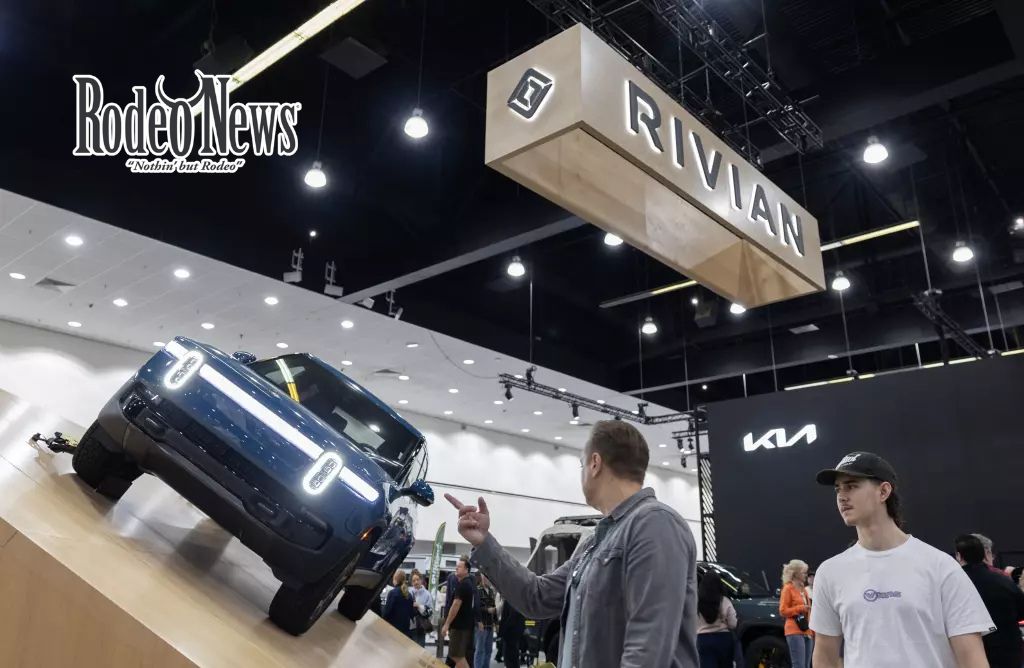
On the luxury side, Rivian displayed its new RIS, starting at $77,000 with up to 410 miles of range, while Lucid introduced the Gravity, a high-end SUV promising as much as 450 miles on a single charge. Rivian also showcased the upcoming R2, a smaller electric SUV expected to retail around $45,000 with a range exceeding 300 miles.
Policy Shifts Introduce Market Uncertainty
The dismantling of federal rebates has reshaped the EV landscape. California reported a surge in purchases during the months leading up to the incentive repeal, with nearly 126,000 zero-emission vehicles sold in the third quarter of 2025 — almost 29% of all new car sales statewide.
But the momentum has softened elsewhere. In October, the first full month without the tax credit, EVs accounted for just 5.2% of new U.S. retail vehicle sales, a steep drop from 12.9% in September. Forecasts for November show slight improvement, with EVs projected to hit around 6% of national sales.
The shifting market has led several automakers, including Acura, Ford and General Motors, to scale back their EV ambitions, pausing or canceling planned models. Industry observers noted a more subdued tone at this year’s press events, a departure from previous years when automakers unveiled electrification roadmaps with considerable fanfare.
Still, experts emphasize that the downturn is likely temporary. “The strong will survive,” said Ed Loh, head of editorial at Motor Trends, during the show. “The brands producing high-quality EVs at competitive prices will bounce back.”
California Pushes Forward With Charging Infrastructure
Despite federal headwinds, California continues expanding its charging network. The state surpassed 200,000 public and shared EV charging ports in September — an increase of about 20,000 since March, according to data from the California Energy Commission. The state now boasts more public charging stations than gas pumps.
Gov. Gavin Newsom has repeatedly reaffirmed California’s commitment to electrification. A June executive order strengthened targets for reducing transportation emissions and increasing state investment in clean manufacturing and EV infrastructure.
Global EV Market Remains Strong
While U.S. sales fluctuate, the international EV market continues to accelerate. The International Energy Agency reported 17 million electric vehicles sold worldwide in 2024, a 25% increase over the previous year. Sales in 2025 are projected to exceed 20 million vehicles, representing more than one-quarter of global auto sales.
The contrast underscores the complex crossroads facing the U.S. EV industry: technological momentum and global adoption remain strong, but domestic political shifts and market uncertainty may determine how quickly American consumers embrace an electric transition.