Canada Retaliatory Tariffs Target U.S. Goods
Canada retaliatory tariffs are set to take effect on September 8, escalating the latest trade confrontation between Ottawa and Washington after negotiations between the two countries collapsed. Canada announced new duties of 15%, 25% and 50% on hundreds of U.S. products, matching the latest U.S. tariff rates on a dollar-for-dollar basis.
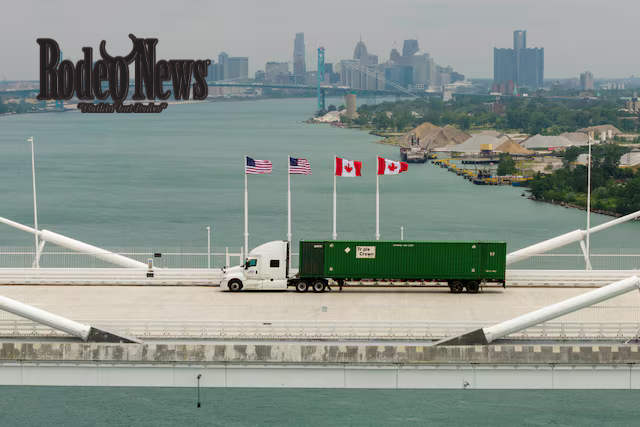
The move covers a broad range of American products, including steel, aluminum, furniture, clothing, appliances, dairy products, seafood, electronics, tools and machinery. Reuters reported that the measures affect about $20 billion worth of annual U.S. imports, while Canada’s government puts the total value of the covered imports at C$27.6 billion.
Ottawa also announced a C$7.5 billion package designed to cushion Canadian workers and businesses from the economic impact of the dispute.
The announcement marks another major step in a trade conflict that has increasingly strained one of North America’s most important economic relationships.
Canada Retaliatory Tariffs Begin September 8
The new Canada retaliatory tariffs are scheduled to begin on September 8. The government said the individual tariff rates will correspond to the U.S. rates applied to the same categories of goods.
Products facing the highest 50% rate include steel and aluminum products that had previously been subject to a lower Canadian counter-tariff. Furniture and clothing are also included in the 50% category.
A 25% tariff will apply to products including appliances, cheese, seafood and certain steel and aluminum derivatives. Meanwhile, electronics and tools are among products facing a 15% duty.
The list is significantly broader than a single-industry response. Canadian officials said the targeted products include prepared foods, perfumes and toiletries, plastics, lumber, pulp and paper, carpets and other clothing products.
Industrial goods are also included. These range from metal products and machinery to electrical equipment, rail engines, motorcycles, furniture and gaming equipment.
The Canadian government says the objective is to protect domestic producers from competing against U.S. goods that could otherwise become more attractive in the Canadian market because of the trade dispute.
Why Canada Is Taking Action Now
The latest Canada retaliatory tariffs follow the introduction of new U.S. duties on Canadian goods.
The U.S. imposed 50% tariffs on approximately $27.6 billion of Canadian goods effective August 22, according to the Canadian government. Reuters described the affected U.S. imports as roughly $20 billion in annual trade and said the measures represent about 5% of Canada’s exports to the United States.
The latest escalation came after U.S.-Canada negotiations failed to produce an agreement.
Canadian officials had been seeking a deal that could reduce tariffs and provide greater certainty for companies operating across the border. However, talks broke down, leaving both governments with fewer immediate options to prevent another round of tariff increases.
Canada’s government said it had negotiated extensively but ultimately suspended talks rather than accept terms it considered unfavorable to Canadian workers, businesses and strategic industries.
The result is a familiar pattern in international trade disputes: one country imposes tariffs, the other responds, and companies on both sides must adjust to higher costs and changing supply chains.
The $7.5 Billion Support Package
Alongside the Canada retaliatory tariffs, Ottawa announced C$7.5 billion in new and enhanced support measures.
The package is intended to help businesses maintain liquidity, protect jobs and assist workers affected by tariffs. It builds on nearly C$25 billion in support measures that the Canadian government says it has already provided since the tariff dispute began.
One major component is an additional C$1.5 billion for the Regional Tariff Response Initiative. The program is designed to help small and medium-sized businesses manage financial pressure caused by tariffs.
Another C$500 million will be added to the Business Development Bank of Canada’s Pivot to Grow program. The new funding is intended to help businesses deal with immediate cash-flow problems.
Ottawa is also lowering the minimum revenue requirement for businesses seeking access to certain tariff-related programs operated by the Business Development Bank of Canada. The threshold will fall to C$1 million, potentially allowing more companies to qualify for assistance.
The government is further committing C$2 billion to a new Canada Strong Diversification Fund. The program is designed to support tariff-affected businesses and projects intended to strengthen long-term economic resilience.
A separate C$3.5 billion package will focus on workers and employers. It includes additional employment insurance flexibility, workplace training and improvements to Canada’s Job Bank.
The government also announced a Worker Retention and Retraining Program to help companies keep employees during periods of economic pressure.
Small Businesses Face a Major Test
For Canadian small businesses, the effects of the trade dispute could be particularly difficult.
Large corporations often have more financial resources and greater flexibility to shift suppliers, adjust production or absorb temporary increases in costs. Smaller companies may have fewer options.
A manufacturer that depends on U.S. machinery, for example, could face higher import costs once the new tariffs take effect. A retailer selling American products may also have to decide whether to absorb the additional expense, raise prices or find alternative suppliers.
This is why the Canadian government’s liquidity measures are important.
The goal is not simply to compensate every business for higher costs. Instead, Ottawa is trying to give companies enough financial flexibility to continue operating while they adjust their supply chains and seek new markets.
The Business Development Bank of Canada will also provide interest-free loans ranging from C$2.5 million to C$5 million to eligible affected businesses, according to Reuters. The repayment period is designed to give companies additional breathing room during the trade dispute.
Which U.S. Products Are Being Targeted?
The Canada retaliatory tariffs deliberately cover products across multiple sectors.
Among the most prominent categories are:
- Steel and aluminum
- Furniture
- Clothing and apparel
- Appliances
- Dairy products
- Fish and seafood
- Electronics
- Tools
- Agricultural equipment
- Lumber
- Pulp and paper
- Plastics
- Machinery
- Electrical equipment
- Prepared foods
- Personal-care products
The Canadian government has published a detailed product list covering the goods subject to the new measures.
The strategy is partly economic and partly political.
Canadian Industry Minister Mélanie Joly said the government wanted to protect domestic businesses while also applying pressure to selected U.S. interests ahead of the November 3 midterm elections.
That means the tariff list is not simply a technical calculation based on trade volumes. Ottawa is also seeking to make the economic and political consequences of the dispute more visible in the United States.
Impact on Consumers Could Be Complicated
Tariffs do not automatically translate into a one-for-one increase in consumer prices. The eventual effect depends on how importers, manufacturers, distributors and retailers respond.
A Canadian company importing an American appliance could face a higher landed cost after the tariff is introduced. The importer might absorb some of the increase, negotiate a lower price with the supplier or pass part of the cost to consumers.
Some companies could also switch to suppliers in Canada or other countries.
That could create opportunities for domestic manufacturers and exporters. However, replacing established suppliers can take time and may involve higher production or transportation costs.
The result could therefore be mixed. Some Canadian producers may benefit from reduced competition from U.S. products, while businesses that depend on American inputs may face higher costs.
U.S. Businesses Could Also Feel the Pressure
The impact of Canada retaliatory tariffs will not be limited to Canadian companies.
Canada is one of the United States’ most important trading partners, and the two economies have deeply integrated supply chains.
American manufacturers selling goods into Canada could see demand weaken if their products become more expensive. Companies may also face pressure to reduce prices or find alternative markets.
The effects could be particularly important in industries where Canadian and U.S. production networks operate across the border.
The latest dispute is also unfolding alongside threats of additional U.S. tariffs on Canadian automobiles. Reuters reported that President Donald Trump has threatened a 50% tariff on Canadian cars, trucks and automotive parts beginning January 1, 2027, if an agreement is not reached.
That creates another layer of uncertainty for automakers and suppliers.
Trade War Raises Broader Economic Risks
The immediate tariff amounts are only part of the story.
The larger concern is what happens if the dispute continues to escalate.
Canada and the United States have highly integrated economies. Companies have spent decades building supply chains that cross the border, particularly in manufacturing, energy, agriculture and transportation.
When tariffs disrupt those networks, businesses may reconsider where they source components and where they manufacture finished products.
That process can create long-term economic changes even if tariffs are eventually removed.
Reuters has also highlighted the broader risk to the U.S.-Mexico-Canada trade framework. Total trade between the United States and Canada reached about $715 billion last year, underscoring how significant the relationship is for both economies.
A prolonged dispute could therefore affect investment decisions well beyond the companies directly covered by the new tariffs.
Markets Watch the Canada Tariff Response
Financial markets have already been responding to developments in the trade dispute.
The Canadian dollar edged higher against the U.S. dollar on August 25 after the government announced its countermeasures, although the currency remained sensitive to changing expectations surrounding the negotiations. Reuters reported the Canadian dollar was trading around C$1.3835 per U.S. dollar, or roughly 74.21 U.S. cents, during the session.
Bond yields also moved lower as investors considered what the escalating trade conflict could mean for the Canadian economy and the Bank of Canada’s future policy decisions.
Markets will likely remain focused on three issues.
First, investors will watch whether the September 8 tariffs actually take effect.
Second, they will monitor whether Washington responds with additional duties.
Third, markets will look for signs that the two countries are willing to return to negotiations.
Any improvement on those fronts could reduce economic uncertainty. Conversely, another round of tariffs could increase pressure on businesses, consumers and financial markets.
What Happens Next?
The September 8 implementation date gives Canada and the United States a limited window to change course.
Canada has made clear that it is prepared to proceed with the new measures while continuing to defend its economic interests.
The government has also left existing tariff-remission mechanisms available for exceptional cases, suggesting that some flexibility could remain for businesses facing unusual circumstances.
However, the possibility of further escalation remains.
The automobile sector is especially important because of the cross-border nature of North American vehicle production. Additional tariffs could raise costs for manufacturers and potentially disrupt the flow of parts and vehicles between the two countries.
That makes the next stage of negotiations critical.
Canada Retaliatory Tariffs Put Pressure on Both Sides
The latest Canada retaliatory tariffs represent a significant escalation, but their ultimate economic impact will depend on how long they remain in place and whether the two governments return to negotiations.
Ottawa is attempting to balance two objectives.
The first is defensive: protect Canadian workers and businesses from the effects of U.S. tariffs.
The second is strategic: create enough economic and political pressure to encourage Washington to reconsider its approach.
The C$7.5 billion support package shows that Canada expects the dispute to create real domestic costs. The measures are aimed at helping businesses manage cash flow, supporting investment and protecting workers while companies adapt.
For American businesses, the counter-tariffs create their own challenges. Products that have long moved freely or predictably across the border will now face additional costs.
The key question is whether those costs become a temporary consequence of a difficult negotiating period or the beginning of a deeper restructuring of North American trade.
For now, the September 8 deadline is the next major milestone.
Until then, businesses on both sides of the border will have to prepare for another round of uncertainty, while governments weigh the economic consequences of continuing the tariff fight against the political pressure to secure a favorable deal.
The latest measures show that Canada is prepared to respond forcefully. Whether that strategy produces a new agreement or pushes the two economies toward a more fragmented trading relationship will become clearer in the weeks ahead.