Iran Ceasefire Agreement: Pezeshkian Offers New Path
The Iran ceasefire agreement could be back on the table after Iranian President Masoud Pezeshkian said Tehran is prepared to resume the deal reached with the United States in June, provided Washington also returns to its commitments. His remarks came as tensions between Iran and the United States intensified again following a month-long lull in direct military action.
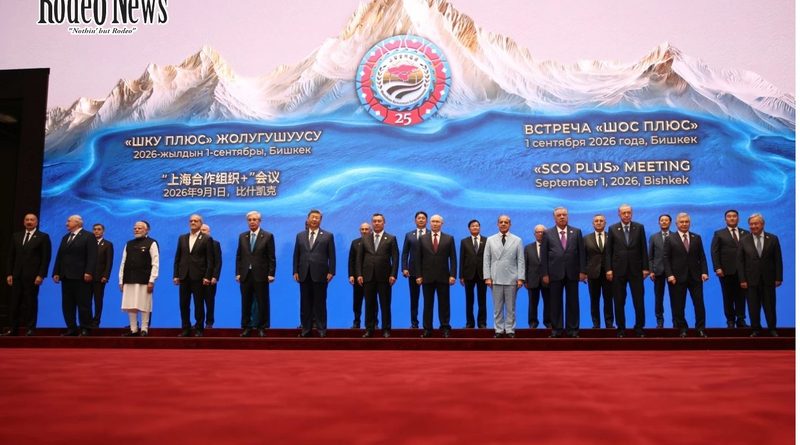
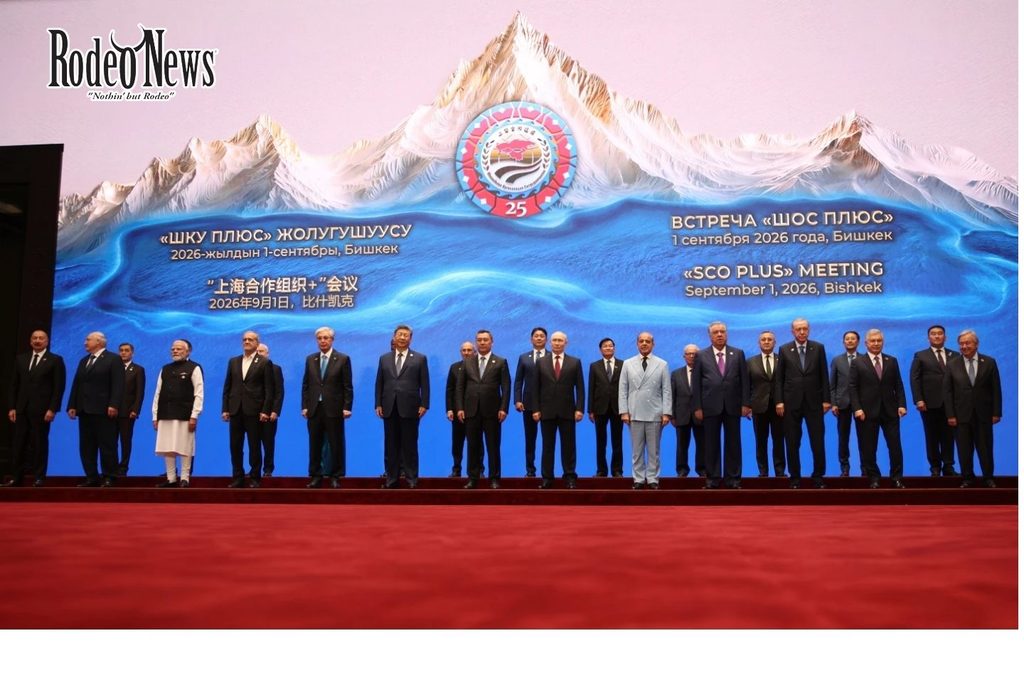
Pezeshkian made the comments Tuesday at the Shanghai Cooperation Organization summit in Kyrgyzstan. Iranian state media quoted him as saying that Iran would immediately reciprocate if the United States returned to its obligations under the memorandum of understanding.
The statement represents one of the clearest recent signals from Tehran that diplomacy remains possible, even as military tensions continue to threaten the region.
The June agreement was intended to establish an immediate ceasefire and create a 60-day period for negotiations toward a broader peace arrangement. However, the understanding quickly deteriorated, and the United States and Iran exchanged fire again over the weekend.
According to The Associated Press, the original arrangement included provisions involving the Strait of Hormuz, U.S. sanctions, Iranian oil exports and reconstruction efforts.
Iran Ceasefire Agreement Faces Major Obstacles
The renewed discussion around the Iran ceasefire agreement comes at a particularly difficult moment.
The June memorandum was built around reciprocal commitments. Iran agreed to clear mines from the Strait of Hormuz and allow shipping to pass, while Washington agreed to end its naval blockade, ease sanctions, provide waivers for Iranian oil exports and begin work on a reconstruction package.
Those commitments became increasingly difficult to maintain as distrust grew between the two governments.
The latest exchange of fire has further complicated efforts to return to the negotiating table. The United States has said its recent military operations were connected to attempts by Iran’s Islamic Revolutionary Guard Corps to disrupt commercial shipping and threaten American personnel in the region.
U.S. Central Command has described its actions as limited and focused on protecting commercial shipping through the Strait of Hormuz.
Iran, meanwhile, has continued to insist on its ability to control the strategically important waterway.
The competing positions underline the central challenge facing any renewed negotiations: both sides appear to want concessions from the other before agreeing to restore the previous framework.
Strait of Hormuz Becomes Central to the Dispute
The Strait of Hormuz has emerged as one of the most important issues in the confrontation.
The narrow waterway connects the Persian Gulf with the Gulf of Oman and is a critical route for international energy shipments. Disruptions there can have consequences far beyond Iran and the Gulf region.
Iran has been working with Oman on a framework for managing shipping traffic through the strait, although it remains uncertain whether Washington would accept such an arrangement.
Other Gulf countries have called for the waterway to be reopened without conditions.
The issue has also attracted growing attention from the U.S. government. Treasury Secretary Scott Bessent said Tuesday that the strait could lose much of its strategic importance over the next two years as companies and shipping operators seek alternative routes and reduce their dependence on trade connected to Iran.
His comments reflect a broader debate over whether prolonged disruption could permanently alter global shipping patterns.
For Iran, however, the strait provides significant strategic leverage.
Iranian Parliament Speaker Mohammad Bagher Qalibaf said Tuesday that Tehran controls the waterway. His remarks suggested that Iran does not intend to surrender that leverage simply as part of a diplomatic settlement.
That position could make negotiations considerably more complicated.
U.S. Military Strikes Raise Tensions
Pezeshkian’s renewed diplomatic message came as the United States acknowledged that it was striking targets in Iran after a month without direct military action.
U.S. Central Command said the latest operations followed attempted attacks by Iranian forces against commercial shipping in the Strait of Hormuz and against American service members deployed in the region.
The escalation followed a U.S. strike on rocket launchers on Larak Island. Iran responded by launching missiles toward U.S. locations in Jordan, according to AP, while the United Arab Emirates said it intercepted an Iranian drone over its waters.
The renewed fighting has raised questions about whether the conflict could move into another prolonged period of escalation.
President Donald Trump has indicated that additional strikes could still be necessary. At the same time, his administration has increasingly emphasized economic pressure against Tehran rather than relying exclusively on military operations.
That approach could create another opening for diplomacy, but it also leaves the two sides with sharply different expectations.
Washington wants Iran to change its behavior and reduce threats to shipping and regional forces. Tehran wants the United States to honor commitments it made under the June memorandum and provide economic relief.
Iran Wants Washington to Return to Its Commitments
Pezeshkian’s message was notable because it did not simply call for negotiations in general.
Instead, he tied Iran’s willingness to return to the ceasefire directly to American compliance with the previous agreement.
That distinction matters.
The Iranian president is effectively arguing that Tehran does not need an entirely new framework. Instead, Washington should return to the commitments that were already negotiated.
This could potentially provide a starting point for diplomacy if American officials are willing to consider the June agreement again.
However, the political environment has changed significantly since that memorandum was reached.
The latest military confrontation has increased mistrust. The United States has also expanded its economic pressure campaign against Iran, while Iranian officials continue to emphasize control over the Strait of Hormuz.
As a result, simply restoring the old agreement may not be enough.
A new arrangement could require additional guarantees, monitoring mechanisms and agreements over shipping before both governments feel confident enough to reduce military pressure.
Two Tankers Reportedly Attacked Near Hormuz
The risks facing commercial shipping have also increased.
The United Kingdom Maritime Trade Operations center received reports of an attack involving a tanker in the Strait of Hormuz and another incident involving a tanker and military forces near Oman’s coast.
According to AP, one tanker was reportedly hit by three projectiles while leaving the Persian Gulf through the strait. No group immediately claimed responsibility for either incident.
The incidents highlight why the waterway has become such a major focus of the conflict.
Even when the United States and Iran are not directly exchanging fire, uncertainty around commercial shipping can create economic pressure.
Higher insurance costs, shipping delays and fears over energy supplies can quickly affect international markets.
For Washington, maintaining the free movement of commercial vessels is therefore both a security and economic priority.
For Tehran, the ability to influence traffic through the waterway provides bargaining power at a time when the country is under significant sanctions and military pressure.
Gaza Conflict Adds to Regional Pressure
The wider Middle East situation is also becoming more difficult.
In Gaza, an Israeli operation targeting a Hamas militant resulted in the deaths of at least four people, including two children, according to hospital officials cited by AP.
Israeli officials said the military had conducted strikes against targets in Gaza to remove threats to its forces. Israel’s defense minister also said the military had apprehended a senior Hamas operative.
The continuing violence in Gaza adds another layer of instability while the United States and Iran attempt to navigate their own confrontation.
The conflicts are closely watched across the region because further escalation in one theater could affect calculations in another.
Gulf governments are particularly concerned about the possibility that continued U.S.-Iran fighting could threaten energy infrastructure, shipping routes and regional security.
Yemen Faces Another Humanitarian Threat
The consequences of the broader conflict extend beyond Iran, Israel and the United States.
The United Nations food agency warned that further escalation in Yemen could deepen the country’s already severe hunger crisis.
Carl Skau, acting executive director of the World Food Program, told AP that higher global food prices were already affecting one of the world’s largest humanitarian crises.
That warning illustrates the wider economic consequences of instability around the Gulf.
A prolonged disruption in energy transportation could push prices higher, increasing pressure on countries that already face food insecurity and economic challenges.
The Strait of Hormuz therefore represents more than a military flashpoint. Its stability has implications for international trade, energy markets and humanitarian conditions.
Diplomacy Remains Possible, but the Window Is Narrow
The latest comments from Pezeshkian suggest that diplomacy has not completely disappeared.
Iran’s willingness to consider the previous ceasefire arrangement provides Washington with a potential opening if American officials want to explore a return to negotiations.
Yet the obstacles remain substantial.
The two countries disagree over sanctions, military activity, shipping through the Strait of Hormuz and the broader terms of any future settlement. The recent exchange of fire has also demonstrated how quickly a fragile period of calm can collapse.
For a renewed Iran ceasefire agreement to succeed, both governments would likely need to accept difficult compromises.
Iran would need to provide meaningful assurances over shipping and military activity. The United States, meanwhile, would need to decide whether economic concessions and sanctions relief could be used to encourage Tehran back into a stable agreement.
The next stage could depend heavily on whether military actions continue or whether both governments choose to pause and test the diplomatic channel.
What Happens Next?
For now, Pezeshkian’s statement offers a possible path away from another cycle of escalation.
The Iranian president has made clear that Tehran is prepared to reciprocate if Washington returns to its previous commitments. That puts the next move partly in the hands of the United States.
At the same time, the situation on the ground remains unstable.
Military strikes, attacks involving commercial vessels and competing claims over the Strait of Hormuz continue to make a rapid diplomatic breakthrough difficult.
The international community will be watching closely for signs that Washington and Tehran are prepared to revive negotiations.
If both sides can move away from immediate military confrontation, the June framework could potentially become the foundation for a broader agreement. If not, the latest escalation could become another chapter in a conflict that has already reshaped security and economic calculations across the Middle East.
The central question is no longer simply whether Iran and the United States can agree to a ceasefire. It is whether they can build enough trust to make that ceasefire last.
For the moment, Pezeshkian’s proposal keeps that possibility alive.
Source: Associated Press, September 1, 2026. Read the original AP report
Suggested internal link: Add a relevant existing article from your website about the Iran war, Strait of Hormuz, U.S.-Iran relations or Middle East conflict using a natural anchor such as Iran war, Strait of Hormuz, or U.S.-Iran tensions.