Daisy Chain Fields: Olivia Rodrigo’s Epic Night
Daisy Chain Fields turned Olivia Rodrigo’s vision for a women-centered music festival into a major cultural event, bringing together some of the biggest names in contemporary music for a day built around performance, community and advocacy.
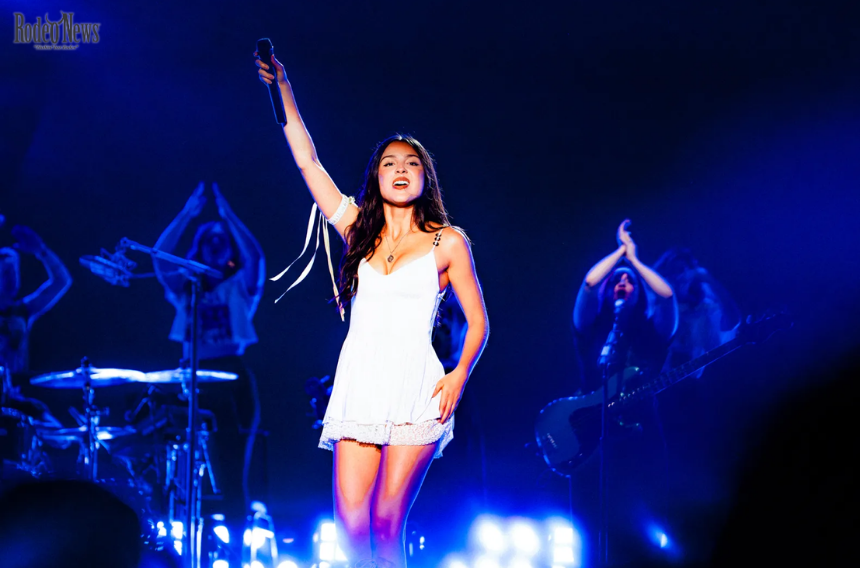
Held at Great Park in Irvine, California, the inaugural festival featured Rodrigo alongside Chappell Roan, Doechii, Bikini Kill, Garbage, Mitski, the Breeders, Santigold and other performers. The event also featured appearances and performances from legendary artists including Stevie Nicks, Sarah McLachlan and Alanis Morissette.
Rather than functioning as another conventional pop festival, Daisy Chain Fields was designed around a broader purpose. The event connected music with organizations working on issues affecting women and girls, creating a space where entertainment and activism could share the same stage.
The result was a festival that felt both celebratory and deliberately meaningful.
Daisy Chain Fields Brings Women in Music Together
From the beginning, Olivia Rodrigo presented Daisy Chain Fields as more than a showcase for her own music.
The festival was announced as an all-women lineup designed to celebrate women in music while supporting organizations focused on women and girls. Its concept drew inspiration from the tradition of women-led music events, including the influential Lilith Fair era of the 1990s.
That mission was reflected in the lineup.
Chappell Roan brought her theatrical pop persona to the festival, while Doechii represented another side of contemporary music with her genre-blending approach. Meanwhile, veteran groups and artists such as Bikini Kill, Garbage, Mitski and the Breeders connected younger audiences with earlier generations of women who reshaped alternative and independent music.
The lineup therefore created an unusual bridge between generations.
For Rodrigo, that intergenerational element was central to the festival’s identity. Instead of presenting emerging artists and established stars as competitors, Daisy Chain Fields placed them within the same larger celebration.
Olivia Rodrigo Takes Center Stage
Rodrigo served as both founder and headliner, giving the festival a personal connection that extended beyond her name at the top of the bill.
The singer-songwriter has increasingly used her platform to support causes involving women and girls, and Daisy Chain Fields represented one of her largest efforts to combine that advocacy with live music.
Her headline performance became the centerpiece of the day.
Rodrigo also used the occasion to collaborate with several influential artists, creating moments that extended beyond her own catalog. One of the most notable surprises came when Stevie Nicks joined Rodrigo for a performance of “Landslide.”
The appearance carried particular significance because Nicks represents an earlier generation of women who established themselves in a male-dominated music industry.
Seeing Rodrigo and Nicks share the stage reinforced one of the central ideas behind Daisy Chain Fields: musical influence can move across generations.
Chappell Roan Delivers a Standout Performance
Chappell Roan was one of the festival’s most anticipated performers, and her appearance added another layer of theatrical energy to the event.
Roan has become known for building elaborate visual identities around her performances, and Daisy Chain Fields was no exception. Her festival appearance featured a dramatic new look, including a sharp copper bob and a futuristic-inspired outfit.
Her performance also demonstrated why Roan has become such a distinctive live performer.
Rather than treating a festival set as simply a collection of songs, Roan approaches the stage as a complete theatrical environment. That approach fit naturally into an event that emphasized individuality and self-expression.
Her presence alongside Rodrigo also reflected the strength of a new generation of female pop artists.
Both performers have developed enormous fan communities while maintaining distinctive artistic identities. Their participation gave Daisy Chain Fields considerable mainstream appeal without sacrificing the festival’s broader purpose.
Doechii Adds Another Dimension
Doechii brought a different musical perspective to Daisy Chain Fields.
The Florida-born rapper and performer has developed a reputation for crossing boundaries between hip-hop, pop and experimental performance. Her presence ensured that the festival’s definition of women in music was not limited to one particular genre.
That diversity was one of the event’s greatest strengths.
Daisy Chain Fields was not simply a pop festival featuring several female singers. Its lineup moved between punk, alternative rock, hip-hop, indie music and mainstream pop.
That approach made the event feel closer to a celebration of the wider history and future of women in music.
It also allowed younger fans to encounter artists they might not normally see on the same festival bill.
Stevie Nicks, Sarah McLachlan and Alanis Morissette Join the Celebration
The appearance of established music icons gave Daisy Chain Fields additional historical weight.
Stevie Nicks performed at the festival and later joined Rodrigo for “Landslide.” Sarah McLachlan also appeared with Rodrigo, performing “Building a Mystery” and “Angel.” Alanis Morissette joined Rodrigo for “Ironic” after Karen O was unable to perform.
Those collaborations transformed the festival into something resembling a living history of women in popular music.
Each artist represented a different period and musical tradition. Together, their performances demonstrated how the influence of women artists continues to shape younger generations.
The connection was particularly fitting given Daisy Chain Fields’ inspiration from earlier women-led music movements.
Daisy Chain Fields Was About More Than Music
One of the defining features of Daisy Chain Fields was its nonprofit component.
The festival was created to support organizations working on issues affecting women and girls. Its organizers also included a dedicated space where attendees could learn more about nonprofit organizations and the causes they support.
That concept turned the festival grounds into more than a concert venue.
Fans could experience performances while also learning about organizations working in areas such as reproductive rights, health, workplace protections and other issues affecting women.
According to coverage from The Associated Press, the event generated $20 million in support, including $10 million in festival net proceeds and an additional $10 million matching contribution from philanthropist Melinda French Gates through Pivotal Ventures.
The financial impact gave the event significance beyond its entertainment value.
A $20 Million Impact
The reported $20 million raised became one of the most important outcomes of Daisy Chain Fields.
The money is intended to benefit organizations supporting women and girls, making the festival an example of how a major entertainment event can connect ticket revenue and philanthropy.
That model is increasingly relevant in an industry where artists have enormous cultural influence but are also looking for ways to create tangible social impact.
Rodrigo’s festival demonstrates one possible approach: build the charitable mission into the event from the beginning rather than treating philanthropy as an additional promotional feature.
The result was a festival where the charitable component was visible throughout the experience.
Why the Festival Matters for Olivia Rodrigo
Daisy Chain Fields also represents an important development in Rodrigo’s career.
The singer is no longer simply a performer appearing at major festivals. By creating and headlining her own event, Rodrigo took on the role of curator, organizer and cultural figure.
That distinction matters.
A traditional headliner controls what happens during a set. A festival founder helps determine which artists receive a platform, which causes receive attention and what kind of audience experience the event creates.
Rodrigo used that influence to bring together artists she admired while establishing a clear identity for the festival.
The inaugural event therefore offered a preview of what Daisy Chain Fields could become if it develops into a recurring festival.
The Importance of an Intergenerational Lineup
Perhaps the most compelling aspect of Daisy Chain Fields was its generational range.
Younger stars such as Rodrigo, Roan and Doechii appeared alongside performers whose careers began decades earlier.
That combination gave fans an opportunity to see the connections between different eras of music.
For younger audiences, the festival could serve as an introduction to artists such as Bikini Kill, Garbage, Sarah McLachlan and Stevie Nicks. For longtime music fans, it offered the chance to watch a new generation take ownership of the same cultural spaces.
That exchange is particularly powerful in a festival environment.
Music history can sometimes feel divided into separate eras. Daisy Chain Fields instead presented women in music as part of one continuing story.
A Festival Built Around Community
Another important feature of the event was its emphasis on community.
The festival was conceived as a place where fans could gather around shared interests rather than simply watch individual performances.
That approach was visible in the lineup, nonprofit participation and collaborative performances.
It also helped distinguish Daisy Chain Fields from the increasingly crowded summer festival market.
Large festivals often compete through bigger stages, larger crowds and increasingly elaborate productions. Daisy Chain Fields attempted to compete through purpose and identity.
Its message was straightforward: music can create a gathering point for people who want both entertainment and meaningful connection.
What Daisy Chain Fields Could Mean for Future Festivals
The inaugural event could eventually influence how artists approach festival production.
Rodrigo demonstrated that a major artist can build a festival around a specific cultural mission while still attracting commercially successful performers.
The combination of major pop names, influential alternative acts and nonprofit organizations created a format that could potentially be repeated.
If Daisy Chain Fields returns, its first edition has already established several expectations.
Fans will likely look for ambitious lineups, unexpected collaborations and a strong charitable component. They may also expect the festival to continue connecting established artists with younger performers.
That combination could become its defining characteristic.
Daisy Chain Fields Leaves a Larger Message
Ultimately, Daisy Chain Fields was about more than one day of music.
It was a statement about who gets a platform, how generations of artists can connect and how live entertainment can support causes beyond the stage.
Olivia Rodrigo’s decision to create the festival gave those ideas a highly visible platform.
Chappell Roan and Doechii represented the current generation of artists pushing pop and hip-hop in new directions. Stevie Nicks, Sarah McLachlan and Alanis Morissette brought decades of experience and cultural influence. Meanwhile, groups such as Bikini Kill, Garbage and the Breeders connected the event to the history of women reshaping alternative music.
The result was a festival built around both celebration and purpose.
With $20 million reported for organizations supporting women and girls, Daisy Chain Fields also demonstrated that a music festival can produce a measurable philanthropic impact while creating memorable live performances.
For Olivia Rodrigo, the festival represents a significant expansion of her artistic identity.
For the audience, it was a day filled with major performances and unexpected collaborations.
And for the broader music industry, Daisy Chain Fields offered a powerful reminder that festivals can be about more than who performs on the biggest stage.
They can also be about why everyone is there in the first place.