Partial Lunar Eclipse: 5 Must-Know L.A. Details
The partial lunar eclipse over Los Angeles and Southern California is set to create a striking night-sky display, with the Moon taking on a deep red or copper-colored appearance as it moves through Earth’s shadow.
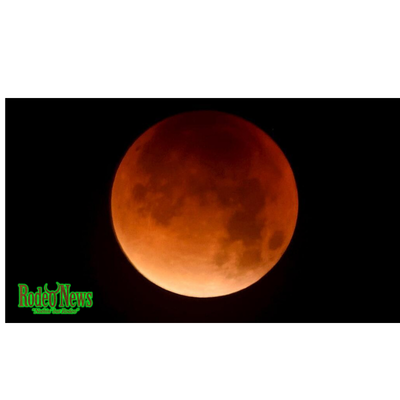
The August 27–28, 2026 eclipse is especially notable because it is a deep partial eclipse. At its peak, roughly 96% of the Moon’s visible disk will be inside Earth’s dark umbral shadow. A small bright portion will remain outside the shadow, meaning the event will not technically be a total lunar eclipse. SSpace+1
For viewers in Los Angeles, the timing is particularly favorable. The partial phase begins Thursday evening, August 27, with the eclipse reaching its maximum at about 9:12 p.m. local time before ending around midnight. TTime and Date+1
Here is what Southern California skywatchers need to know.
Partial Lunar Eclipse Begins Thursday Night
The partial lunar eclipse will be visible across much of Southern California on Thursday night.
According to ABC7, the eclipse begins at approximately 7:34 p.m. in Los Angeles, when the Moon begins moving into the darker portion of Earth’s shadow. The event reaches its most dramatic stage around 9:13 p.m. and ends at approximately 10:52 p.m., according to the station’s report. AABC7 Los Angeles
Other astronomical timing calculations place the Los Angeles eclipse from approximately 7:17 p.m. until 12:01 a.m., reflecting the broader eclipse sequence and the distinction between the different shadow phases. The maximum occurs at about 9:12 p.m. local time. TTime and Date
That means viewers have a substantial window to watch the Moon change.
The most noticeable transformation will occur as the Moon enters the umbra, the darkest central part of Earth’s shadow.
At that point, one side of the Moon can appear dramatically darker while the remaining illuminated section continues to shine.
The Moon Could Turn Red or Copper
One of the most eye-catching features of this partial lunar eclipse will be the Moon’s color.
As the Moon moves deeper into Earth’s shadow, the eclipsed portion can take on shades of red, orange, brown or copper.
This happens because sunlight passing through Earth’s atmosphere is filtered before reaching the Moon. The atmosphere scatters shorter blue wavelengths more effectively, while redder light can continue through and illuminate the lunar surface.
The result is the familiar reddish appearance associated with the popular term “blood moon.”
However, this event should technically be described as a partial lunar eclipse rather than a total lunar eclipse.
At maximum eclipse, approximately 96% of the Moon will be inside Earth’s umbral shadow, leaving a small portion directly illuminated by sunlight. SSpace+1
That narrow bright section could make the event especially dramatic.
Instead of seeing the entire Moon turn dark red, viewers may see a mostly copper-colored Moon with a bright edge.
Partial Lunar Eclipse Viewing Times in Los Angeles
For people planning to watch from Los Angeles, the evening schedule is relatively convenient.
The eclipse sequence begins during the evening, with the Moon gradually entering Earth’s shadow.
The key period is around the maximum eclipse, when the largest portion of the Moon will be covered.
Key Los Angeles times
- Around 7:17 p.m.: The broader eclipse begins in Los Angeles.
- Around 7:34 p.m.: ABC7 identifies the start of the visible partial phase.
- Around 9:12–9:13 p.m.: Maximum eclipse.
- Around 10:52 p.m.: ABC7’s reported end of the main visible event.
- Around midnight: The broader eclipse sequence concludes in Los Angeles. A
ABC7 Los Angeles+1
The exact appearance will depend on where viewers are located and local conditions.
For the best visual impact, skywatchers should try to be outside before maximum eclipse rather than waiting until the peak.
That allows them to see the shadow gradually move across the Moon.
Griffith Observatory Plans a Live Broadcast
People who cannot find a clear view of the Moon can still follow the event online.
The Griffith Observatory is scheduled to provide a live broadcast, according to ABC7. The broadcast is expected to run from approximately 7:25 p.m. until 12:05 a.m., weather permitting. The eclipse is expected to become visible from the observatory at around 8:15 p.m. AABC7 Los Angeles
A livestream can also be useful if clouds interfere with local viewing.
Southern California weather conditions can vary significantly from one neighborhood to another. Coastal areas may experience marine-layer clouds while inland locations can have different visibility.
Skywatchers therefore should check their immediate conditions shortly before heading outside.
You Do Not Need Special Eclipse Glasses
Unlike a solar eclipse, a lunar eclipse is safe to watch with the naked eye.
There is no need for specialized protective glasses.
The difference is important.
During a solar eclipse, the viewer is looking toward the Sun, creating a serious risk of eye damage without proper protection.
During a lunar eclipse, viewers are looking at the Moon, which is reflecting sunlight rather than producing the intense direct solar radiation associated with solar viewing.
ABC7 notes that no special eye protection is required for this lunar event. AABC7 Los Angeles
Binoculars or a telescope can make the experience even better.
Magnification can reveal the boundary between the illuminated and shadowed portions of the lunar surface, along with details of the Moon’s craters and terrain.
However, neither piece of equipment is necessary.
For many viewers, the naked-eye view will be enough.
Where to Watch the Partial Lunar Eclipse
The best viewing location is one with a clear view of the sky and minimal obstruction.
A rooftop, backyard, open park or elevated location can provide a better experience than an area surrounded by tall buildings.
Light pollution is less of a problem for lunar eclipses than it is for many other astronomical events because the Moon is bright enough to remain visible from urban areas.
That means people in Los Angeles do not necessarily need to drive far outside the city.
Instead, the most important factor is having a clear view of the Moon.
Clouds can be a bigger problem than city lights.
A location with an unobstructed view of the sky can therefore be more valuable than a long drive into a darker area.
Why This Eclipse Is So Unusual
The August 2026 event stands out because it comes very close to being total.
A total lunar eclipse occurs when the entire lunar disk enters Earth’s umbra.
This eclipse falls just short of that threshold.
About 96% of the Moon’s visible area will be covered by the umbral shadow at maximum. SStar Walk+1
That makes it much more dramatic than a shallow partial eclipse.
For observers, the distinction between partial and total may not feel particularly important during the deepest phase.
Most of the Moon will be darkened.
The eclipsed portion may also become visibly reddish, creating an appearance that resembles a blood moon.
But a small bright section will remain, providing the visual clue that this is technically a partial eclipse.
The Eclipse Is Visible Across a Wide Region
Los Angeles is not the only place where people can watch.
The August 27–28 eclipse is visible across large portions of North America and South America, as well as parts of Europe and Africa. SSpace+1
Visibility varies depending on the local time and whether the Moon is above the horizon during each stage.
For western parts of the United States, including California, the eclipse is especially well placed around the evening maximum.
In other regions, the event occurs later at night or during the early morning hours.
The same astronomical event therefore appears at different local times around the world.
What Causes a Lunar Eclipse?
A lunar eclipse happens when Earth moves between the Sun and the Moon.
The three bodies become aligned closely enough for Earth to cast its shadow across the lunar surface.
Earth’s shadow has two main parts.
The outer, lighter region is called the penumbra. The darker central region is called the umbra.
During a partial lunar eclipse, part of the Moon enters the umbra while another part remains outside it.
That is exactly what will happen during the August 2026 event.
As the Moon passes through the shadow, observers can watch the boundary between light and darkness slowly move across the lunar disk.
NASA describes the August 28 event as a deep partial lunar eclipse, with the evening of August 27 corresponding to the event in some North American time zones. NNASA Scientific Visualization Studio
Photography Tips for the Red Moon
The eclipse also provides a strong opportunity for amateur photographers.
A smartphone can capture the Moon, but photographing the darker red phase may be challenging because the camera needs to balance a relatively dim object against a dark sky.
A tripod can help reduce camera shake.
For smartphone users, manually reducing exposure can prevent the bright portion of the Moon from becoming an overexposed white circle.
A DSLR or mirrorless camera with a telephoto lens can provide substantially more detail.
Photographers should also consider including recognizable Southern California landmarks in the frame.
The Moon above the Los Angeles skyline, mountains or Griffith Observatory could create a more memorable image than a close-up lunar photograph alone.
What to Expect From Southern California
The biggest variable for Southern California viewers will be the weather.
A spectacular astronomical event cannot be seen through thick clouds.
That means prospective viewers should check local forecasts before the eclipse begins and be prepared to move to a clearer location if necessary.
Even partial clearing could be enough.
The Moon is bright, and the eclipse occurs over several hours, giving observers multiple opportunities to catch a clear interval.
Those planning to photograph the event should arrive early and set up before the Moon reaches maximum eclipse.
That avoids missing the most dramatic portion while dealing with equipment.
Partial Lunar Eclipse Is a Must-See Night-Sky Event
The August 27–28, 2026 partial lunar eclipse offers Southern California an unusually favorable opportunity to watch a dramatic celestial event without special equipment.
For Los Angeles viewers, the most important time is around 9:12 p.m. Thursday, when the eclipse reaches maximum and roughly 96% of the Moon is covered by Earth’s umbral shadow. TTime and Date+1
The Moon may appear dark red, orange or copper during the deepest stage.
Although it will not technically become a total blood moon, the visual effect should be striking.
Best of all, viewers do not need special glasses or expensive equipment.
A clear sky, an unobstructed view and a little patience should be enough.
For anyone who missed Southern California’s total lunar eclipse earlier in 2026, Thursday night offers another chance to watch Earth’s shadow transform the Moon.
And because the next total lunar eclipse is not expected until December 2028, this near-total partial eclipse is one night skywatchers in Los Angeles will not want to overlook.
Image ALT Text: Partial lunar eclipse over Los Angeles during the August 2026 red Moon event