Cesar Gastelum Suspect Arrested After Livestream Killing in Mexico
The Cesar Gastelum suspect arrested case has taken a major turn after Mexican authorities announced the detention of a man allegedly involved in the killing of the social media influencer during a livestream in Culiacan, Sinaloa. Officials said the suspect was located in Puebla, where a police operation also resulted in an armed confrontation.
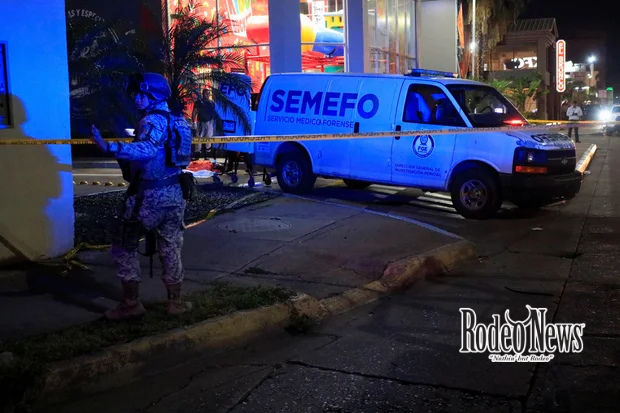
Gastelum was shot on August 4 while broadcasting live with two friends outside a fast-food restaurant in Culiacan. The influencer, who had more than 500,000 TikTok followers, was participating in a social media challenge while dressed as a food delivery worker when a motorcycle approached. According to footage reviewed by Reuters, the motorcycle driver appeared to fire directly at Gastelum.
The arrest represents a significant development in a case that has drawn international attention because the killing happened in front of a live online audience. It also comes amid continuing violence between criminal factions in Sinaloa, one of Mexico’s most troubled regions.
Cesar Gastelum Suspect Arrested in Puebla
Mexico’s Security Minister Omar Garcia Harfuch said authorities located the alleged killer in Puebla, a state in central Mexico.
According to officials, police officers came under attack by three armed individuals during the operation. One of those individuals was killed, while authorities arrested the suspected killer of Gastelum and another person. Investigators also seized three firearms, ammunition and vehicles.
The development marks an important step in an investigation that began after Gastelum was killed in broad daylight in a busy area of Culiacan.
However, the arrest does not mean the investigation is finished. The suspect will still face judicial proceedings, and authorities will need to establish the evidence supporting the allegations in court.
That distinction is important. Being arrested does not establish guilt, and the suspect remains legally entitled to due process.
How the Influencer Was Killed During a Livestream
Gastelum was broadcasting with two friends when the attack occurred.
The group was dressed as food delivery workers as part of a social media challenge. During the livestream, a motorcycle carrying two people stopped near them. The driver appeared to fire at Gastelum before leaving the scene.
The attack happened in Culiacan, the capital of Sinaloa. The city has become synonymous with organized-crime violence because of prolonged conflict involving factions associated with the Sinaloa Cartel.
The circumstances made Gastelum’s death particularly shocking. Unlike many violent crimes that are reported after the fact, the shooting unfolded during an online broadcast.
The livestream was later removed, but copies and images continued to circulate online.
Gastelum was known for comedic and lifestyle-oriented content. Reports have put his TikTok following at more than 500,000, while other accounts have estimated his audience at close to 600,000 or more.
Why Authorities Are Investigating His Social Media Posts
Investigators are examining whether Gastelum’s online activity played a role in his killing.
Mexico’s security authorities said a preliminary investigation indicated that the murder was connected to social media posts that allegedly alluded to a faction of a criminal organization. Officials have not publicly released all details of those posts or established a complete motive.
That uncertainty is significant.
Social media has become an increasingly important part of Mexico’s criminal landscape. In areas where organized crime exerts influence, online personalities can attract enormous audiences while also becoming exposed to threats, accusations or pressure from criminal organizations.
Culiacan is particularly sensitive because of the region’s long-running cartel conflict.
The city has also developed a prominent “narco-culture,” in which music, fashion, videos and social media content can portray or reference the lifestyles of powerful drug traffickers.
Authorities and local media have previously reported that some influencers have links to criminal groups. However, those reports do not mean that every creator operating in the region has criminal connections.
In Gastelum’s case, investigators are still determining exactly why he was targeted.
Culiacan Remains at the Center of Cartel Violence
The murder has once again focused attention on Sinaloa’s security crisis.
A prolonged conflict between rival factions connected to the Sinaloa Cartel has produced widespread violence across the state. Thousands of people have been killed or reported missing during the broader conflict, according to reporting cited by CBS News.
The Sinaloa Cartel is one of Mexico’s most notorious criminal organizations. Its history is closely associated with Joaquín “El Chapo” Guzmán, who is serving a prison sentence in the United States.
For residents of Culiacan, violence linked to organized crime is not a new phenomenon. What makes Gastelum’s case different is the way the killing became visible to a large online audience almost immediately.
The attack demonstrates how the risks associated with organized crime can intersect with the modern influencer economy.
Creators who build audiences by documenting their lives can make themselves highly visible. In dangerous environments, that visibility can sometimes create additional risks.
A Growing Pattern of Influencers Targeted in Mexico
Gastelum’s killing is not an isolated case.
In May 2025, Mexican influencer Valeria Marquez was shot and killed during a TikTok livestream at a beauty salon in Zapopan, Jalisco. Prosecutors said she appeared to have been killed by a hitman, and the case generated widespread outrage across Mexico.
Mexican authorities later announced the arrest of Ramon Angel Alvarez Ayala, whom officials linked to Marquez’s killing and the November 2025 murder of Uruapan Mayor Carlos Manzo.
The cases have raised broader questions about the vulnerability of online personalities in areas affected by organized crime.
Influencers can command large audiences without having the institutional protection available to politicians, major corporations or traditional media organizations. At the same time, their public profiles can make them attractive targets for intimidation or manipulation.
In January 2025, reports also emerged that a small aircraft had dropped threatening pamphlets over Culiacan. The messages reportedly targeted artists and YouTubers accused of having dealings with a faction of the Sinaloa Cartel.
These incidents have intensified concerns about the relationship between social media, celebrity culture and organized crime in parts of Mexico.
Police Operation Turns Violent During Arrest
The arrest operation itself illustrates the security challenges facing Mexican authorities.
According to Harfuch, officers encountered three armed individuals while attempting to make the arrests in Puebla. One of those individuals was killed during the confrontation.
Authorities subsequently detained two people and seized weapons, ammunition and vehicles.
The operation highlights the difficulties investigators face when pursuing suspects connected to violent criminal networks.
At the same time, authorities have not publicly disclosed every piece of evidence gathered against the principal suspect. Further details are expected to emerge through the judicial process.
For now, officials have described the investigation as ongoing.
What Happens Next in the Cesar Gastelum Case?
The Cesar Gastelum suspect arrested development is likely to lead to further investigative and judicial activity.
Prosecutors will need to present evidence linking the suspect to the killing. Investigators may also examine the communications, vehicles, weapons and other evidence recovered during the arrest operation.
Authorities will likely continue examining Gastelum’s social media activity as they work to establish a motive.
The central question remains why he was targeted.
Officials have indicated that his social media posts may have referenced a criminal faction, but they have not publicly provided enough information to establish the full circumstances behind the attack.
That means several aspects of the case remain unresolved.
The arrest may also help investigators identify other people allegedly involved in planning or carrying out the shooting. The fact that two people were detained during the operation could become relevant as prosecutors reconstruct the events surrounding Gastelum’s death.
The Wider Warning for Social Media Creators
Gastelum’s death also highlights a difficult reality of the digital era.
Livestreaming allows audiences to experience events as they happen. That immediacy is one of the main reasons platforms such as TikTok and other social networks have become powerful tools for creators.
But livestreaming can also reveal a person’s location in real time.
For influencers operating in areas affected by organized crime, that can potentially create security risks. A public broadcast may reveal where a creator is, who they are with and how long they intend to remain in one location.
Gastelum’s case is a particularly tragic example of how quickly an ordinary social media challenge can turn into a deadly event.
It is also a reminder that viral visibility does not necessarily translate into physical security.
Mexico’s Fight Against Organized Crime Continues
The investigation into Gastelum’s murder comes as Mexico continues its broader campaign against organized crime.
President Claudia Sheinbaum’s administration has placed significant emphasis on reducing violence and targeting criminal organizations. Security officials have continued announcing arrests and operations across multiple states.
In Gastelum’s case, authorities now have a suspect in custody. The next challenge will be converting the arrest into a successful prosecution based on evidence that can withstand judicial scrutiny.
The outcome will matter beyond one individual case.
Gastelum’s death has become another example of how organized crime can reach into everyday life, including the increasingly influential world of social media.
The shooting also demonstrates why Culiacan remains a major security concern. Criminal conflicts that once appeared distant from mainstream entertainment and online culture can now directly affect creators whose content reaches hundreds of thousands of people.
For Gastelum’s followers, the most disturbing part of the story remains the fact that his final moments were captured during a livestream.
The arrest offers a measure of progress for investigators. Yet questions about the motive, the possible involvement of additional suspects and the broader criminal network behind the attack remain unanswered.
Until those questions are resolved in court, the case remains an active investigation.