Nepal Flash Flood: 157 Dead in Shocking Disaster
A devastating Nepal flash flood has killed at least 157 people and left hundreds of others missing after a massive surge of water, mud and debris swept through communities near the Nepal-Tibet border. The disaster struck the mountainous Bhotekoshi River corridor on August 26, destroying homes, roads, bridges and major infrastructure.
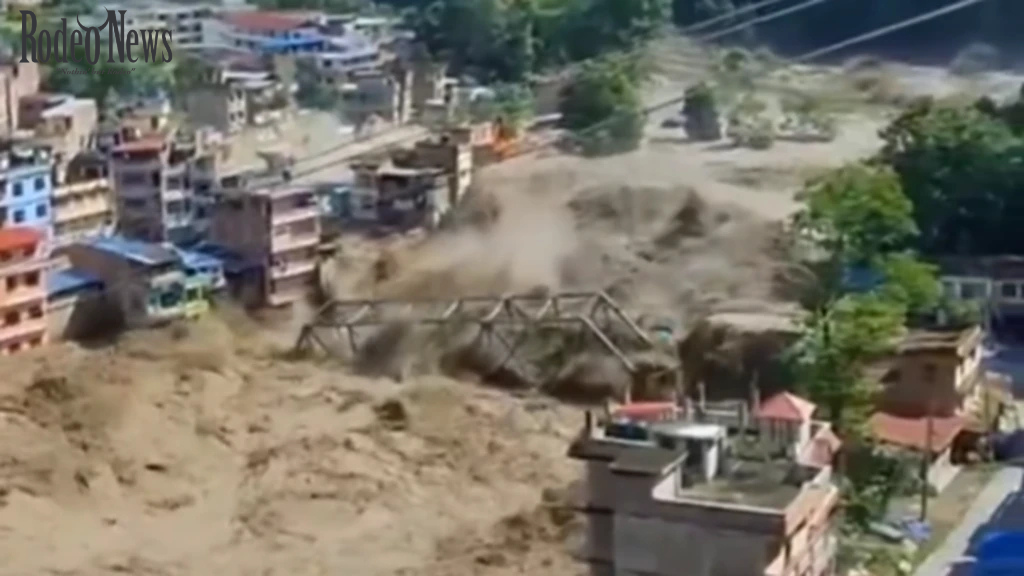
The scale of the destruction has continued to emerge as rescue teams reach areas that were initially cut off. Reuters reported that 157 bodies had been recovered in Nepal, while hundreds of tourists and other travellers remained unaccounted for.
The disaster has also affected the Tibetan side of the border. Chinese authorities reported deaths and hundreds of people missing in Gyirong county after a mudslide hit the area around a major border crossing.
The situation remains fluid, and casualty figures could change as search teams reach isolated settlements and authorities verify reports of missing people.
Nepal Flash Flood Sweeps Through Mountain Communities
The Nepal flash flood struck the Bhotekoshi River system in northern Nepal, particularly affecting Rasuwa district and communities around Timure, Syapru Besi and Rasuwagadhi.
The Bhotekoshi enters Nepal from Tibet before eventually feeding into the Trishuli River system. Because the affected settlements sit along narrow Himalayan valleys, a sudden rise in water can move with enormous speed and destructive force.
Local reports described torrents carrying mud, rocks and debris through populated areas. Roads were washed away, bridges collapsed and buildings close to riverbanks were destroyed.
The Kathmandu Post reported that a 42-kilometre stretch of road linking Betrawati in Nuwakot with the Rasuwagadhi border crossing was damaged at multiple points. Several concrete bridges were also swept away.
The damage has created an additional challenge for emergency crews because the same roads needed to deliver rescue equipment and supplies have themselves been destroyed.
Hundreds of Travellers Remain Missing
One of the most alarming aspects of the disaster is the large number of people whose whereabouts remain unknown.
Earlier reports from Nepal’s Tourism Board said 384 travellers were unaccounted for, including 291 foreign nationals. Reuters reported that the missing included people from several countries, with Indian nationals among those affected.
The figures have been difficult to verify because communications were disrupted across parts of the disaster zone.
Some travellers were also in the region because it serves as an important route toward Tibet. The Rasuwagadhi area is connected to travel routes used by tourists and pilgrims, including people travelling toward the Kailash Mansarovar region.
As rescue operations continue, authorities are working with tourism officials, travel companies, security agencies and foreign governments to establish who has survived, who has been rescued and who remains missing.
That process is complicated by the destruction of roads, electricity networks and communications infrastructure.
What Caused the Nepal Flash Flood?
The precise chain of events behind the Nepal flash flood is still being investigated.
Initial assessments have pointed toward a major landslide or ice-and-rock avalanche that may have blocked a river before releasing a sudden wall of water downstream. Reuters reported that satellite imagery and local authorities identified a landslide in the Lhende River area.
A magnitude 4.4 earthquake was also recorded in the region around the time of the disaster, although the exact relationship between the earthquake and the flooding remains under investigation.
Experts have also highlighted the vulnerability of Himalayan river systems to sudden changes involving glaciers, landslides and unstable mountain slopes.
That makes it difficult to describe the event as an ordinary rain-driven flood.
In some affected locations, reports indicated that there was no exceptional rainfall immediately before the surge. Instead, communities were confronted with a rapidly rising river carrying enormous quantities of rock and sediment.
This lack of warning was one of the factors that made the disaster particularly dangerous.
Rasuwa Among the Worst-Hit Areas
Rasuwa district has emerged as one of the hardest-hit parts of Nepal.
The communities of Timure and Syapru Besi suffered extensive damage, while the Rasuwagadhi border area was also severely affected. Authorities warned residents downstream as floodwaters moved toward the Trishuli River.
The Kathmandu Post reported that numerous settlements along the Bhotekoshi corridor were affected, while officials continued to assess the full extent of the destruction.
Power infrastructure was also damaged.
According to Al Jazeera’s report citing the Nepal Electricity Authority, around 430 megawatts of generation capacity, including hydropower and solar facilities, had been affected.
For a country that relies heavily on hydropower, damage to electricity infrastructure creates problems well beyond the immediate flood zone.
It can affect hospitals, communications, businesses, transport systems and rescue operations.
Roads and Bridges Destroyed
The destruction of transport infrastructure is another major concern.
The road connecting northern Nepal with the China border is strategically important for both trade and travel. When sections of that route disappeared beneath floodwater and debris, communities were effectively cut off.
The Kathmandu Post reported that the entire 42-kilometre road section between Betrawati and Rasuwagadhi had been damaged, with multiple bridges washed away.
That means emergency teams cannot simply drive into some of the worst-hit areas.
Helicopters have become essential, but aviation operations have also been complicated by dangerous conditions. Earlier reports said water levels in affected areas were too high for helicopters to land safely in some locations.
As a result, rescuers face a race against time.
People trapped in isolated communities may have limited access to food, clean water, medical care and shelter while rescue crews struggle to reach them.
Nepal Launches a Major Rescue Operation
Nepal’s security forces have been mobilized to respond to the disaster.
The Nepal Army deployed helicopters and disaster-response personnel, while police and other emergency agencies began searching damaged communities and river corridors.
However, rescue operations are taking place under extremely difficult circumstances.
Flood debris can conceal vehicles, buildings and people. Roads may collapse without warning, while unstable slopes create the risk of additional landslides.
There is also concern about further flooding if rivers remain blocked by landslide debris upstream.
Authorities have therefore urged people living near major rivers to move toward safer ground and avoid returning to damaged areas before officials declare them safe.
Tibet Also Faces Major Damage
The disaster was not limited to Nepal.
Across the border in Tibet, a mudslide hit the Gyirong area and damaged roads, communications and power infrastructure. Chinese authorities reported deaths and hundreds of missing people, while officials warned of major casualties.
The Gyirong border crossing is an important connection between China and Nepal.
Damage there could therefore have economic consequences in addition to the humanitarian crisis.
Chinese President Xi Jinping called for intensive search-and-rescue efforts and stronger monitoring and early-warning systems following the disaster.
The cross-border nature of the disaster also highlights a broader challenge for Himalayan countries.
Rivers do not follow political boundaries. A landslide, glacier-related event or sudden release of water upstream can affect communities many kilometres away in another country.
Foreign Governments Track Missing Tourists
The large number of foreign travellers reported missing has prompted governments and diplomatic authorities to begin checking the whereabouts of their citizens.
Reuters reported that Indian nationals were among those missing, while South Korea said eight of its citizens working at a hydropower project were missing and 10 others were stranded.
South Korea established a task force to coordinate its response and planned to send a rapid-response team to Nepal.
Other countries have also been working to establish whether their citizens were caught in the disaster.
However, officials have cautioned that early figures can be incomplete.
A person listed as missing may simply be unable to communicate because telephone networks are down or roads have been cut. For that reason, authorities must verify reports carefully before declaring someone dead or safe.
Why the Himalayas Face Serious Flood Risks
The Nepal flash flood has again exposed the risks facing communities in the Himalayan region.
Nepal is highly vulnerable to floods, landslides and other natural hazards because of its steep terrain, active geology and extensive river networks.
The Himalayan environment also contains glaciers, unstable slopes and glacial lakes. Sudden changes in these systems can produce catastrophic downstream flooding.
Climate change is adding another layer of concern.
Scientists have warned that warming temperatures are affecting glaciers and increasing risks associated with unstable ice and glacial lakes in parts of the Himalayas. At the same time, extreme rainfall can trigger landslides and overwhelm rivers.
The combination creates a complex disaster environment.
The lesson is not simply that communities need stronger flood defenses. They also need better monitoring, reliable communication systems, evacuation routes and cross-border data sharing.
Early Warning Systems Could Save Lives
One of the clearest issues emerging from the disaster is the importance of early warning.
A flash flood can move far faster than conventional evacuation systems can respond. If residents receive only minutes of warning, even a well-organized emergency response may not be enough.
Authorities therefore need systems capable of detecting unusual changes upstream and immediately sending warnings downstream.
That requires cooperation between governments, meteorological agencies, hydrological services, local authorities and communities.
It also requires warnings that actually reach people.
A sophisticated monitoring station is of little use if residents downstream do not receive the alert or do not understand what action to take.
The disaster provides a stark reminder that early-warning technology must be paired with practical evacuation plans.
A Humanitarian Crisis Still Unfolding
The full human cost of the Nepal flash flood is not yet known.
Even after more bodies are recovered, authorities will still need to determine how many homes have been destroyed, how many people have been displaced and how badly critical infrastructure has been damaged.
The immediate priorities are clear: find survivors, provide medical treatment, establish safe shelter and restore communications.
The longer-term challenge will be rebuilding.
Communities along the Bhotekoshi and Trishuli corridors depend on roads, tourism, trade, hydropower and river-based commerce. Reconstructing those systems could take months or longer.
The psychological impact will also be significant.
Families waiting for news about missing relatives face an especially painful period as rescue teams continue searching through devastated areas.
What Happens Next?
The next phase of the disaster response will focus on search and rescue, casualty verification and restoring access to isolated communities.
Officials will also need to determine the precise cause of the flood and assess whether other unstable areas remain dangerous.
For residents downstream, the immediate message remains one of caution.
River levels can change rapidly after a major landslide or flood, and debris blocking a watercourse can create additional hazards.
Meanwhile, international agencies and neighbouring countries are expected to continue monitoring the situation and supporting Nepal’s response.
The tragedy is already one of the country’s most serious recent natural disasters. But the final death toll and scale of economic damage may not become clear for some time.
For now, rescue workers are confronting a landscape transformed by water, mud and rock.
The Nepal flash flood has destroyed vital infrastructure and separated families from loved ones. As authorities continue the search, the priority is finding survivors and preventing further loss of life.