Saudi Nuclear Deal Moves to Congress
The Saudi nuclear deal has entered a crucial new phase after President Donald Trump sent a proposed 30-year civil nuclear agreement with Saudi Arabia to Congress for review. The move brings the long-running U.S.-Saudi nuclear partnership closer to implementation while opening a fresh political fight over nuclear safeguards, uranium enrichment and Saudi Arabia’s relationship with Israel.
The agreement was finalized in July and would allow U.S. companies to export civilian nuclear technology to Saudi Arabia. It could also create major commercial opportunities for American companies involved in reactor construction, nuclear fuel and related infrastructure. However, the pact has attracted criticism from lawmakers and nuclear nonproliferation experts because of questions surrounding the kingdom’s potential ability to enrich uranium and process nuclear material.
The agreement now faces a 90-session-day congressional review period. Congress can attempt to reject the agreement, although Trump’s veto authority makes blocking it difficult unless opponents can assemble the two-thirds majority needed to override a presidential veto.
At the same time, Trump has added a major political condition that could prove more difficult than the congressional review itself.
The president has said the nuclear agreement will only move forward if Saudi Arabia joins the Abraham Accords and normalizes relations with Israel. That condition was imposed after the agreement had already been signed, creating another layer of uncertainty around a pact that was already controversial in Washington.
What the Saudi Nuclear Deal Would Do
The proposed Saudi nuclear deal is designed to establish a long-term framework for peaceful nuclear cooperation between Washington and Riyadh.
Saudi Arabia has been seeking nuclear technology for years as part of its effort to diversify its energy system and reduce its dependence on oil. The kingdom wants nuclear power to become part of a broader electricity strategy while freeing more crude oil for export.
The U.S. agreement would give American companies an opportunity to participate in the development of Saudi Arabia’s nuclear infrastructure. Reuters reported that the arrangement could involve U.S. technology, including AP1000 reactors, with companies such as Westinghouse positioned to benefit from future construction and supply contracts.
The commercial stakes are significant.
Saudi Arabia is one of the world’s largest oil producers, but the kingdom also consumes substantial amounts of energy domestically. Nuclear power could eventually provide another source of electricity while allowing Saudi Arabia to use more of its hydrocarbons for export or higher-value industrial applications.
Saudi officials have also promoted the use of domestic uranium resources. The kingdom argues that developing a nuclear fuel cycle would support its long-term energy security and reduce the amount of oil required to meet domestic power demand.
That ambition, however, is precisely what has raised concern in Washington.
Why Uranium Enrichment Is So Controversial
The biggest issue surrounding the Saudi nuclear deal is the question of uranium enrichment.
Uranium enrichment can have legitimate civilian applications. Nuclear reactors require fuel, and enrichment is part of the fuel cycle. But enrichment technology can also produce material suitable for nuclear weapons if taken to sufficiently high levels.
That dual-use nature has made Saudi Arabia’s nuclear ambitions particularly sensitive.
Reports about the agreement have described provisions under which U.S. and Saudi officials would jointly study the feasibility of an American-built uranium enrichment facility in the kingdom. The Wall Street Journal reported that any such facility would involve U.S. companies, while critics argue that transferring sensitive enrichment capabilities could create a dangerous precedent for nuclear proliferation in the Middle East.
Reuters has likewise reported that the agreement could permit Saudi Arabia to enrich uranium and reprocess spent nuclear material, two activities that have historically attracted intense scrutiny from nonproliferation experts.
The Trump administration has disputed some descriptions of the agreement.
Trump has publicly insisted that the arrangement is for civil nuclear power and has said there will be no enrichment. That creates an important distinction between the president’s public characterization and reports describing provisions that could allow Saudi Arabia to develop enrichment capabilities under U.S. involvement.
The precise interpretation of the agreement will therefore be closely watched by Congress and nuclear policy experts.
Congress Faces a Difficult Decision
The congressional review could become one of the most important tests of the administration’s Middle East policy.
Under the U.S. Atomic Energy Act, nuclear cooperation agreements are subject to congressional review. The proposed Saudi agreement has already been formally approved by the president under the relevant statutory process.
A presidential determination published by the U.S. government says Trump concluded that implementing the proposed agreement would promote U.S. interests and would not create an unreasonable risk to the common defense and security. The determination was dated July 16, 2026.
U.S. government record on the Saudi nuclear agreement
Congress now has its opportunity to review the agreement.
The political challenge for opponents is substantial. While lawmakers can seek to block the agreement, Trump could veto a congressional rejection. Opponents would then need a two-thirds majority in both chambers to override that veto, a high bar in a politically divided Congress.
Nevertheless, congressional scrutiny could force the administration to clarify exactly what Saudi Arabia would be permitted to do with uranium, spent fuel and other sensitive nuclear materials.
That debate could determine whether the agreement becomes a model for future U.S. nuclear partnerships or a controversial exception to longstanding nonproliferation policy.
The Israel Condition Changes the Deal
The nuclear issue is only one part of the political equation.
Trump has explicitly linked the Saudi nuclear deal to Saudi-Israeli normalization. The president has said Riyadh must join the Abraham Accords before the nuclear agreement can proceed.
That condition is significant because Saudi Arabia has not agreed to recognize Israel under the current framework.
The kingdom has historically tied normalization to progress toward Palestinian statehood. The collapse of diplomatic momentum following the Israel-Hamas war has made the issue even more complicated.
Reuters reported that the U.S. nuclear agreement was sent to Congress on August 24, while a U.S. administration official reiterated that Trump’s position had not changed: the nuclear pact would only move forward if Saudi Arabia joins the Abraham Accords.
This creates an unusual situation.
Congress is reviewing a nuclear agreement that has already been signed, but the president has simultaneously attached a separate diplomatic requirement to its implementation.
Saudi Arabia must therefore navigate two different questions: whether it wants the nuclear partnership and whether it is prepared to normalize relations with Israel under the terms demanded by Washington.
Why Saudi Arabia Wants Nuclear Power
For Riyadh, the nuclear program is about more than international prestige.
Saudi Arabia is attempting to transform its economy through its Vision 2030 strategy. Energy diversification is central to that effort.
The kingdom has enormous oil and gas resources, but burning hydrocarbons domestically reduces the amount available for export. Nuclear power could eventually provide a stable source of electricity for homes, industry and desalination while allowing more oil to remain available for international markets.
Saudi officials have also shown interest in developing domestic uranium resources.
That ambition makes nuclear energy strategically attractive. Yet it also increases concern among U.S. policymakers because uranium mining, conversion and enrichment can provide a country with greater control over the nuclear fuel cycle.
The central question for Washington is therefore not simply whether Saudi Arabia should have nuclear reactors.
It is whether Saudi Arabia should also gain capabilities that could shorten the distance between a civilian nuclear program and a potential weapons capability.
Why the Deal Has Raised Nonproliferation Concerns
The United States has previously negotiated nuclear agreements that imposed strong restrictions on sensitive nuclear activities.
The most frequently cited example is the 2009 U.S.-United Arab Emirates agreement. That arrangement included commitments designed to limit the UAE’s ability to enrich uranium or reprocess spent nuclear fuel.
Critics of the Saudi agreement argue that Washington should demand similarly strict restrictions from Riyadh.
Reuters has reported that the Saudi arrangement does not contain some of the safeguards that U.S. officials have traditionally sought in nuclear cooperation agreements. One concern involves the International Atomic Energy Agency’s Additional Protocol, which provides for broader inspection rights, including access to undeclared locations under certain circumstances.
The concern is heightened by Saudi Crown Prince Mohammed bin Salman’s previous comments about nuclear weapons.
The crown prince has indicated that Saudi Arabia could consider developing nuclear weapons if Iran acquired such a capability. That statement has become an important part of the debate surrounding the country’s civilian nuclear ambitions.
Any agreement that gives Riyadh greater control over the nuclear fuel cycle could therefore have consequences beyond electricity generation.
A New Nuclear Balance in the Middle East
The timing of the agreement is also important.
The Middle East has experienced years of tension over Iran’s nuclear program. The possibility of additional countries developing advanced nuclear capabilities has consequently become a major strategic concern.
If Saudi Arabia develops large-scale civilian nuclear infrastructure with an indigenous fuel cycle, other regional powers could eventually seek similar capabilities.
That could create a more complicated nuclear landscape across the Middle East.
Supporters of the agreement argue that bringing Saudi Arabia into a U.S.-led civilian nuclear framework could be safer than leaving Riyadh to seek technology from other countries.
Critics counter that Washington should not sacrifice established nonproliferation standards for commercial opportunities or geopolitical influence.
The disagreement reflects a broader question about American strategy: whether U.S. nuclear cooperation should be used as a tool for strengthening alliances, even when partners seek capabilities that Washington has historically treated cautiously.
American Companies Stand to Benefit
The economic component of the Saudi nuclear deal is another major reason the agreement matters.
Saudi Arabia is expected to require billions of dollars in investment if it moves ahead with a large civilian nuclear program.
American companies could compete for reactor construction, engineering, nuclear fuel and related infrastructure contracts. Reuters has identified Westinghouse, Cameco and Brookfield Asset Management among companies positioned to benefit from the broader nuclear opportunity.
The Trump administration has repeatedly emphasized expanding U.S. commercial influence abroad.
A major nuclear partnership with Saudi Arabia could therefore serve two objectives at once: strengthening the strategic relationship between Washington and Riyadh while opening a substantial market for American industry.
But the commercial opportunity also makes the agreement politically sensitive.
Lawmakers who believe nuclear security should take priority over commercial interests are likely to question whether American companies should participate in developing Saudi enrichment capabilities.
What Happens Next?
The immediate next step is congressional review.
The 90-session-day period gives lawmakers time to examine the agreement and its supporting documents. Committees can scrutinize the technical provisions, safeguards and political conditions surrounding the pact.
The most important questions will likely include:
- What exactly can Saudi Arabia do with uranium under the agreement?
- Will the kingdom be permitted to establish enrichment capabilities?
- What restrictions apply to spent nuclear fuel?
- How extensive will international inspections be?
- What role will U.S. companies play in the nuclear fuel cycle?
- How will Trump’s Israel-normalization condition be enforced?
- What happens if Saudi Arabia refuses to join the Abraham Accords?
The answers could determine whether the agreement moves forward smoothly or becomes the center of a major foreign-policy confrontation.
The Bigger Stakes for Trump
For Trump, the Saudi nuclear deal is about much more than nuclear energy.
It fits into a broader strategy of deepening U.S. ties with Saudi Arabia while encouraging Riyadh to normalize relations with Israel.
If successful, the arrangement could strengthen American commercial influence, deepen the U.S.-Saudi strategic partnership and potentially create new momentum for the Abraham Accords.
If it fails, the administration could face criticism from multiple directions.
Nonproliferation advocates could argue that Washington offered Saudi Arabia too much nuclear flexibility. Saudi officials could conclude that the United States is attaching unacceptable political conditions to a long-sought energy partnership. Israel could remain concerned about the potential growth of Saudi nuclear capabilities.
Congress therefore has an unusually important role.
The agreement sits at the intersection of energy policy, nuclear security, American business interests and Middle East diplomacy.
Bottom Line
The Saudi nuclear deal is now moving into its most politically consequential stage.
Trump has sent the 30-year civil nuclear agreement to Congress, opening a formal review process that could last 90 session days. The agreement could give American companies a major role in building Saudi Arabia’s nuclear infrastructure, while also raising difficult questions about uranium enrichment, spent-fuel processing and international safeguards.
At the same time, Trump has linked the pact to Saudi Arabia joining the Abraham Accords and normalizing relations with Israel.
That condition could ultimately prove just as important as the nuclear provisions themselves.
For Saudi Arabia, the agreement offers a pathway toward nuclear energy and greater control over its future energy mix. For the United States, it offers commercial opportunities and a chance to strengthen an important Middle Eastern partnership.
But for Congress and nuclear-security experts, the central issue remains whether the agreement can expand peaceful nuclear cooperation without creating a new proliferation risk.
The coming congressional review will show whether Trump’s ambitious Saudi nuclear strategy can survive both Washington’s political scrutiny and Riyadh’s diplomatic demands.
Image ALT Text
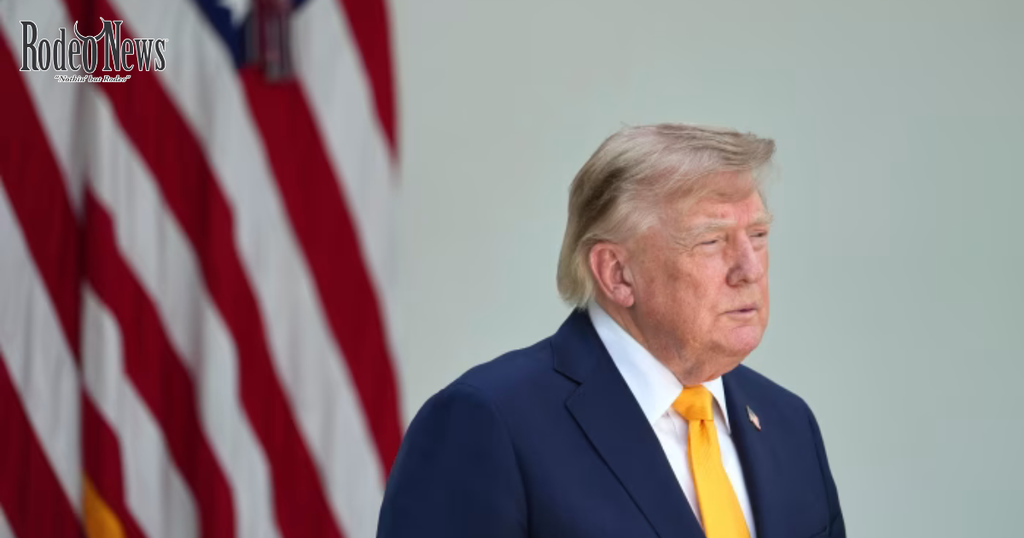
Saudi nuclear deal: Donald Trump meets Saudi officials during U.S.-Saudi nuclear negotiations
Suggested Image Caption
The Saudi nuclear deal could reshape U.S.-Saudi energy cooperation while adding new diplomatic and nonproliferation challenges.