Trump Saudi Nuclear Deal Moves to Congress
Trump Saudi Nuclear Deal Moves to Congress
The Trump Saudi nuclear deal has entered a critical new phase after the Trump administration sent a proposed civil nuclear agreement with Saudi Arabia to Congress for review. The move puts lawmakers at the center of a potentially far-reaching agreement involving U.S. nuclear technology, Saudi energy ambitions and the future of relations between Saudi Arabia and Israel.
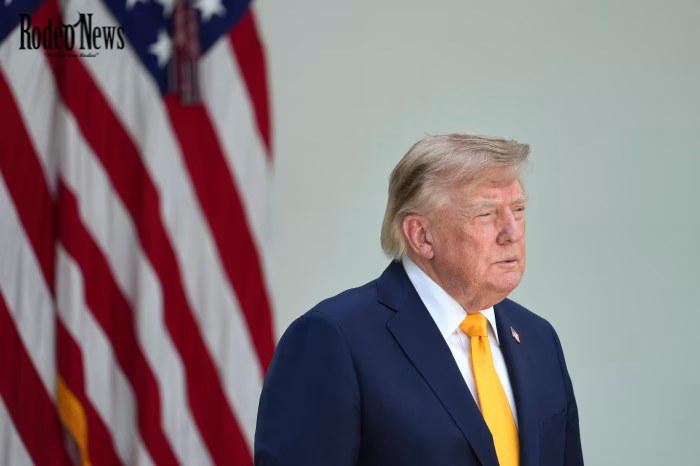
The agreement, reached in July, would allow U.S. companies to export civilian nuclear technology to Saudi Arabia. It is designed as a long-term framework for cooperation and is expected to strengthen the role of American companies in the kingdom’s developing nuclear industry.
However, the agreement is not simply an energy deal.
President Donald Trump has made Saudi Arabia’s participation in the Abraham Accords a condition for the nuclear agreement to move forward. That links the proposed nuclear partnership directly to one of the most sensitive diplomatic issues in the Middle East: Saudi recognition of Israel.
What Is the Trump Saudi Nuclear Deal?
The Trump Saudi nuclear deal is a civil nuclear cooperation agreement between the United States and Saudi Arabia.
The agreement is commonly known as a “123 agreement” because it is concluded under Section 123 of the U.S. Atomic Energy Act. Such agreements establish a legal framework for U.S. cooperation with foreign countries on peaceful nuclear activities.
According to the U.S. Department of Energy, Secretary of Energy Chris Wright and Saudi Energy Minister Prince Abdulaziz bin Salman signed the agreement on July 22, alongside a bilateral safeguards agreement. The department described the arrangement as a decades-long, multibillion-dollar partnership.
The U.S. government says the agreement will expand American nuclear technology exports, support U.S. jobs and supply chains, and help Saudi Arabia meet its growing energy needs.
For Riyadh, nuclear power represents an opportunity to diversify its energy system and reduce the amount of oil used domestically for electricity generation. That could allow more crude oil and other hydrocarbons to remain available for export.
For Washington, the agreement offers a way to strengthen U.S. commercial influence in a strategically important market while competing with other countries seeking a role in Saudi Arabia’s nuclear development.
1. Congress Now Has a Major Role
The first major development is the agreement’s arrival in Congress.
Reuters reported that the agreement was sent to lawmakers on Monday, with Congress receiving 90 session days to review it. If Congress does not reject the agreement during the review period, it can take effect under the applicable statutory process.
That does not mean the deal faces no political obstacles.
Lawmakers are likely to examine the agreement from several angles. Nuclear nonproliferation will be one of the most important issues. So will the commercial benefits for American companies, the strategic relationship with Saudi Arabia and the diplomatic conditions attached to the agreement.
The congressional review could therefore become a significant test for the administration’s Middle East strategy.
The White House is seeking a major expansion of U.S.-Saudi cooperation. At the same time, some lawmakers and nonproliferation advocates have questioned whether the agreement provides sufficient safeguards against the spread of sensitive nuclear capabilities.
2. Saudi Arabia Wants Nuclear Energy for Its Growing Economy
Saudi Arabia remains one of the world’s largest oil producers, but its government has been pursuing a broader economic transformation.
The kingdom wants to develop new energy sources while expanding industrial activity and reducing its reliance on oil revenues over the long term.
Civilian nuclear power could become part of that strategy.
Nuclear reactors can provide large amounts of electricity continuously, potentially helping Saudi Arabia meet rising power demand. The technology could also support an economy increasingly focused on manufacturing, infrastructure, technology and other energy-intensive industries.
The U.S. Department of Energy says the agreement will help meet Saudi energy needs while opening opportunities for American companies and workers.
Saudi officials have also argued that nuclear energy could help reduce domestic oil consumption. Using nuclear power for electricity could allow more oil to be directed toward exports and higher-value economic activities.
That economic argument is one reason Riyadh has maintained a strong interest in developing a civilian nuclear industry.
3. Uranium Enrichment Remains a Sensitive Issue
The most controversial element surrounding the Trump Saudi nuclear deal is the question of uranium enrichment.
President Trump has said the agreement does not allow Saudi Arabia to enrich uranium. His administration has emphasized the civilian and nonmilitary nature of the agreement.
Yet questions remain about how Saudi Arabia’s future nuclear capabilities will evolve.
Uranium enrichment is a normal part of some civilian nuclear programs when uranium is prepared for use as reactor fuel. However, enrichment technology can also become highly sensitive because the same basic process can be adapted to produce material at much higher levels of enrichment.
That is why nuclear nonproliferation experts closely examine agreements that could give countries access to enrichment-related technology or infrastructure.
Reuters reported that critics have pointed to the absence of some of the restrictions found in previous U.S. nuclear agreements, including the stronger limitations associated with the agreement the United States reached with the United Arab Emirates.
The distinction is important.
A civilian nuclear program is not automatically a weapons program. But the international community has historically treated uranium enrichment and spent-fuel reprocessing as particularly sensitive technologies because of their potential relationship to nuclear weapons development.
4. Trump Ties the Deal to the Abraham Accords
The most dramatic political complication is Trump’s demand that Saudi Arabia join the Abraham Accords.
The accords began during Trump’s first administration and established diplomatic relations between Israel and several Arab countries, including the United Arab Emirates and Bahrain. Morocco later joined the normalization process.
Saudi Arabia has not joined the accords.
Trump has nevertheless said the Saudi nuclear agreement is subject to the kingdom becoming part of the normalization framework. Reuters reported on August 25 that the administration’s position remained unchanged: the agreement would move forward only if Saudi Arabia joins the Abraham Accords.
That condition makes the nuclear agreement much more than an energy policy.
It becomes part of a larger diplomatic negotiation involving Israel, Saudi Arabia, the United States and the future political structure of the Middle East.
Saudi Arabia has previously indicated that normalization with Israel would require meaningful progress toward Palestinian statehood. That position makes the diplomatic condition difficult to separate from the broader Israeli-Palestinian conflict.
As a result, the nuclear agreement could face obstacles that have little to do with nuclear technology itself.
5. The Deal Could Reshape U.S.-Saudi Relations
The agreement also has significant strategic implications.
Washington and Riyadh already cooperate closely on energy, defense, investment and regional security. A long-term civil nuclear partnership could deepen those ties and give American companies a major role in Saudi Arabia’s emerging nuclear industry.
The U.S. Energy Department has explicitly presented the agreement as a way to expand American nuclear exports and strengthen the strategic partnership between the two countries.
That commercial dimension matters.
The global nuclear energy market is becoming increasingly competitive. Countries including China, Russia and other major nuclear suppliers have sought opportunities to build reactors and provide technology in emerging markets.
For the United States, securing a prominent role in Saudi Arabia could therefore be viewed as both an economic opportunity and a strategic competition issue.
The agreement could also help the Trump administration promote American nuclear technology overseas as part of a broader effort to expand the U.S. nuclear industry.
Why the Deal Matters Beyond Saudi Arabia
The consequences of the Trump Saudi nuclear deal could extend well beyond the U.S. and Saudi Arabia.
The Middle East has long been a region where nuclear ambitions are closely watched because of tensions between regional powers.
Iran’s nuclear program is particularly important to the debate.
If Saudi Arabia develops a substantial civilian nuclear industry, neighboring governments will watch the terms of the program closely. Any perception that Riyadh has received unusually broad nuclear rights could influence how other countries view their own nuclear options.
That is why nonproliferation safeguards are likely to remain central to the congressional debate.
At the same time, Saudi Arabia’s nuclear ambitions cannot be separated from its wider energy strategy. The kingdom is investing heavily in new sources of electricity and attempting to prepare its economy for a future in which global energy markets may look very different from today.
Nuclear power could provide a reliable source of electricity while supporting long-term economic diversification.
What Happens Next?
The immediate next step is congressional review.
Lawmakers now have an opportunity to scrutinize the agreement’s terms and consider its economic, security and nonproliferation implications. Reuters reported that Congress has 90 session days to review the agreement.
The administration, meanwhile, faces a diplomatic challenge.
Trump wants the nuclear agreement to advance, but he has simultaneously tied its implementation to Saudi-Israeli normalization.
That creates a potentially difficult equation.
Saudi Arabia wants access to American nuclear technology and assistance. The United States wants to strengthen its strategic and commercial position. Israel has major security concerns about Saudi nuclear capabilities. Meanwhile, Riyadh continues to view the Palestinian issue as central to any decision about formally recognizing Israel.
Those interests do not necessarily point in the same direction.
Therefore, the congressional process could become only one part of a much larger negotiation.
A High-Stakes Test for Trump
The Trump Saudi nuclear deal represents a rare combination of energy policy, commercial competition, nuclear nonproliferation and Middle East diplomacy.
On paper, the agreement is focused on peaceful nuclear energy.
In practice, its consequences could be much broader.
For Saudi Arabia, nuclear power could become an important component of its future energy mix. For U.S. companies, the agreement could open a major market. For Washington, it could strengthen an important strategic partnership.
But the diplomatic condition imposed by Trump adds a significant complication.
Saudi Arabia’s decision on normalization with Israel could determine whether the nuclear agreement actually advances. At the same time, congressional scrutiny could shape the safeguards and political conditions surrounding the partnership.
The outcome will therefore be watched closely not only in Washington and Riyadh, but also in Jerusalem and across the wider Middle East.
For now, the agreement has moved from negotiation into congressional review. The next stage will determine whether Trump’s ambitious nuclear partnership becomes a functioning long-term program or remains caught between energy policy and the region’s unresolved diplomatic conflicts.