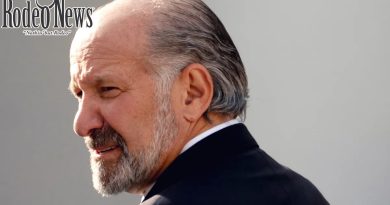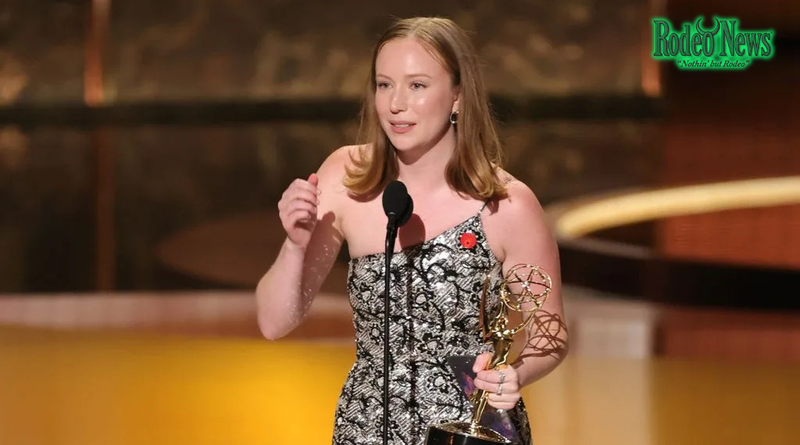
Hannah Einbinder Defends Mark Ruffalo Amid Paramount Clash
Hannah Einbinder has publicly defended Mark Ruffalo after Paramount accused the actor of invoking antisemitic tropes while criticizing the Ellison family and the proposed Paramount-Warner Bros. merger. The Hacks star called the allegation “ludicrous” and argued that Ruffalo was raising concerns about corporate power, military technology and media consolidation rather than targeting Jewish people.
The dispute has quickly become one of Hollywood’s most heated entertainment-industry controversies, bringing together questions about corporate ownership, political speech, Israel and Gaza, and the boundaries of criticism involving Jewish public figures.
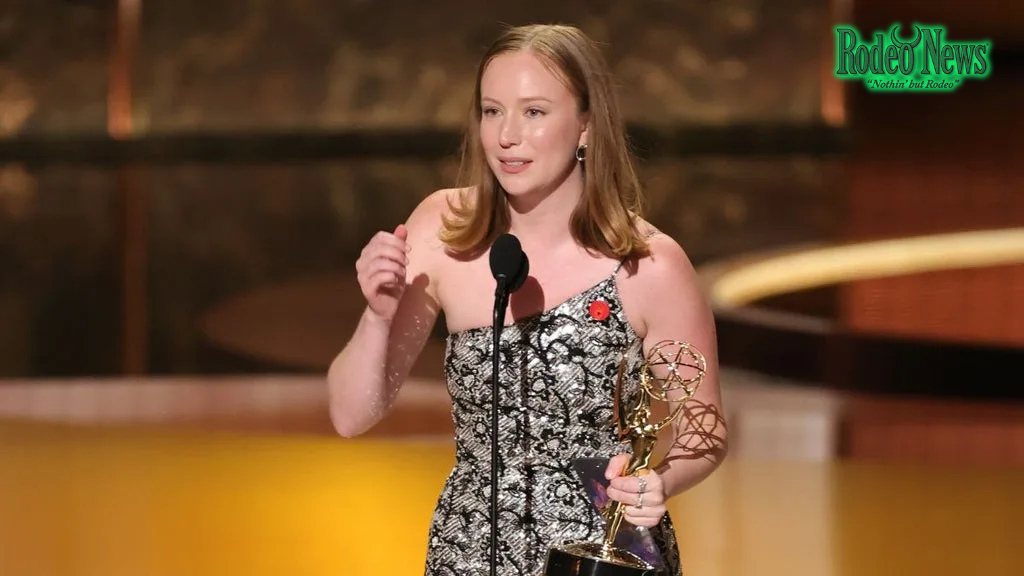
Einbinder entered the debate Monday through an Instagram Story, expressing gratitude that Ruffalo had publicly connected the Ellison family’s business interests with his concerns about the proposed merger.
She also argued that artists with large public platforms should be willing to speak out when they believe major corporate or political developments could have broad consequences.
Hannah Einbinder Defends Mark Ruffalo Over Antisemitism Claim
Einbinder’s defense came after Ruffalo criticized the Ellison family and the proposed Paramount-Warner Bros. transaction.
In his original social-media post, Ruffalo linked Oracle, Larry Ellison’s technology company, to technology he said had been used by the Israeli military. He then connected those concerns to David Ellison’s role in the proposed Warner Bros. acquisition. Paramount subsequently characterized Ruffalo’s comments as antisemitic and said they crossed a line.
Einbinder rejected that interpretation.
The actress argued that criticizing specific executives, companies, government policies or business arrangements should not automatically be interpreted as criticism of Jewish people because some of the individuals involved are Jewish.
She specifically pointed to Oracle executive vice chair Safra Catz, who also sits on Paramount’s board, as an example of why she believes the discussion should focus on corporate and political relationships rather than religious identity.
Her comments put her firmly behind Ruffalo as the controversy expanded.
What Mark Ruffalo Said About the Paramount-Warner Bros. Deal
Ruffalo has been outspoken about the proposed Paramount-Warner Bros. transaction, which has attracted intense scrutiny because of its potential impact on one of Hollywood’s largest collections of entertainment assets.
His criticism went beyond the financial dimensions of the deal.
Ruffalo argued that the merger could concentrate an enormous amount of media power under one corporate structure. He also raised concerns about the relationship between technology companies, political influence and military applications.
Paramount responded by accusing the actor of invoking antisemitic tropes.
Ruffalo subsequently rejected the accusation and said his comments were aimed at government policy, corporate activity and individual executives rather than Jewish people. Entertainment Weekly reported that Ruffalo described the allegation as “appalling and fundamentally dishonest” while reiterating his opposition to the proposed acquisition.
That response helped push the dispute beyond a disagreement about the merger and into a broader debate over political speech in Hollywood.
Einbinder Says Criticism Is Not Antisemitism
At the center of Einbinder’s argument is a distinction between criticism of Jewish individuals because they are Jewish and criticism of identifiable people or corporations because of their actions.
She maintained that Ruffalo’s comments were focused on what she described as right-wing corporate power and an unprecedented consolidation of media ownership.
That distinction is particularly important because the controversy involves a Jewish family, Israeli military policy and a major American media transaction at the same time.
Critics of Ruffalo, however, have argued that references involving Jewish business figures, Israel and alleged control of media or political institutions can reproduce antisemitic stereotypes even when the speaker says the target is a corporation or political ideology.
The disagreement therefore goes beyond the proposed merger itself. It reflects a much wider argument over how public figures should discuss Israel, Gaza, Jewish identity and corporate power without crossing into antisemitic rhetoric.
Why the Ellison Family Is at the Center of the Dispute
Larry Ellison is the founder and chairman of Oracle, while his son, David Ellison, leads Paramount Skydance. David Ellison is also central to the proposed Warner Bros. acquisition that Ruffalo has criticized.
Ruffalo’s argument was that the business interests surrounding the transaction deserve scrutiny because of their potential implications for media ownership and political influence.
Einbinder echoed that concern.
She argued that artists should pay attention when ownership of major entertainment companies becomes increasingly concentrated. Her defense suggests that she sees the debate as part of a larger conversation about who controls Hollywood’s most influential institutions.
The issue has attracted attention because the proposed transaction would reshape the competitive landscape of the American entertainment industry.
For Hollywood performers, writers and directors, ownership changes can potentially affect everything from content decisions and distribution to employment opportunities and editorial independence.
Paramount’s Response Intensifies the Hollywood Debate
Paramount’s response significantly raised the temperature of the controversy.
The company accused Ruffalo of using antisemitic tropes and described his comments as unacceptable. That statement immediately shifted the story from a conventional celebrity dispute over a corporate merger into a much more sensitive cultural and political confrontation.
Ruffalo did not back down.
Instead, he defended the substance of his criticism and rejected Paramount’s characterization of his remarks.
Other celebrities have also expressed support for the actor. John Cusack, for example, publicly voiced solidarity with Ruffalo after Paramount’s accusation.
Einbinder’s intervention adds another prominent Hollywood voice to Ruffalo’s side.
Hannah Einbinder’s Hollywood Profile Adds Weight to Her Comments
Einbinder is best known for her role as Ava Daniels on HBO’s acclaimed comedy-drama Hacks. She has become increasingly prominent in Hollywood and has used major public appearances to discuss political and social issues.
Her decision to defend Ruffalo therefore carries significance beyond a simple celebrity endorsement.
She is part of a younger generation of performers who have become increasingly willing to address political issues publicly, particularly when they intersect with entertainment-industry power.
Ruffalo has also developed a long history of political activism. The actor has repeatedly spoken about social justice, environmental issues and international affairs, making public controversy around his political statements less unusual than it might be for a celebrity who generally avoids activism.
The Paramount-Warner Bros. Merger Faces Wider Scrutiny
The controversy surrounding Ruffalo and Einbinder is unfolding against a much larger battle over the future of Warner Bros. and Paramount.
The proposed transaction has become a major issue in Hollywood because of the scale of the companies involved and concerns about media concentration.
Ruffalo has argued that the merger could place too much influence in the hands of a small group of wealthy individuals.
The deal has also attracted legal and political scrutiny. According to recent reporting, the proposed merger remains contested, with a federal trial expected in 2027 if the parties cannot reach a settlement.
That broader context helps explain why the controversy has attracted attention from actors, executives, political figures and advocacy organizations.
The disagreement is not simply about whether one actor made an offensive comment. It is also about who gets to shape the conversation surrounding one of the entertainment industry’s biggest potential corporate transformations.
Hollywood Faces a Difficult Conversation
The clash between Ruffalo, Paramount and Einbinder illustrates how difficult political conversations have become for Hollywood.
Actors increasingly use social media to comment directly on corporate deals, wars, elections and human-rights issues. That gives celebrities a powerful way to reach audiences without going through traditional media outlets.
However, the same direct communication can create enormous risks.
A single Instagram post can trigger corporate statements, industry backlash and calls for professional consequences within hours.
That is what has happened with Ruffalo’s comments.
Paramount’s accusation transformed a corporate criticism into a debate over antisemitism. Ruffalo’s response then broadened the argument into questions about political speech and criticism of Israeli policy.
Einbinder’s decision to publicly defend him ensures that the dispute will remain part of Hollywood’s larger political conversation.
What Happens Next for Mark Ruffalo?
For now, the immediate dispute appears unlikely to disappear quickly.
Ruffalo remains attached to several high-profile projects, including major film and television work. His appearance as Bruce Banner/Hulk has also kept him among the most recognizable actors in the entertainment industry.
That visibility means his political statements can generate substantial attention well beyond Hollywood.
The controversy could also continue to influence the public debate surrounding the Paramount-Warner Bros. deal.
Meanwhile, Einbinder’s intervention signals that Ruffalo has supporters in Hollywood who believe the criticism directed at him goes too far.
Whether the controversy ultimately affects either actor’s professional prospects remains unclear.
A Bigger Debate About Celebrity Speech
The dispute ultimately raises a question that Hollywood has faced repeatedly: How much responsibility should celebrities take for political speech when they have millions of followers?
Supporters of Ruffalo and Einbinder argue that artists should not be silenced simply because they criticize powerful companies, executives or governments.
Critics counter that public figures have a responsibility to avoid language that can reinforce harmful stereotypes, especially when discussing Jewish people, Israel and media ownership.
Both sides are now firmly entrenched.
For Einbinder, however, the answer appears straightforward. She believes Ruffalo’s criticism should be understood as an argument about corporate power and political influence, not as an attack on Jewish identity.
Her decision to speak publicly ensures that the controversy will continue to attract attention as the Paramount-Warner Bros. saga develops.
Final Takeaway
Hannah Einbinder’s defense of Mark Ruffalo has added another high-profile voice to a rapidly escalating Hollywood dispute.
Ruffalo criticized the Ellison family’s connections to technology, Israel and the proposed Paramount-Warner Bros. merger. Paramount responded by accusing him of invoking antisemitic tropes, while Ruffalo rejected the allegation and defended his criticism as political and corporate commentary.
Einbinder has now taken Ruffalo’s side, arguing that the accusation is “ludicrous” and that artists should be willing to use their platforms to challenge powerful institutions.
The debate is unlikely to end with one Instagram post. As the proposed merger faces continued scrutiny, the clash over corporate power, political speech and antisemitism could remain one of Hollywood’s most closely watched controversies.
Image Recommendation: Hannah Einbinder and Mark Ruffalo at recent Hollywood events or a licensed editorial photo illustrating the dispute.
Image ALT Text: Hannah Einbinder defends Mark Ruffalo amid Paramount controversy
Suggested External Links: Link to credible coverage from Variety, The Hollywood Reporter, TheWrap and Entertainment Weekly.
Suggested Internal Links: Add links to existing articles on the Paramount-Warner Bros. merger, Mark Ruffalo’s recent projects, Hacks, and Hollywood entertainment news.
SEO Note: The article uses the focus keyword naturally in the title, opening paragraph, heading structure and body while avoiding repetitive keyword stuffing. Claims concerning the current dispute are based on multiple recent reports.