The Scott Bessent bond plan is facing a major challenge from one of Wall Street’s most influential investors. Stanley Druckenmiller, who once worked closely with the US Treasury secretary at George Soros’s investment firm, has warned that Washington could lose its battle with the bond market if it continues trying to push borrowing costs lower through Treasury purchases.
Druckenmiller’s criticism comes at a sensitive moment for the Trump administration. The US national debt has reached about $40 trillion, while the annual federal deficit is expected to approach $2 trillion this year. At the same time, long-term Treasury yields remain elevated, increasing the government’s cost of financing its debt.
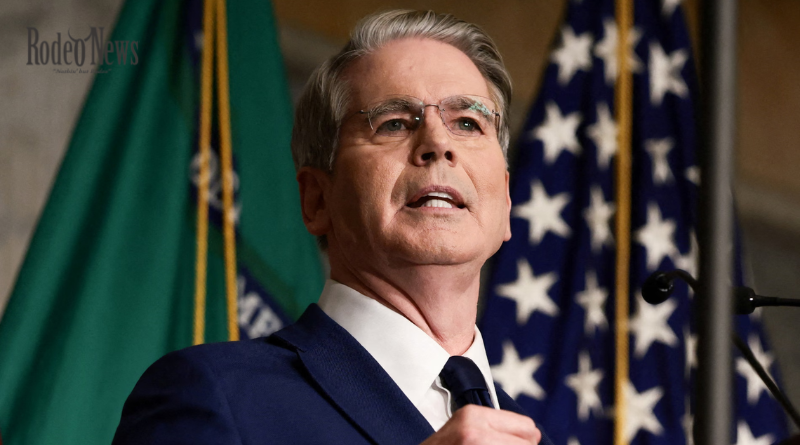
The dispute highlights a broader question for financial markets: can the Treasury successfully influence long-term borrowing costs through bond buybacks, or are rising yields sending a warning about America’s fiscal position?
Scott Bessent Bond Plan Draws Sharp Wall Street Criticism
Bessent has expanded the Treasury’s long-dated bond buyback operations as the government looks to improve conditions in the Treasury market and potentially reduce pressure on longer-term yields.
The maximum size of individual buyback operations was increased from $2 billion to at least $4 billion. The purchases are aimed at Treasury securities with maturities ranging from roughly 10 to 30 years. The program is scheduled to operate between September 9 and November 4.
The initial market reaction appeared encouraging.
When the Treasury announced the larger operation, long-term yields dropped. However, that decline did not last. Yields subsequently moved back above their earlier levels, suggesting that investors were not convinced the intervention addressed the forces pushing borrowing costs higher.
That reversal became a central point in Druckenmiller’s criticism.
The veteran investor argued that the Treasury should allow the bond market to communicate its concerns rather than attempting to suppress the signal through government purchases. In his view, higher long-term yields are not simply a technical market problem. They are also a warning about the government’s fiscal trajectory.
Stanley Druckenmiller Warns Bessent Could Lose
Druckenmiller’s intervention carries unusual weight because of his professional relationship with Bessent.
The two men worked together at Soros Fund Management during the 1990s. Their careers were shaped by the global macro-investing strategies associated with George Soros, including the famous 1992 bet against the British pound.
Druckenmiller now finds himself publicly challenging a policy approach taken by his former colleague.
His argument is straightforward: governments cannot permanently force financial markets to ignore underlying economic fundamentals.
The investor has warned that attempts to defend asset prices against fundamentals eventually fail. The question, he argues, is how much money governments spend before accepting the market’s verdict.
For Bessent and the Trump administration, that creates a difficult policy dilemma.
Treasury officials have reasons to care about the functioning of the bond market. US government securities are central to the global financial system, and disruptions in liquidity can have consequences far beyond Washington.
But Druckenmiller believes the current problem goes deeper than market liquidity.
He argues that the Treasury needs to address the federal deficit rather than attempt to offset its consequences through bond purchases.
Why Treasury Yields Matter So Much
Treasury yields are among the most important prices in global finance.
When Treasury prices rise, their yields generally fall. When prices decline, yields rise. Because Treasury securities are widely used as benchmarks for borrowing costs, movements in longer-term yields can affect mortgages, corporate financing, investment decisions and government interest expenses.
That makes the recent increase in long-term yields particularly important for the Trump administration.
Higher yields mean that the government must generally pay more to borrow money over longer periods. With federal debt already around $40 trillion, even relatively small changes in borrowing costs can have significant implications for future budgets.
Druckenmiller therefore sees the long-term Treasury yield as more than a market statistic.
He views it as a form of fiscal discipline.
In that interpretation, investors are effectively telling Washington that the combination of government spending, deficits and debt requires a higher return to compensate for the risks involved.
Trying to silence that signal could delay the political decisions needed to address the underlying problem.
The $1 Trillion Treasury Account Question
The debate became even more significant after reports that the Treasury could potentially use money in its General Account to increase its ability to purchase government bonds.
The account, held at the Federal Reserve, contains close to $1 trillion, according to reports cited by the Guardian.
The possibility of using such a large pool of funds has attracted attention because it would potentially give the Treasury substantially more firepower than the regular buyback program.
Yet critics argue that more purchasing power does not necessarily solve the problem.
If investors are demanding higher yields because of concerns about deficits, inflation or the long-term supply of government debt, government purchases may temporarily influence prices without changing those underlying conditions.
That is the central concern behind Druckenmiller’s warning.
US Debt Problem Sits at the Center
The biggest issue facing the Scott Bessent bond plan is arguably the scale of America’s fiscal imbalance.
The US national debt recently passed $40 trillion. Meanwhile, the federal deficit is expected to reach approximately $2 trillion this year.
Those numbers make it increasingly difficult to separate bond-market performance from fiscal policy.
Investors must continually assess how much debt Washington will issue, how much interest the government will need to pay and whether future administrations will take steps to control spending.
If investors become less confident about the government’s ability to stabilize its finances, they can demand higher yields.
That can create a difficult feedback loop.
Higher yields increase interest costs. Higher interest costs can put additional pressure on the federal budget. Larger deficits can then require additional borrowing, potentially placing further pressure on the bond market.
Druckenmiller’s argument is that the cycle can only be broken through credible fiscal reform.
Trump Administration Wants Lower Borrowing Costs
The issue is also politically important for President Donald Trump.
Lower interest rates and borrowing costs have been recurring priorities for the administration. Cheaper financing can support economic activity, reduce pressure on households and businesses, and lower the government’s own interest burden.
However, the Treasury has limited control over long-term yields.
The Federal Reserve controls short-term monetary policy, while longer-term Treasury yields are heavily influenced by investor expectations about inflation, economic growth, government borrowing and future interest rates.
That distinction is crucial.
A Treasury buyback can affect supply and liquidity in specific parts of the market. But it cannot automatically eliminate the broader forces that determine where long-term yields should trade.
This is why critics describe the intervention as potentially moving from liquidity management toward price management.
Inflation and Geopolitical Risks Add Pressure
The bond-market debate is unfolding against a complicated global backdrop.
Inflation concerns remain important because higher inflation can reduce the attractiveness of fixed-income securities. Investors may demand higher yields if they believe future inflation will erode the purchasing power of their returns.
Geopolitical tensions are also contributing to uncertainty.
Recent developments involving Iran and energy markets have raised concerns that higher oil prices could create additional inflationary pressure. Meanwhile, worsening trade tensions involving the US and Canada could introduce further risks to economic growth and government finances.
Those factors make the Treasury’s challenge more difficult.
Even an aggressive buyback program cannot directly control oil prices, global inflation expectations or geopolitical risk premiums.
The 1992 Irony Behind the Dispute
There is also an unusual historical element to the disagreement.
Bessent and Druckenmiller were both associated with Soros Fund Management during the 1992 currency crisis involving the British pound.
The fund famously bet against sterling as the British government attempted to keep the currency within the European Exchange Rate Mechanism. The pound eventually left the system in an episode known as Black Wednesday.
The experience demonstrated the enormous power financial markets can exert when investors believe government policy is inconsistent with economic fundamentals.
That history makes the current dispute especially striking.
Bessent, once part of an investment operation that successfully challenged a government’s attempt to defend a currency level, is now helping lead a US government effort to influence conditions in another major financial market.
Critics therefore see an element of irony in the Treasury’s current strategy.
What Could Happen Next?
The outcome of the Scott Bessent bond plan could depend on whether investors ultimately view the Treasury’s actions as technical market management or an attempt to override economic fundamentals.
If the program improves liquidity without distorting prices, Treasury officials could argue that it is serving its intended purpose.
But if long-term yields continue rising despite larger purchases, pressure on the administration could intensify.
That would strengthen Druckenmiller’s argument that the bond market is demanding fiscal reform rather than intervention.
A credible plan to reduce the federal deficit could have a much larger and more durable effect on long-term yields than a relatively small buyback program. Druckenmiller has argued that fiscal reform could accomplish more than a bond-purchase operation many times larger.
The challenge is political.
Reducing deficits typically requires difficult choices over taxes, government spending and entitlement programs. Those decisions can be far more controversial than changing the mechanics of Treasury operations.
Why Investors Are Watching Closely
For investors, the dispute is about more than one Treasury program.
It is a test of how the Trump administration intends to manage the relationship between fiscal policy and financial markets.
If Washington continues to prioritize lower borrowing costs without addressing the deficit, investors could conclude that the government is attempting to suppress an important market signal.
On the other hand, if Treasury officials can demonstrate that buybacks improve market liquidity without artificially controlling prices, the policy could prove more defensible.
The bond market will ultimately provide the clearest answer.
That is precisely why Druckenmiller believes it should be allowed to speak.
For now, the reversal in Treasury yields following the initial announcement has given critics additional ammunition. The market briefly responded to the Treasury’s intervention, but the effect faded quickly.
A High-Stakes Test for Washington
The Scott Bessent bond plan has placed the Treasury secretary at the center of a high-stakes debate over America’s financial future.
Bessent is trying to improve Treasury-market conditions and reduce pressure from rising long-term borrowing costs. Druckenmiller, however, believes the strategy risks treating the symptom instead of the cause.
The fundamental problem is the US fiscal position.
With debt around $40 trillion and annual deficits approaching $2 trillion, the bond market has powerful reasons to focus on Washington’s long-term finances.
If investors continue demanding higher yields, the Treasury may discover that financial markets cannot be persuaded indefinitely through purchases alone.
That leaves Washington facing a much harder question: whether it is prepared to address the fiscal fundamentals behind rising borrowing costs.
For Druckenmiller, the answer should begin with listening to the bond market.
For Bessent, the coming months will show whether Treasury intervention can stabilize markets without undermining the very market signals policymakers need to hear.
The stakes are considerable. The US Treasury market sits at the heart of the global financial system, and the credibility of its prices affects governments, companies and investors around the world.
Suggested internal links: Add links to your existing articles about US debt, Donald Trump’s economic policies, Treasury yields, Federal Reserve interest rates and the US budget deficit.
Suggested external links: Link to the original Guardian report, the US Treasury, the Federal Reserve and Stanley Druckenmiller’s Wall Street Journal commentary where appropriate.