
Japan-China Relations Face a Critical Test in Beijing
Japan-China relations are facing a crucial diplomatic test as a cross-party group of Japanese lawmakers travels to Beijing in an effort to reopen communication with China.
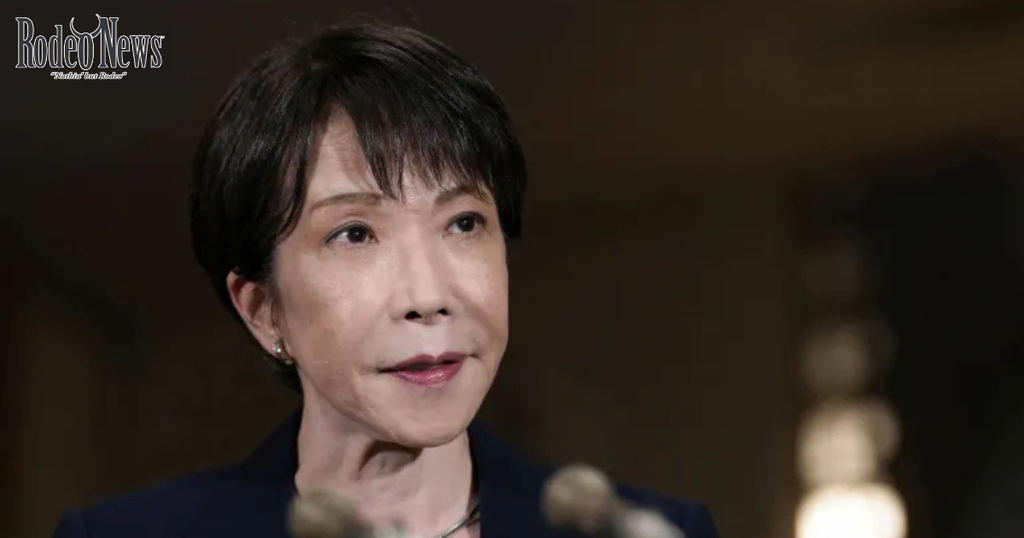
The delegation arrived in China on Monday, August 24, as Tokyo seeks to ease one of its most serious disputes with Beijing in years. The visit comes after Japanese Prime Minister Sanae Takaichi made comments about Taiwan that angered Chinese officials and contributed to a wider deterioration in political and economic relations.
The lawmakers are expected to meet officials from the Chinese Communist Party during their visit, which is scheduled to continue through Thursday. Their mission is not designed to immediately resolve every disagreement between the two countries. Instead, the immediate objective is more basic: restore communication.
That alone could prove significant.
Japanese lawmaker Shinichi Isa, a member of the opposition Centrist Reform Alliance and a former diplomat at Japan’s embassy in China, said communication between the two sides had been cut across multiple areas. He argued that the consequences were beginning to spread beyond politics.
The delegation therefore represents an attempt to create a political opening at a time when official channels have become increasingly difficult to use.
Japan-China Relations and the Taiwan Dispute
The central issue behind the current crisis is Taiwan.
Takaichi’s comments in November suggested that a Chinese attack on Taiwan could create a situation serious enough for Japan to consider military action under its security framework. Beijing reacted angrily because it regards Taiwan as part of China and strongly opposes foreign governments discussing possible military involvement in a Taiwan conflict.
For Beijing, Taiwan is not simply another foreign-policy disagreement. It is considered a core national issue and a highly sensitive test of China’s sovereignty claims.
Japan, meanwhile, views security developments around Taiwan through the lens of its own national defense. Taiwan lies close to Japan’s southwestern islands, while major sea lanes and regional military routes connect the Taiwan Strait to Japan’s wider security environment.
That makes the issue particularly difficult for Tokyo.
The dispute has continued because Takaichi has not retracted her comments. China has repeatedly called on Japan to withdraw what Beijing describes as erroneous statements.
Consequently, the Japanese lawmakers’ visit is unlikely to produce an immediate political breakthrough.
Instead, the trip is best understood as an attempt to prevent further deterioration.
Why Japan-China Relations Matter Beyond Politics
The consequences of the dispute extend well beyond diplomatic statements.
Japan and China are major economic powers with extensive trade, manufacturing and investment links. When political tensions rise, businesses on both sides can face uncertainty over tourism, supply chains, exports and investment decisions.
Al Jazeera reported that China’s response to the Taiwan dispute included travel warnings and tighter trade restrictions, with measures affecting the flow of rare earth minerals to Japanese companies.
Rare earth materials are particularly important because they are used in a wide range of advanced industrial products, including electronics, motors and other technologies.
For Japan, maintaining reliable access to critical materials is therefore a strategic issue as well as an economic one.
For China, Japan remains an important neighboring economy and a major regional trading partner.
That creates a powerful incentive for both sides to avoid allowing the diplomatic crisis to become permanently embedded in economic relations.
The Japanese government itself continues to maintain a dedicated framework for bilateral relations, including economic ties, maritime issues and developments in the East China Sea. Japan’s Foreign Ministry says the two countries remain important neighbors despite their many outstanding disputes.
Three Bold Steps Could Help Ease the Crisis
The Beijing delegation cannot solve the dispute alone. However, three developments could help stabilize Japan-China relations.
1. Reopen Direct Political Communication
The first step is the simplest and potentially the most important.
Japan and China need functioning communication channels.
When senior officials can speak directly, misunderstandings can be addressed before they become larger confrontations. Diplomatic contacts can also provide a way to manage incidents involving military aircraft, naval vessels, disputed waters and Taiwan.
Japanese Foreign Minister Toshimitsu Motegi has previously emphasized the importance of communication with China. Japan’s Foreign Ministry has also stated that Tokyo remains open to dialogue despite disagreements.
The problem is that dialogue requires both sides to accept difficult conversations.
The current delegation may provide a political bridge. Members from Japan’s governing Liberal Democratic Party and opposition parties can communicate messages that are difficult to deliver through formal government channels.
That does not mean they can replace diplomats.
But they can help create conditions in which formal diplomacy becomes possible again.
2. Separate Economic Cooperation From Political Disputes
The second challenge is economic.
Japan and China can disagree over Taiwan, security and history while still maintaining practical economic relations.
In fact, separating those issues may be essential.
Businesses generally require predictability. Companies need to know whether goods will cross borders, whether supply chains will remain open and whether political disputes could suddenly result in new restrictions.
The longer uncertainty continues, the greater the incentive for companies to diversify their supply chains.
That may reduce economic dependence on either side, but it could also weaken one of the strongest stabilizing forces in the bilateral relationship.
Beijing has criticized Japan’s security policies and its comments on Taiwan. China’s Foreign Ministry has also demanded that Tokyo respect what Beijing describes as the political foundation of bilateral relations.
Tokyo, meanwhile, wants to maintain economic engagement while strengthening its security position.
Finding a balance will be difficult.
However, protecting legitimate commercial exchanges could give both countries a reason to keep diplomatic channels open.
3. Manage Taiwan and Historical Issues Carefully
The third step may be the hardest.
Taiwan and historical disputes are deeply connected to national identity in both countries.
China’s government has repeatedly criticized Japanese statements and policies related to Taiwan. Beijing has also strongly objected to Japanese political activity surrounding the Yasukuni Shrine and what it regards as attempts to minimize Japan’s wartime history.
Japan, on the other hand, has its own political debate over national security, military preparedness and its relationship with the United States.
Neither side is likely to abandon its fundamental position.
Therefore, the immediate goal may need to be more limited: prevent disagreements from turning into uncontrolled escalation.
That means carefully chosen language, direct communication and clear crisis-management mechanisms.
A Difficult Moment for Tokyo and Beijing
The timing of the lawmakers’ visit is significant.
China’s Foreign Ministry recently said that some Japanese political figures from both governing and opposition parties were concerned about the state of bilateral relations and wanted to help restore normal exchanges.
That suggests Beijing is not necessarily rejecting every form of contact with Japan.
Instead, China appears to be distinguishing between dialogue and acceptance of Tokyo’s position on Taiwan.
That distinction matters.
Beijing can agree to meet Japanese lawmakers without accepting Takaichi’s Taiwan-related statements. Similarly, Tokyo can seek dialogue without abandoning its broader security policy.
Diplomacy often works precisely because countries can communicate without first agreeing on every issue.
The challenge is preventing communication itself from becoming politically unacceptable.
Japan-China Relations Could Face More Tests
The current delegation is only one part of a potentially wider diplomatic effort.
Further exchanges have reportedly been planned, including a delegation led by former Japanese Foreign Minister Takeshi Iwaya later in September. Japanese business representatives are also expected to travel to China later in the year.
If those visits take place, they could provide another opportunity to stabilize relations.
Business contacts may be particularly useful because they focus on practical problems rather than the most politically sensitive issues.
However, the larger strategic disagreement will remain.
China continues to oppose Japan’s position on Taiwan and has criticized Tokyo’s defense policies. Japan, meanwhile, increasingly views China’s military activities as part of a challenging regional security environment.
Japan’s 2026 defense policy has also drawn strong criticism from Beijing. China’s Foreign Ministry has described Tokyo’s military buildup and references to Taiwan as serious concerns.
This means the bilateral relationship is unlikely to return quickly to a period of easy cooperation.
Why the Beijing Visit Matters
The most important outcome from the delegation may not be a major agreement.
It could simply be a decision to keep talking.
That may sound modest, but diplomacy often depends on preventing communication from collapsing completely.
The current crisis has demonstrated how quickly a dispute over Taiwan can affect wider relations between two of Asia’s largest economies.
A breakdown in communication can also create risks in areas that neither side initially intended to politicize.
Trade, tourism, business travel and regional security can all become casualties of a diplomatic dispute.
The Japanese lawmakers therefore have a narrow but important task.
They need to demonstrate that political differences can still be discussed without turning every meeting into another confrontation.
What Happens Next?
The immediate question is whether the Beijing meetings produce a channel for continued contact.
If Chinese officials agree to further political exchanges, Japan could gain an opportunity to rebuild communication gradually.
If the talks fail to produce meaningful engagement, pressure on the Japanese government could increase as businesses and political figures worry about the long-term cost of deteriorating ties.
For China, the challenge is equally complicated.
Beijing wants Japan to change what it considers unacceptable positions on Taiwan and security. But allowing relations to deteriorate indefinitely could also carry economic and strategic costs.
That creates room for limited diplomacy.
The key will be whether both governments can separate the management of disagreements from the pursuit of cooperation.
A Small Opening in a Major Regional Rivalry
The latest delegation does not signal that the Japan-China dispute is over.
It does, however, show that political forces in both countries still see value in maintaining contact.
That may be the most encouraging development so far.
Japan-China relations remain burdened by Taiwan, security concerns, historical grievances and economic disputes. Yet neither Tokyo nor Beijing benefits from allowing every disagreement to become a permanent crisis.
The Beijing visit could therefore become an important first step toward restoring basic communication.
A major breakthrough may still be far away.
But in a relationship as strategically important as Japan and China, even a small opening can matter.
External Sources and Further Reading
- Al Jazeera — Japanese delegation seeks to soothe strained ties with China
- Japan Ministry of Foreign Affairs — Japan-China Relations
- China Ministry of Foreign Affairs — August 2026 statements on Japan and Taiwan
- Associated Press — Japanese lawmakers visit Beijing seeking to mend ties
Internal Link Placement
Because the target website/domain was not provided, no internal URL has been invented. For SEO, add 2–3 links from this article to relevant existing stories on your site, preferably using anchors such as:
- Japan’s security policy
- Taiwan tensions in East Asia
- China-Japan trade relations
The strongest internal link should appear within the first 300 words.
SEO Definition
Focus Keyword: Japan-China relations
The phrase refers to the diplomatic, economic, security and political relationship between Japan and the People’s Republic of China. In this article, it specifically refers to the current effort to restore communication following tensions over Taiwan and broader disagreements between Tokyo and Beijing.