Artemis II Photos Revealed: Inside NASA’s 12,000 Stunning Images
The release of Artemis II photos has captured global attention after NASA unveiled more than 12,000 breathtaking images from its historic lunar mission. The massive archive offers an unprecedented look at Earth, the Moon, and deep space—marking one of the most visually significant moments in modern space exploration.
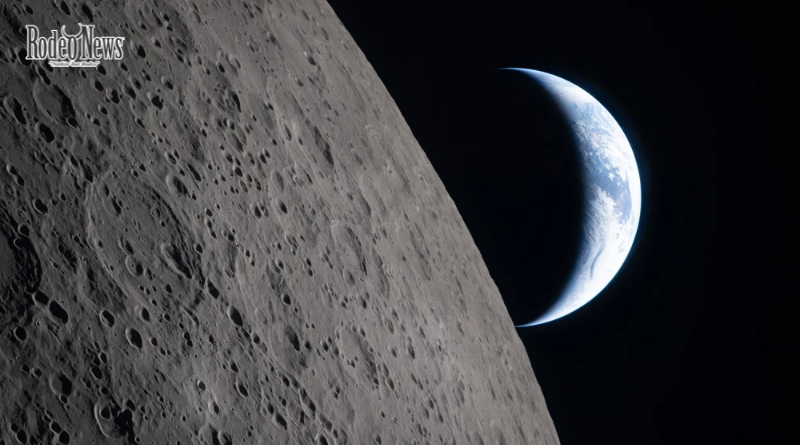
Taken during a 10-day journey around the Moon, these images document humanity’s return to deep space for the first time in more than five decades. The photos, captured by astronauts aboard the Orion spacecraft, are not only visually stunning but also scientifically valuable.
From dramatic “Earthset” scenes to rare views of the Milky Way, the Artemis II photos provide a powerful reminder of both technological progress and human curiosity.
A Historic Mission Behind the Artemis II Photos
The Artemis II mission, launched by NASA on April 1, 2026, marked the first crewed journey beyond low Earth orbit since the Apollo era. Four astronauts—Reid Wiseman, Christina Koch, Victor Glover, and Jeremy Hansen—traveled farther from Earth than any humans before them.
During the mission, the crew flew around the far side of the Moon before returning safely to Earth on April 10.
This journey was not just symbolic—it was a critical step toward NASA’s long-term goal of landing humans on the Moon again and eventually sending astronauts to Mars.
Throughout the mission, the astronauts captured thousands of images documenting every phase of their journey—from launch to lunar flyby to reentry.
What Makes the Artemis II Photos So Special
The newly released Artemis II photos stand out for several reasons:
1. Record-Breaking Distance
The crew traveled more than 25,000 miles beyond previous human spaceflight records, giving them a unique vantage point never seen before.
2. Human Perspective
Unlike robotic missions, these images were taken by astronauts, adding a deeply human element to the visuals. You’re seeing space through human eyes—not just instruments.
3. Massive Scale
NASA released over 12,000 images, making this one of the largest public photo archives from a single space mission.
4. Scientific Value
Beyond their beauty, the Artemis II photos will help scientists study lunar geography, Earth’s atmosphere, and cosmic phenomena.
Iconic Images From the Artemis II Collection
Among the thousands of Artemis II photos, several standout images have already gone viral.
Earthset: A New Perspective on Our Planet
One of the most iconic images is the “Earthset” photograph—showing Earth disappearing behind the Moon’s horizon.
This image echoes the famous “Earthrise” photo from Apollo 8 but offers a modern, high-resolution perspective. It captures Earth as a fragile blue sphere against the vast darkness of space.
The image was taken during the spacecraft’s lunar flyby and has quickly become a defining visual of the mission.
The “Hello, World” Earth Photo
Another remarkable image, known as “Hello, World,” shows Earth illuminated from space during the early phase of the mission.
It is especially significant because it represents the first full-disk Earth image captured by humans since 1972.
The photo highlights Earth’s night side, revealing glowing city lights and atmospheric details rarely seen from such distances.
A Rare Solar Eclipse From Space
Among the most scientifically valuable Artemis II photos is a rare solar eclipse captured from the Moon’s far side.
This perspective is nearly impossible to achieve from Earth and provides new data for scientists studying solar and lunar interactions.
The Milky Way Without Light Pollution
The Artemis II crew also captured stunning images of the Milky Way galaxy—completely free from Earth’s light pollution.
These images reveal a dense field of stars and cosmic structures that are rarely visible even through advanced telescopes on Earth.
Detailed Lunar Surface Images
The mission also produced high-resolution images of the Moon’s surface, including craters and terrain near the lunar terminator—the line dividing day and night.
These images will help scientists better understand the Moon’s geology and prepare for future landing missions.
The Human Side of the Artemis II Photos
While many Artemis II photos focus on space itself, others highlight the astronauts’ experience during the mission.
Images show crew members floating inside the Orion spacecraft, gazing out windows at Earth, and documenting their journey.
These moments bring a sense of intimacy and relatability to an otherwise distant and complex mission.
They remind us that space exploration is not just about technology—it’s about people.
Why NASA Released the Artemis II Photos
NASA’s decision to release the full archive of Artemis II photos reflects a growing commitment to transparency and public engagement.
By making the images publicly available, the agency allows scientists, educators, and the general public to explore the mission in detail.
According to NASA officials, processing and releasing such a large dataset required a significant effort from teams at the Johnson Space Center and other facilities.
The release also serves to inspire future generations of scientists, engineers, and explorers.
How Artemis II Photos Support Future Moon Missions
The Artemis II photos are not just a visual archive—they are a critical resource for future missions.
NASA is already planning Artemis III and beyond, which aim to land astronauts on the Moon and establish a sustainable human presence.
The images will help:
- Identify potential landing sites
- Study lunar terrain and hazards
- Improve navigation and mission planning
- Enhance spacecraft design
In short, these photos are helping pave the way for humanity’s return to the Moon.
A New Era of Space Exploration
The release of the Artemis II photos marks a turning point in how we experience space exploration.
Unlike the Apollo era, where only a handful of images were widely distributed, today’s missions generate massive amounts of data that can be shared instantly with the world.
This accessibility has transformed space exploration into a global, shared experience.
Millions of people can now witness the journey to the Moon almost as if they were there.
Public Reaction to the Artemis II Photos
The response to the Artemis II photos has been overwhelmingly positive.
Many viewers have described the images as inspiring, emotional, and even life-changing.
The photos have sparked renewed interest in space exploration and highlighted the importance of continued investment in scientific research.
They also serve as a reminder of Earth’s fragility—a recurring theme in images taken from space.
The Bigger Picture: Why These Photos Matter
At first glance, the Artemis II photos may seem like just beautiful images.
But they represent something much larger.
They are proof that humanity is once again pushing beyond Earth’s boundaries.
They demonstrate the power of international collaboration, as the mission included astronauts from both the United States and Canada.
And perhaps most importantly, they inspire us to look outward—to imagine what lies beyond our planet.
Conclusion
The release of more than 12,000 Artemis II photos is more than just a milestone for NASA—it is a moment for all of humanity.
These images capture the beauty of space, the complexity of exploration, and the resilience of human ambition.
As NASA prepares for future missions, including lunar landings and eventual journeys to Mars, the Artemis II photos will remain a powerful symbol of what we can achieve.
They are not just pictures.
They are a glimpse into the future.