North Korea Missile Launch 2026 Escalates Global Tensions
North Korea missile launch 2026 developments have once again captured global attention after Pyongyang fired multiple ballistic missiles into the sea off its eastern coast, marking yet another escalation in an already volatile geopolitical climate. The latest tests come at a time when international focus is heavily divided due to the ongoing conflict in the Middle East, particularly the intensifying Iran war.
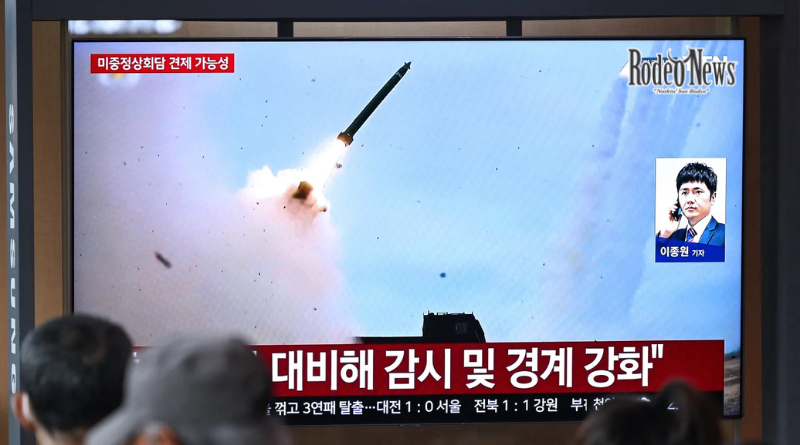
According to military officials in South Korea and Japan, the missiles were launched from the eastern coastal region near Sinpo, an area known for submarine and advanced weapons development.
A Renewed Show of Military Strength
The North Korea missile launch 2026 incident is not an isolated event. It represents the seventh missile test conducted by Pyongyang this year alone, underlining a consistent pattern of military escalation.
South Korea’s Joint Chiefs of Staff reported that several unidentified ballistic missiles were detected early Sunday morning, traveling toward the Sea of Japan. Japanese authorities confirmed the launches and condemned them as violations of United Nations Security Council resolutions.
While no immediate damage was reported, the implications are far-reaching. Each missile test enhances North Korea’s credibility as a nuclear-capable state and signals its intent to maintain — and expand — its strategic deterrence capabilities.
Timing Amid the Iran War Raises Concerns
What makes the North Korea missile launch 2026 particularly alarming is its timing. The tests occurred amid the ongoing Iran war, a conflict involving the United States, Israel, and Iran that has already destabilized large parts of the Middle East.
The Iran war, which began in early 2026 following coordinated airstrikes by U.S. and Israeli forces, has triggered widespread retaliation from Iran, including missile and drone attacks across the region.
Analysts suggest that North Korea may be leveraging this global distraction to advance its own military agenda. With U.S. resources and attention focused on the Middle East, Pyongyang could be testing the limits of international response.
This strategic timing reflects a broader geopolitical pattern: when global powers are preoccupied elsewhere, secondary actors often seize the opportunity to assert influence.
Strategic Message to the United States and Allies
The North Korea missile launch 2026 tests appear to carry a clear message directed at the United States and its regional allies, including South Korea and Japan.
Experts believe the launches serve multiple purposes:
- Demonstrating military readiness
- Reinforcing deterrence against perceived U.S. aggression
- Gaining leverage in potential future negotiations
North Korean leader Kim Jong Un has repeatedly emphasized the importance of strengthening the country’s nuclear arsenal, framing it as essential for national survival.
Recent intelligence reports also indicate that North Korea is expanding its nuclear capabilities, including uranium enrichment and missile technology advancements.
Sinpo: A Key Launch Site
The missiles were reportedly launched from Sinpo, a strategic coastal city that plays a critical role in North Korea’s military infrastructure.
Sinpo is widely believed to host submarine facilities capable of launching submarine-launched ballistic missiles (SLBMs). If confirmed, this would significantly increase North Korea’s strike capabilities by enabling stealth-based missile deployment.
Such advancements are particularly concerning because submarine-based systems are harder to detect and intercept, reducing warning times for potential targets.
Regional Reactions: Alarm and Condemnation
The North Korea missile launch 2026 tests triggered immediate reactions across the Asia-Pacific region.
South Korea
Seoul quickly convened emergency security meetings and heightened its military surveillance. Officials reaffirmed their commitment to working closely with the United States and Japan to monitor further developments.
Japan
Japan lodged a formal protest, calling the launches a threat to both regional and international peace. Tokyo emphasized that such actions directly violate UN sanctions imposed on North Korea’s ballistic missile program.
United States
While official responses remain measured, U.S. defense analysts have expressed growing concern over the frequency and sophistication of North Korea’s missile tests.
A Pattern of Escalation in 2026
The North Korea missile launch 2026 event is part of a broader pattern of increasing military activity.
So far this year, North Korea has conducted:
- Multiple ballistic missile launches
- Cruise missile tests
- Tactical weapons experiments, including cluster munitions
This surge in testing highlights Pyongyang’s determination to modernize its arsenal despite international sanctions and diplomatic pressure.
Global Security Implications
The implications of the North Korea missile launch 2026 extend far beyond the Korean Peninsula.
Multi-Front Geopolitical Tension
With the Iran war already stretching global military resources, North Korea’s actions add another layer of complexity to international security dynamics.
Risk of Miscalculation
Frequent missile tests increase the risk of accidental escalation. A misinterpreted launch or technical malfunction could quickly spiral into a larger conflict.
Nuclear Proliferation Concerns
North Korea’s continued advancements may encourage other nations to accelerate their own weapons programs, potentially triggering a new arms race.
Economic and Market Impact
Geopolitical instability often has ripple effects on global markets, and the North Korea missile launch 2026 is no exception.
Investors are closely monitoring developments, particularly in:
- Energy markets
- Defense stocks
- Shipping and trade routes
The overlap between tensions in East Asia and the Middle East could disrupt global supply chains, especially if conflicts intensify simultaneously.
Diplomatic Outlook: Uncertain but Critical
Despite rising tensions, diplomatic channels remain a crucial factor in preventing further escalation.
There have been occasional signals of willingness from both North Korea and the United States to re-engage in dialogue. However, past negotiations have repeatedly stalled, leaving little optimism for immediate breakthroughs.
The current situation underscores the importance of coordinated international diplomacy involving:
- The United States
- China
- South Korea
- Japan
- The United Nations
Without sustained diplomatic efforts, the risk of continued escalation remains high.
Conclusion: A Dangerous Moment in Global Security
The North Korea missile launch 2026 represents more than just another weapons test — it is a strategic signal in an increasingly unstable global environment.
As the Iran war continues to dominate headlines, North Korea’s actions serve as a stark reminder that multiple geopolitical flashpoints can evolve simultaneously, stretching international response capabilities.
The coming weeks will be critical in determining whether this latest escalation leads to further confrontation or renewed diplomatic engagement.
For now, the world watches closely as tensions rise on multiple fronts, with the potential consequences reaching far beyond regional boundaries.