Iran War Drives Gulf Market Volatility, Lifts Israeli Stocks and Shifts Regional Risk
The widening military conflict involving Iran, Israel and the United States is sending shockwaves through financial markets across the Middle East and beyond, lifting Israeli stocks even as Gulf equities and global investor sentiment wobble under heightened geopolitical risk.
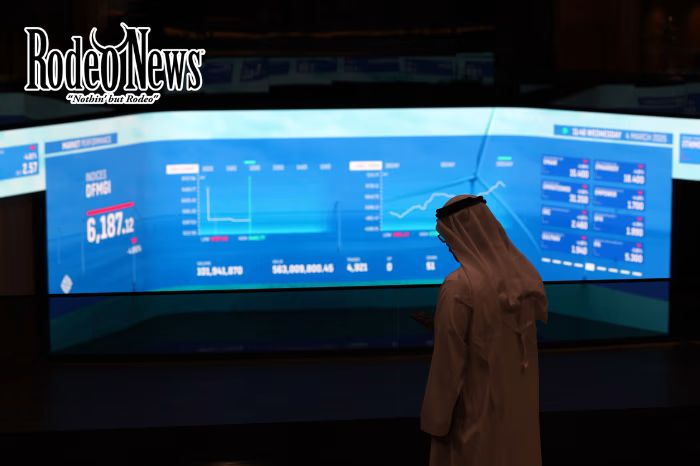
The Wall Street Journal reports that long‑held assumptions underpinning Gulf financial markets have been upended by the intensifying war, forcing investors to reassess risk, asset prices and future economic trajectories in the region.
Gulf Markets Under Pressure as War Escalates
Stock exchanges in the Gulf Cooperation Council (GCC) nations have experienced sharp volatility since the onset of direct hostilities late last month. Regional markets like Dubai and Abu Dhabi opened sharply lower after trading resumed following multi‑day closures due to security concerns.
Dubai’s main index slid nearly 5 percent, Oman’s MSM benchmark declined about 3 percent, and Egypt’s EGX 30 also recorded notable losses, while Kuwait’s exchange suspended trading amid extreme volatility.
Investors, already wary of regional instability, reacted swiftly to the risk of disruption to energy flows and rising costs for shipping and insurance — key factors that directly affect Gulf economies heavily dependent on oil and gas exports.
The International energy infrastructure risk is compounded by disruptions in the Strait of Hormuz, through which nearly one‑fifth of global crude oil supplies pass daily. Analysts noted that tanker traffic has slowed dramatically and war‑risk insurance premiums have spiked, threatening supply reliability.
Israel’s Markets Defy Regional Downturn
In contrast to its neighbours, the Tel Aviv Stock Exchange has performed robustly amid the conflict, with key indices such as the TA‑35 reaching all‑time highs.
The rally reflects strong domestic investor confidence, buoyed by expectations of continued U.S. military support, resilience in economic fundamentals and increased activity in defence, cybersecurity and related sectors that benefit from geopolitical tension.
This divergence illustrates how conflict can create asymmetric market outcomes — bolstering sectors and equities tied to national defence and strategic spending even as broader regional risk pushes conventional assets lower.
Oil Prices Surge on Supply Risk
Global energy markets have reacted sharply to the widening conflict. Brent crude prices have climbed above $85 per barrel after initial spikes of more than eight percent over several sessions, driven by fears of supply disruptions and instability in the Gulf.
Concerns have centred on the potential closure or partial blockade of the Strait of Hormuz — a vital artery for crude and liquefied natural gas shipments — following threats and direct military actions that have reduced shipping activity.
The spectre of prolonged closures or sustained attacks on energy infrastructure has stoked inflation worries globally, as higher oil prices filter through transportation, manufacturing and general consumer costs.
Broader Global Market Ripples
Beyond the Middle East, markets in Asia and Europe have also begun to feel the conflict’s economic pinch.
Asian equities, including South Korea’s KOSPI index, suffered sharp declines in response to surging energy costs and risk‑off sentiment, marking some of the worst sessions in recent history for regional stocks.
Meanwhile, global central banks — including those in Southeast Asia — are reassessing economic forecasts as energy price inflation threatens to complicate monetary policy decisions already strained by post‑pandemic dynamics.
European markets have also reflected risk‑aversion, with stock benchmarks sliding and safe‑haven assets gaining traction amid uncertainty over future oil supply and geopolitical escalation.
Regional Economies Grapple With Real‑World Impacts
The economic fallout extends to everyday life in the Gulf as well. Consumers in the United Arab Emirates have noticed rising costs for basic food items, such as fruits and vegetables, tied to increased transportation costs, insurance premiums and supply chain disruptions fuelled by war risk.
National authorities in affected states have sought to reassure the public regarding food security, even as inflationary pressures persist.
Shifting Risk Perceptions and Investor Strategy
Market participants say the crisis has fundamentally altered risk pricing in the region.
Assets once regarded as safe — including major Gulf financial hubs — are now being reevaluated, with investors demanding higher risk premiums or reallocating portfolios to safer or more defensively oriented investments.
At the same time, sectors tied to defence, infrastructure and cybersecurity have drawn investor interest given their relative resilience and strategic importance during prolonged conflict.
Looking Ahead
With no clear end in sight to the Iran–Israel–U.S. conflict, financial markets are likely to remain sensitive to geopolitical developments.
For Gulf economies, long‑term stability may hinge on energy infrastructure resilience, renewed diplomatic efforts and external support to ease economic disruptions.
For global investors, the Middle East’s role as a critical pivot in energy supply and geopolitical risk means market reactions today could foreshadow broader structural shifts in global capital flows.