Cambodia Must Not Confuse Diplomacy With Delay in Thailand Border Talks
Disclaimer: The commentary published is contributed by the author and does not represent the views or opinions of Kiripost Media. The publication of this commentary does not constitute endorsement of its content by Kiripost or its staff.
By Panhavuth Long
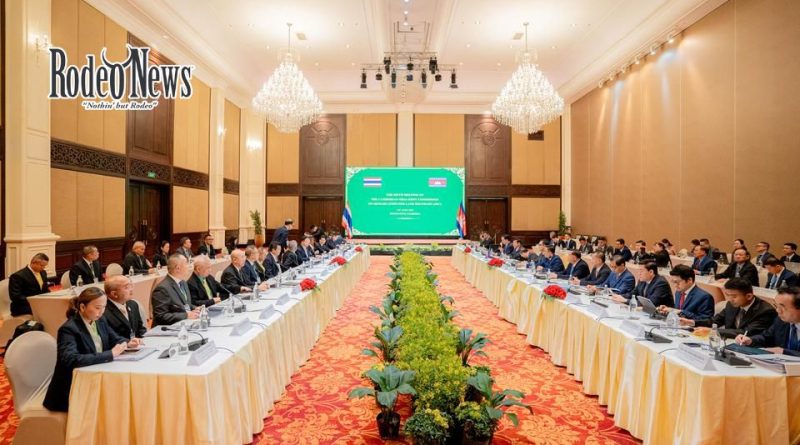
Prime Minister Hun Manet’s call for Thailand to resume meetings of the Joint Boundary Commission (JBC) following the formation of its new government signals a measured and responsible approach to a sensitive border dispute.
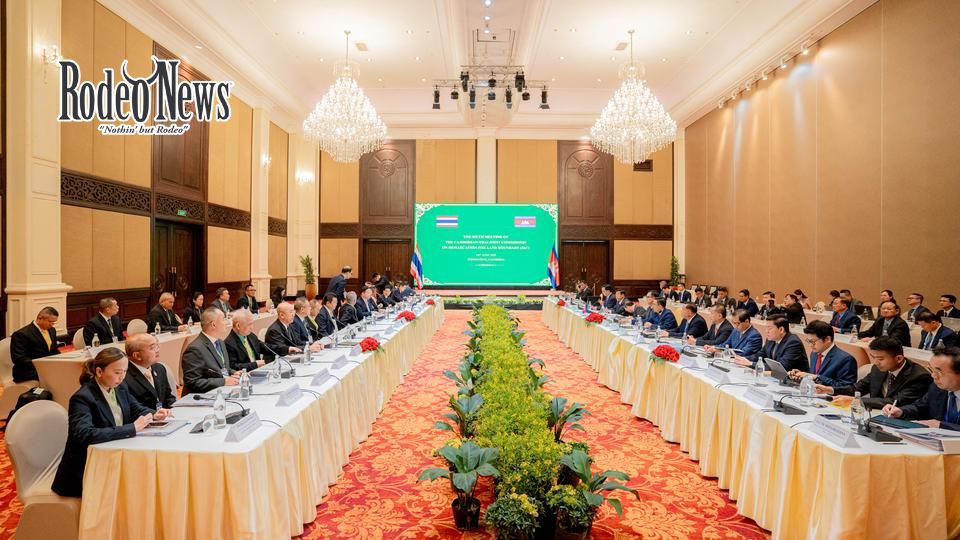
Phnom Penh is correct to insist that disagreements be addressed through established bilateral frameworks and in accordance with international law. Diplomacy, after all, remains the most credible path for two neighboring states bound by geography and history.
But diplomacy alone does not guarantee progress. Strategy does.
Cambodia faces a critical moment. While the JBC provides a legitimate institutional mechanism for resolving outstanding boundary issues, it is not, in itself, a solution. Mechanisms can be slowed, proceduralized, or indefinitely postponed. Without careful management and strategic foresight, what appears to be engagement can quietly evolve into stagnation.
Delay Is Not Always Neutral
Thailand has already postponed JBC discussions more than once, citing domestic political procedures. With elections concluded, new phases of political transition—coalition negotiations, cabinet appointments, bureaucratic reshuffles—could easily serve as further grounds for delay.
Such postponements may appear procedural. Yet in border negotiations, delay often carries strategic weight.
When talks are repeatedly deferred, the status quo on the ground begins to harden. Administrative presence expands. Infrastructure projects continue. Security arrangements solidify. Over time, what was once contested can begin to look settled—not through agreement, but through normalization.
In territorial disputes, the passage of time can quietly reshape leverage.
Cambodia must recognize that repeated delays are rarely accidental. In high-stakes negotiations, postponement can function as a tool—allowing one side to avoid concessions while maintaining a public posture of engagement.
The Risks of a Prolonged Status Quo
An unresolved border dispute does not remain static. It evolves.
As months turn into years, practical authority on the ground—local administration, development initiatives, law enforcement presence—gradually shapes international perception. Even when legal claims remain intact, prolonged inaction can erode negotiating strength.
Sovereignty is not defended solely in statements of principle. It is reinforced through sustained positioning, preparation and clarity of purpose.
If Cambodia allows the dispute to drift without defined milestones, it risks negotiating from a progressively weaker position. Patience, while valuable, cannot substitute for preparedness.
The JBC Is One Track—Not the Only Track
The Joint Boundary Commission is an important bilateral platform. However, Cambodia does not control Thailand’s internal political calendar or administrative processes.
That reality demands a multi-track approach.
Phnom Penh must treat the JBC as one component of a broader strategy rather than the sole avenue for progress. Diplomatic engagement should continue, but it must be complemented by technical readiness, institutional coordination and proactive international communication.
There is a realistic possibility that future JBC sessions may occur intermittently or be reduced to largely symbolic meetings. In such a scenario, both sides could claim engagement while substantive progress remains absent.
Cambodia cannot afford to participate in a process that generates optics but no measurable outcomes.
Peaceful Does Not Mean Passive
Prime Minister Hun Manet has emphasized Cambodia’s commitment to defending sovereignty without causing pain, injury or destruction. That principle is both responsible and necessary in a region where stability is paramount.
Yet restraint must never be mistaken for passivity.
A peaceful posture should be paired with concrete preparation. Cambodia should ensure full technical readiness, including updated cartographic data, historical boundary documentation and comprehensive survey evidence. Inter-agency coordination must be disciplined so that Phnom Penh speaks with one authoritative voice. Negotiating objectives and red lines must be clearly defined before talks resume.
Equally important are structured timelines and benchmarks. Without agreed schedules and reporting mechanisms, discussions risk becoming open-ended dialogues rather than problem-solving negotiations.
Proactive legal and diplomatic engagement at the international level can also prevent the dispute from being shaped solely by delay or ambiguity.
Preparedness strengthens diplomacy. It does not undermine it.
Meetings Are Not the Goal—Resolution Is
Resuming JBC meetings should not be viewed as an achievement in itself. The objective is resolution.
If the next phase of engagement produces dialogue without deadlines or sessions without deliverables, Cambodia may find itself trapped in a cycle that gradually exhausts its leverage.
Phnom Penh should insist that future discussions be anchored by clear technical work plans, defined timelines and transparent progress reviews. Concrete deliverables—not procedural repetition—must define success.
Without such structure, the process risks devolving into political theatre, where appearances substitute for substance.
A Broader Test of National Strategy
Hun Manet’s framing of the issue—rooted in international law, peaceful engagement and sovereignty—reflects continuity in Cambodia’s diplomatic approach. But the real test lies not in rhetoric, but in execution.
Cambodia’s challenge is not demonstrating its commitment to law-based resolution. It is ensuring that legal principles are not undermined by prolonged ambiguity and gradual normalization of contested realities.
In border disputes, the decisive factor is rarely who waits longer. It is who prepares more thoroughly.
Diplomacy must continue. Engagement must remain open. But Cambodia must approach the next phase with strategic realism, firm timelines and diversified leverage.
If the Joint Boundary Commission becomes another cycle of postponement, Phnom Penh must be prepared to recalibrate rather than simply react.
Sovereignty cannot be safeguarded by waiting. It is protected by strategy.