DVDs, Public Transit and Local Shops: Americans Boycott Big Tech to Protest ICE
PORTLAND, Ore. — When Brittany Trahan wanted to unwind after work, she used to turn on Apple TV or Netflix. Now, she dusts off her DVD player.
Trahan, 36, is among a growing number of Americans taking part in a coordinated boycott of major technology and media companies this month, a campaign aimed at pressuring corporate America to take a public stand against President Donald Trump’s aggressive immigration enforcement policies.
Across the country, participants are canceling streaming subscriptions, avoiding Amazon purchases and swapping ride-hailing apps for buses and trains. The movement, called “Resist and Unsubscribe,” argues that financial pressure — not protests alone — is the most effective way to force political and corporate change.
“I have not gotten the impression that outrage among the citizenry is a problem for this administration,” said Lisa Shannon, 51, also based in Portland. “I think money is a problem for this administration, so I’m leaning in on that front.”
A boycott built around economic pressure
The campaign was launched by Scott Galloway, a prominent podcaster, author and marketing professor at New York University, who said he became increasingly frustrated by what he views as the administration’s indifference to public demonstrations against immigration enforcement.
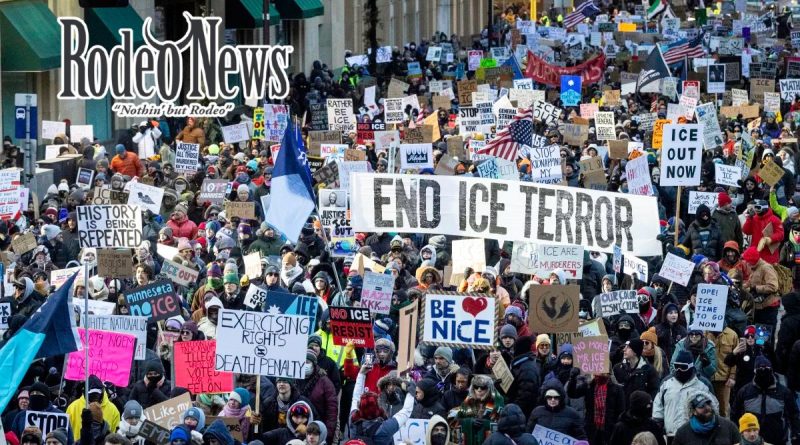
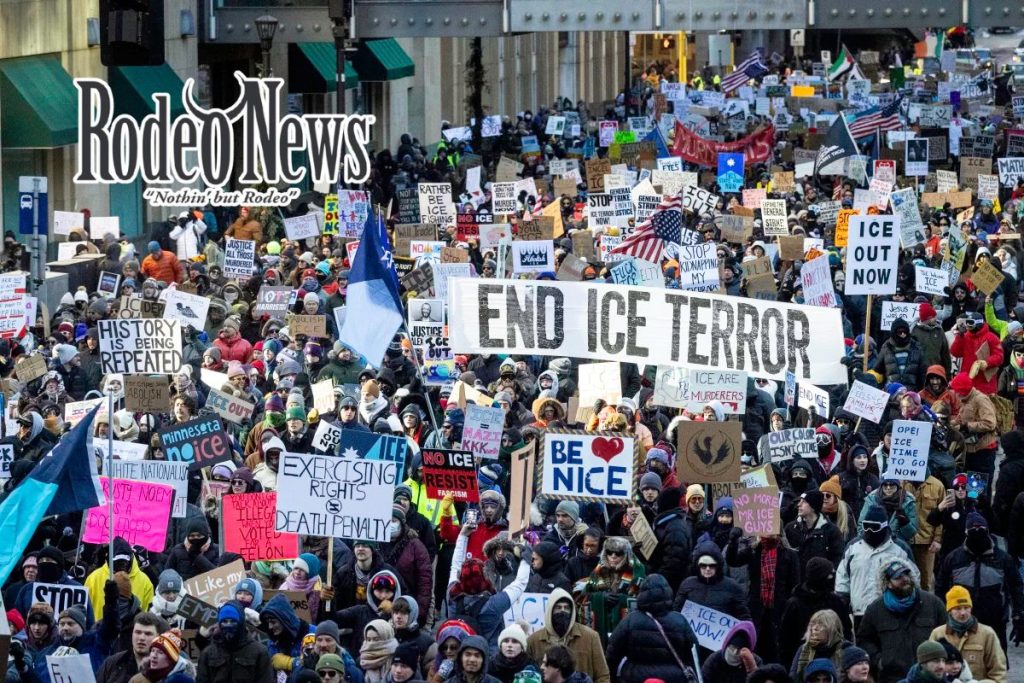
That frustration intensified after federal immigration officers shot and killed two U.S. citizens in Minneapolis last month, an incident that sparked renewed outrage and protests in the city.
Galloway argues that while demonstrations draw attention, they rarely change policy unless they are accompanied by economic consequences.
“The most radical act you can perform in a capitalist society is non-participation,” Galloway said in an interview.
To that end, he created a website listing more than a dozen companies that either have direct ties to U.S. Immigration and Customs Enforcement or wield such influence over the economy that even a modest slowdown in their growth could rattle financial markets.
His view is shaped by past examples, including Trump’s decision to abandon proposed tariffs on several European countries after market volatility alarmed investors.
“I think this is a weapon that is hiding in plain sight,” Galloway said.
Momentum — and skepticism
The boycott officially began Sunday and is planned to last one month. While it is too early to measure its financial impact, interest appears to be building. On Wednesday alone, Galloway said his site logged roughly 250,000 unique page views.
White House spokesperson Abigail Jackson declined to comment directly on the boycott. Instead, she blamed what she described as anti-ICE rhetoric for an increase in assaults on immigration officers, a claim the administration has made previously despite reporting that public records do not substantiate such a rise.
Companies listed on Galloway’s site did not respond to requests for comment.
The effort comes amid a wave of consumer boycotts during Trump’s second term. Canadians have avoided U.S. goods over new tariffs. Some Tesla owners sold their cars to protest Elon Musk’s involvement in the administration. Disney+ and Hulu subscribers canceled services after Disney suspended “Jimmy Kimmel Live!” following political pressure.
Still, experts say boycotting Big Tech presents a unique challenge.
“Asking people to opt out of Big Tech — that could be really hard to do because Big Tech is baked into so many of our day-to-day activities,” said Lucy Atkinson, a professor of advertising and public relations at the University of Texas at Austin.
She noted that successful boycotts usually offer consumers realistic alternatives — something that is difficult when it comes to companies like Amazon, which dominates online retail.
Small sacrifices, unexpected shifts
For many participants, the boycott is less about perfection and more about intention.
Trahan said she first heard about the campaign on one of Galloway’s podcasts and felt energized after months of political fatigue.
“We need a jolt to our systems,” she said.
She canceled multiple streaming services, including Apple TV, even though a new season of her favorite show, Shrinking, had just premiered.
“That kind of sucked,” she admitted. “But this is more important.”
She has since spent more time exploring new hobbies, revisiting old DVDs and even helping her grandmother cancel an HBO Max subscription.
Shannon said Amazon Prime was the hardest service to give up. Her decision solidified after learning Amazon paid tens of millions of dollars to acquire and promote a documentary about first lady Melania Trump.
“For me, the connection was unavoidable,” she said. “The money came from a platform I was actively supporting.”
She has also sworn off Uber, ChatGPT and HBO Max, and now relies on public transit to get around Portland. The experience, she said, has been unexpectedly liberating.
“I’m done until this is over — until I feel secure that our democracy and our neighbors are secure,” Shannon said.
Local spending, lasting habits
In McDonough, Georgia, Brian Seymour II has taken the boycott as an opportunity to reassess where his money goes.
“There’s a saying in my house: show me where you spend your money and I’ll show you what you care about,” said Seymour, 40.
He canceled subscriptions to Disney+, HBO Max and Netflix and stopped shopping at Home Depot, which faced scrutiny last year after immigration raids occurred near several of its stores. The company has said it does not participate in ICE operations and cannot legally bar federal agents from its parking lots.
The changes have produced unexpected benefits. While shopping for firewood recently, Seymour discovered a small local business he had never noticed before.
“Finding more fulfilling ways to spend your time — that’s been a really positive byproduct,” he said. “And I’m saving money.”
Jake Ward, 35, from Fort Collins, Colorado, echoed that sentiment. He canceled Amazon Prime, Audible, Netflix, Hulu and Disney+ and says the impact on his daily life has been minimal.
“We haven’t really missed anything,” Ward said. “If I can, I want to stay unsubscribed for as long as possible.”
Will it last?
Some participants worry that a month-long boycott may not be enough to influence corporate behavior if subscribers return en masse in March.
“That’s a valid concern,” Galloway acknowledged. “I wanted to put as much power and decision-making in the hands of individuals as possible.”
Experts agree that the most damaging effects of boycotts often come not from short-term revenue losses, but from reputational harm and long-term changes in consumer habits.
“Boycotts work when they last,” Atkinson said.
Whether “Resist and Unsubscribe” evolves into a sustained movement remains to be seen. For now, participants say the act of opting out — even temporarily — has changed how they think about consumption, convenience and political power.
And for Trahan, the message is simple.
“It’s not about one show or one delivery,” she said. “It’s about deciding what we’re willing to support.”