9th Circuit Backs Trump on National Guard Deployment to Portland, Overturns Restraining Order
Portland, OR — In a closely watched decision, a divided panel of the 9th U.S. Circuit Court of Appeals on Monday overturned a temporary restraining order that had barred the Trump administration from deploying National Guard troops to Portland, Oregon — a move that immediately reignited debate over the limits of presidential power and the use of federal forces in domestic affairs.
The 2-1 ruling, authored by Trump-appointed judges Ryan Nelson and Bridget Bade, found that President Donald Trump likely acted within his legal authority when he federalized 200 members of the Oregon National Guard in late September. The decision effectively lifted one of two temporary court blocks on the deployment but left a second restraining order — still in effect — standing for now.
Judges: President Likely Acted Within Statutory Authority
“After considering the record at this preliminary stage, we conclude that it is likely that the President lawfully exercised his statutory authority,” the majority wrote, arguing that the President has broad discretion when responding to threats against federal operations.
The court emphasized that presidential authority under Title 10 of the U.S. Code allows deployment of the National Guard during instances where local authorities are unable to enforce federal law. The ruling noted that the President can weigh “the totality of the circumstances” — including past months of protests outside Portland’s Immigration and Customs Enforcement (ICE) facility — when making such determinations.
Critically, the judges rejected the lower court’s decision to focus mainly on September events, when protests had reportedly become smaller and more peaceful. Instead, the panel pointed to earlier violence and unrest during the summer as justification for federal intervention.
State Officials Push Back
Despite the ruling, Oregon Governor Tina Kotek emphasized that the National Guard cannot yet deploy to Portland.
“Right now, until the district court acts on the second TRO, National Guard members from Oregon or any other state cannot deploy,” Gov. Kotek said in a statement Monday evening.
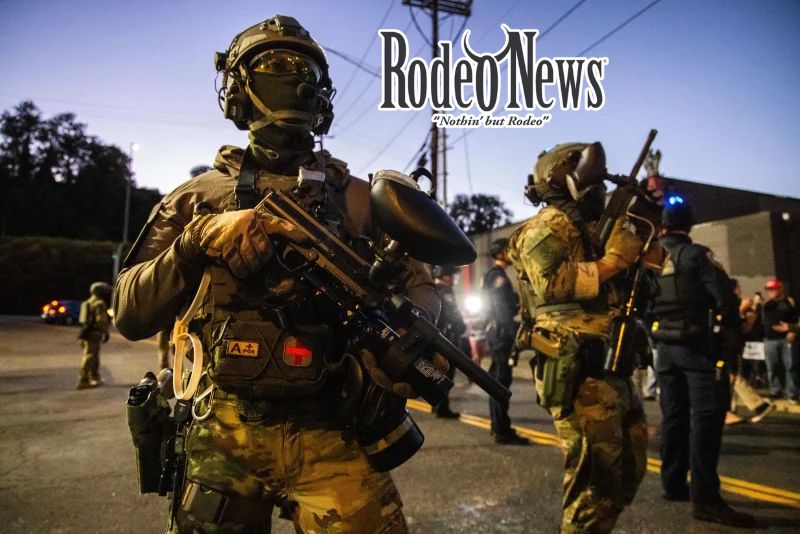
The administration’s legal battle stems from its controversial decision on September 28 to federalize National Guard troops, citing the need to protect federal assets — particularly the ICE building in Portland, which has seen intermittent protests since June.
Trump’s move came with sharp rhetoric, branding Portland on social media as “war-ravaged” and “under siege by Antifa and other domestic terrorists.” Local officials, however, have consistently rejected that portrayal.
“Ludicrous,” Says Governor
In early October, Gov. Kotek told NPR the president’s narrative was “ludicrous,” pointing to peaceful public events like the Portland Marathon as evidence the city was functioning normally.
“We had thousands of people on the streets for the marathon,” she said. “The city is beautiful. The city is thriving.”
Court filings from Portland police echoed this sentiment. Assistant Chief Craig Dobson stated in a declaration that regular nightlife in the city’s entertainment district often required more police presence than the protests in front of the ICE facility.
Lower Court Found Deployment Unjustified
On October 4, U.S. District Judge Karin Immergut had issued a temporary restraining order blocking the deployment, finding that the administration had failed to meet the legal threshold necessary to federalize National Guard forces.
“The incidents cited by the administration — while concerning — did not rise to the level that required federal troops,” Judge Immergut wrote, noting that most protests had been “generally peaceful” since June.
Cited events included the use of flashlights to distract drivers, online posts of unmarked ICE vehicles, and the symbolic presence of a makeshift guillotine. Immergut acknowledged these incidents as inappropriate but ruled they could be handled by regular law enforcement.
Administration Pushes Back, Cites Strained Federal Resources
In court documents, Trump administration attorneys argued the judge “impermissibly second-guessed the Commander in Chief’s military judgments.” The White House contended that federal resources were stretched thin, as 115 federal officers had been sent to Portland over the summer and some had already returned to their original posts.
White House press secretary Karoline Leavitt criticized Judge Immergut’s ruling as “untethered in reality and in the law,” reaffirming that Trump was acting within his authority to safeguard federal operations.
On October 5 — one day after the first restraining order — Trump sent 200 federalized California National Guard members to Oregon. A Department of Defense memo also approved deployment of up to 400 troops from Texas to both Portland and Chicago. Immergut responded with a second restraining order to block any federalized National Guard from entering Oregon.
Dissenting Judge: “Absurd” Justification
Judge Susan Graber, appointed by President Bill Clinton, dissented from the appeals court’s majority ruling. She expressed deep concern about the precedent being set.
“Given Portland protesters’ well-known penchant for wearing chicken suits, inflatable frog costumes, or nothing at all… observers may be tempted to view the majority’s ruling… as merely absurd,” she wrote. “But the implications are far more serious.”
Graber warned that the ruling could grant the president near-unchecked power to federalize state troops under broad and vague justifications.
Next Steps: Legal Uncertainty Remains
With only one of two restraining orders overturned, the immediate impact of the 9th Circuit’s ruling remains unclear. Further hearings at the district court level will determine whether the second order remains in force — a factor that could continue to delay or prevent the National Guard deployment.
Oregon Attorney General Dan Rayfield responded sharply: “Today’s ruling, if allowed to stand, would give the president unilateral power to put Oregon soldiers on our streets with almost no justification,” he said. “We are on a dangerous path in America.”
The Trump administration has appealed similar cases in other states and is now seeking intervention from the U.S. Supreme Court.
For now, Portland remains in legal limbo — caught between dueling court orders and a volatile national conversation over law enforcement, federal power, and protest.