Why the UN’s International Asteroid Warning Network Is Closely Watching Interstellar Comet 3I/ATLAS
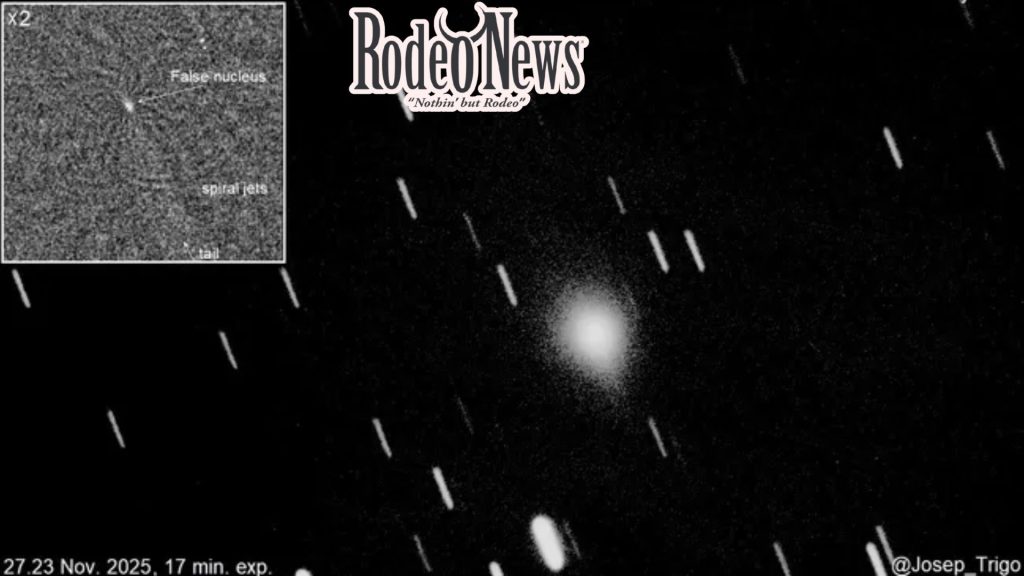
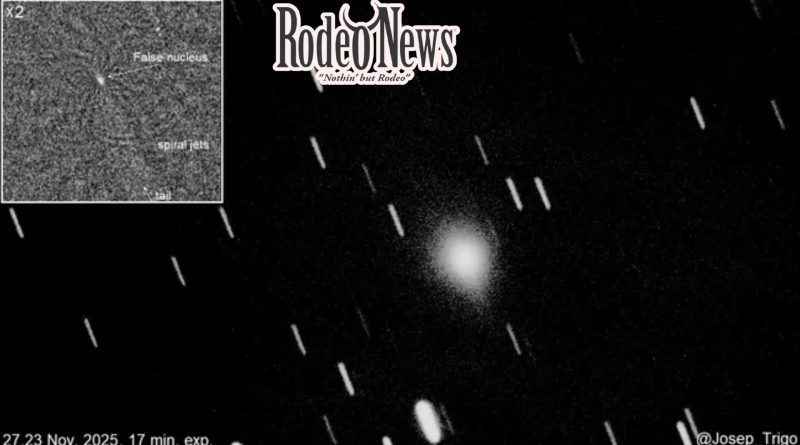
The interstellar comet 3I/ATLAS is attracting intense global attention — not because it poses any danger to Earth, but because its unique origin and behavior provide a rare scientific opportunity. For the first time, the United Nations’ International Asteroid Warning Network (IAWN) has launched a coordinated observing campaign focused on an interstellar visitor, using this object to refine planetary defense practices and comet-tracking techniques.
A Rare Interstellar Visitor
Comet 3I/ATLAS was discovered on July 1, 2025 by the ATLAS survey telescope in Chile. Astronomers quickly recognized it as an interstellar object, meaning it originated outside our solar system and is merely passing through. Its hyperbolic trajectory and unusually high velocity confirm that it is not bound by the Sun’s gravity and will eventually leave our solar neighborhood.
Unlike most comets that circle our Sun in predictable orbits, 3I/ATLAS hurtles through at high speed and will make its closest approach to Earth on December 19, 2025 at a distance of roughly 1.8 astronomical units (about 270 million kilometers). This distance ensures no impact risk to our planet.
Why IAWN Is Watching Closely
Tracking comets with precision is challenging. Their diffuse comae (the cloud of gas and dust surrounding the icy nucleus) and long tails can skew positional measurements, making accurate orbit predictions difficult. These challenges are even greater with an object like 3I/ATLAS, whose interstellar origin and behavior are inherently unusual.
To address these challenges, the International Asteroid Warning Network — a UN-backed planetary defense collaboration — began a two-month observing campaign from late November 2025 through January 27, 2026. The goal is not to respond to a threat, but to test, practice, and improve global capabilities for detecting and characterizing small bodies in space. During this period, more than 80 observatories and citizen scientists are contributing coordinated observations.
These efforts will help standardize methods for measuring comet trajectories, particularly in cases where standard techniques are complicated by cometary activity and morphology. The campaign also serves as a training ground for future planetary defense scenarios involving asteroids or other objects that might one day pose a real threat.
Scientific Payoff
Studying comet 3I/ATLAS offers far more than procedural practice. As only the third confirmed interstellar object after 1I/’Oumuamua and 2I/Borisov, this comet carries material forged around another star system. Observations from telescopes worldwide will help scientists analyze its composition, activity, and structure — clues that could reveal conditions in distant planetary systems.
Because interstellar comets travel at high speeds and are visible for relatively short periods, coordinated global observation is crucial. The IAWN initiative ensures that astronomers can pool data effectively, improving our understanding of how to track such objects accurately and how to respond if future visitors come closer to Earth