Escalating Standoff: U.S. Military Buildup Near Venezuela Intensifies Tensions With Maduro
The geopolitical pressure between the United States and Venezuela has entered a high-stakes chapter. In recent weeks, an unprecedented U.S. military build-up in the Caribbean has intensified, triggering stern warnings from Venezuelan President Nicolás Maduro, who insists his country is on the brink of defending its sovereignty by any means necessary.
A Naval Surge in the Caribbean
Under President Donald Trump, the U.S. has dispatched a formidable naval force to waters near Venezuela. Officials describe the deployment as part of a broader strategy to counter “narco-terrorists” — drug cartels that, in the Trump administration’s narrative, are deeply entwined with the Maduro government. Among the vessels are two Aegis destroyers, a cruiser, and nuclear-capable assets, signaling that Washington is not merely posturing.
Maduro, for his part, paints a very different picture: he accuses the U.S. of fabricating a war, driven by imperial ambitions rather than counterdrug operations He argues this is more than a routine anti-narcotics campaign; it represents a direct threat to Venezuelan sovereignty.
Threats and Countermeasures: A Nation in Arms
In response to what he calls “maximum military pressure,” Maduro has declared that Venezuela is ready for a sustained fight He has gone as far as promising to constitutionally declare a “republic in arms” if the United States were to carry out an attack.
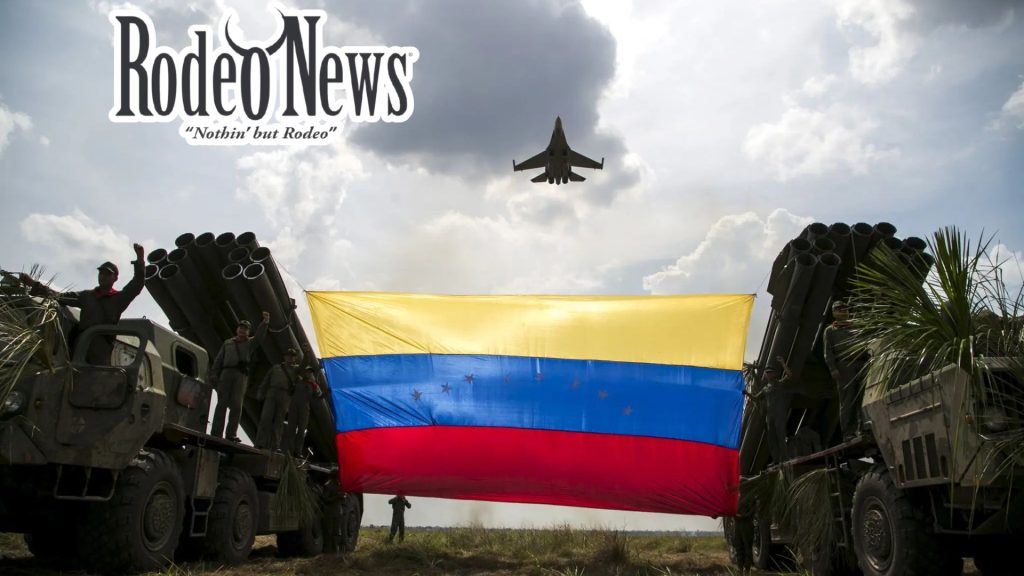
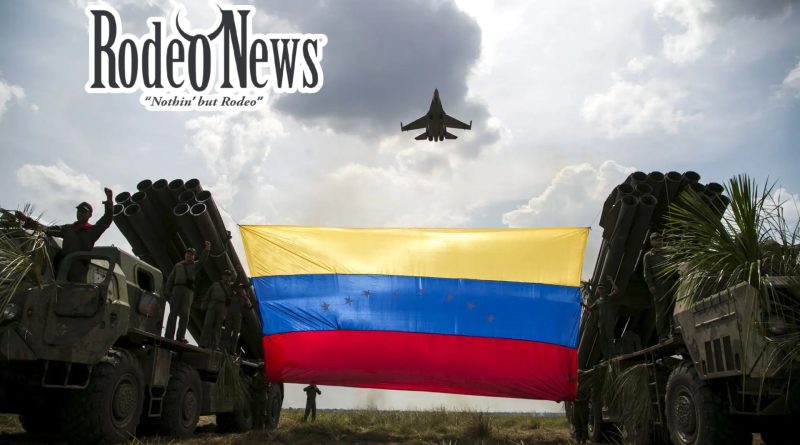
On the ground, the Venezuelan government is not standing idle. Defense Minister Vladimir Padrino announced a “massive deployment” encompassing ground troops, naval forces, riverine units, militias, and missile systems.Maduro also continues to activate his civilian militia, often framing their mobilization as a patriotic duty to defend against foreign aggression.
Diplomatic Ambivalence — and a Warning
Despite the aggressive rhetoric, there appears to be a thin diplomatic opening. Trump recently said he “would probably talk to” Maduro.But he was quick to add that military action remains firmly on the table: “I don’t rule out anything,” he told reporters. The ambiguity itself reflects the complexity of the current U.S. posture — a blend of coercion and cautious outreach.
Yet Maduro has pushed back hard against what he frames as a propaganda campaign. He claims U.S. narratives about his links to drug trafficking—and its resulting military pressure—are exaggerated or deliberately distorted.
Regional and Legal Risks
This escalation carries serious risks, both regionally and legally. International experts have raised red flags: launching a full-scale invasion or airstrikes into Venezuela could violate international law Some analysts also draw echoes of past U.S. interventions in Latin America — notably, comparisons have been made to the 1989 Panama invasion.
Meanwhile, Venezuelan opposition voices are watching closely. Some see the U.S. presence as a form of pressure that might weaken Maduro; others fear a violent confrontation could destabilize the region further.
The Stakes Ahead
At its core, this confrontation is about more than drug interdiction. For Trump, it’s part of a broader strategy to dismantle narcotics networks he argues are backed by corrupt state actors. For Maduro, it’s a threat to national survival and legitimacy. As both sides dig in, the risk of miscalculation rises — and the world watches, wary of the day when military maneuvers in the Caribbean could turn into something far more dangerous.