In the vastness of space, few discoveries capture as much fascination as interstellar visitors. But when Harvard astrophysicist Avi Loeb turned his attention to 3I/ATLAS, the conversation shifted from “just another comet” to something potentially much more extraordinary.
A Tail Towards the Sun — The Anti-Tail Mystery
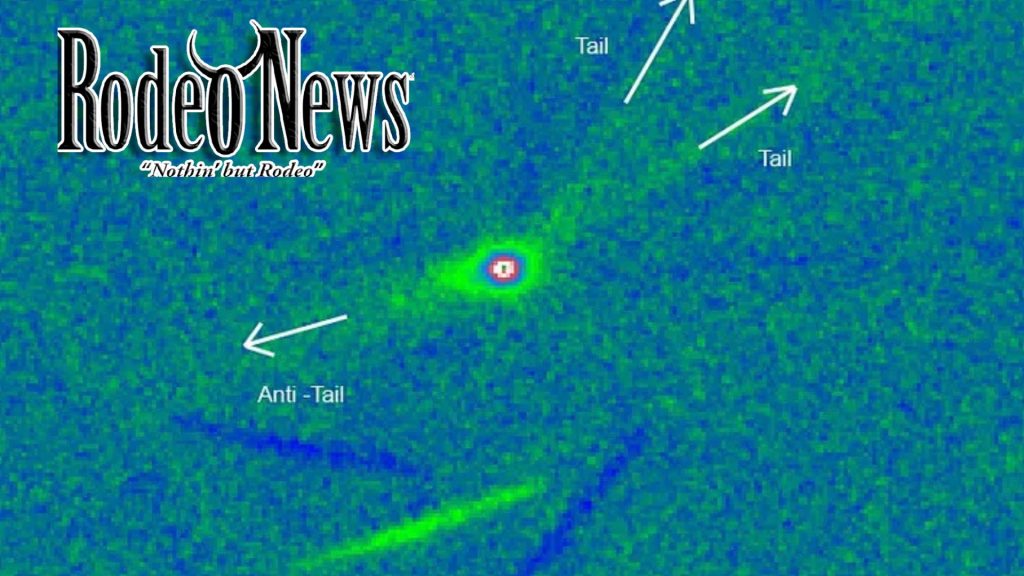
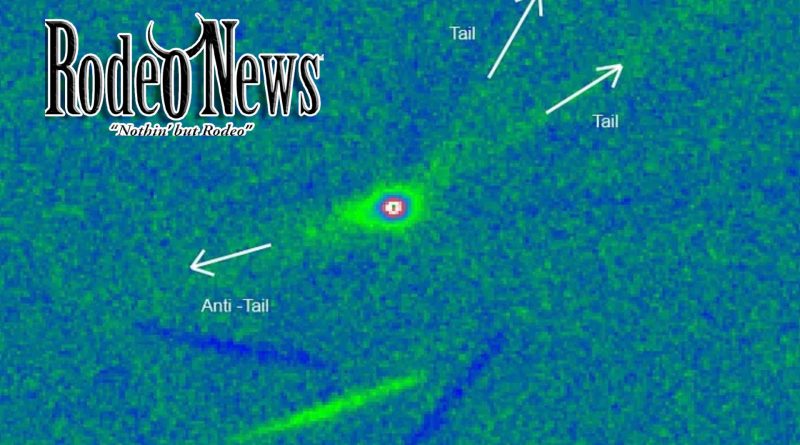
Most comets trail away from the Sun, their dust and gas blown outward by solar radiation. But 3I/ATLAS challenged that norm with a peculiar anti-tail — a plume of material pointing sunward. While some comets can appear to have anti-tails due to perspective effects, Loeb and his collaborator Eric Keto argue that what we see in this case is different: it may not be a mere optical illusion.
According to their model, this unusual structure can be understood through anisotropic sublimation. As 3I/ATLAS is warmed by the Sun, CO₂ gas sublimates more strongly on illuminated areas. That outgassing pushes ice grains (especially water ice) into space, and because of how long those grains survive under sunlight, they scatter light in a way that creates the anti-tail.
From Anti-Tail to Tail: A Transformation
Observations later revealed that the anti-tail didn’t last forever. By September 2025, results from the Nordic Optical Telescope showed a transition: the sunward anti-tail faded, and a more conventional tail — pointing away from the Sun — began to emerge.
Loeb and Keto believe this change is natural in their model. As the object nears the Sun, the production rate of ice grains increases, but their residence time (how long they can survive before sublimating) sharply drops. The result? The brightness of scattering shifts: early on, water-ice grains dominate, but closer to the Sun, heavier or more refractory dust takes over, forming a more typical cometary tail
Scale & Mass: Jets Larger Than Life
One of the most astonishing features of 3I/ATLAS is the scale of its jets. Loeb reports that the anti-tail jets stretch up to 0.95 million kilometers toward the Sun, while the tail jet opposite the Sun extends to 2.85 million kilometers
From this, they estimate a mass-loss rate of about 50 billion tonnes per month. Combined with measurements (or bounds) on its non-gravitational acceleration, this implies a nucleus diameter of at least ~5 km — possibly more, if most of its mass survived its closest approach to the Sun.
Is It Just a Comet … or Something More?
Here’s where things gets really speculative: Loeb suggests that the anti-tail might not just be a physical by-product of sublimation but could even be interpreted as a braking thrust — a sign that 3I/ATLAS is decelerating, possibly by design.
If that’s true, it could be a technosignature — evidence of controlled maneuvering. Loeb fantasizes about the object achieving a bound orbit between Mars and Jupiter, rather than merely passing through the solar system.
However, not everyone agrees. Many in the scientific community remain skeptical, arguing that the object’s behavior can be explained naturally. Critics note that anti-tails can form from unusual geometry and that the unusual measurements (like metallic signatures) are still tentative
What’s Next — Observations & Implications
As of now, 3I/ATLAS is being watched closely. Loeb points out that post-perihelion observations, especially as it approaches its closest distance to Earth, will be crucial.
New data could help resolve key questions:
- Are these jets really as massive and directional as they appear?
- What is the composition of the material (gas, ice, dust)?
- Does the tail behavior match the Keto–Loeb model?
- Is there any measurable non-gravitational acceleration that supports a controlled maneuver?
Depending on what we learn, 3I/ATLAS could either be a textbook interstellar comet — or a truly groundbreaking sign of extraterrestrial technology