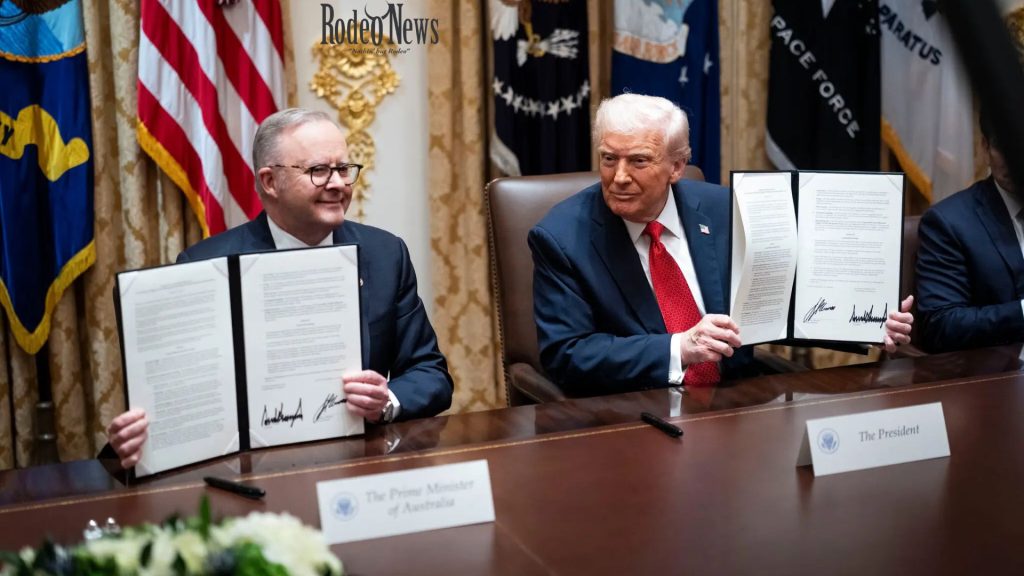
U.S. and Australia sign landmark minerals deal
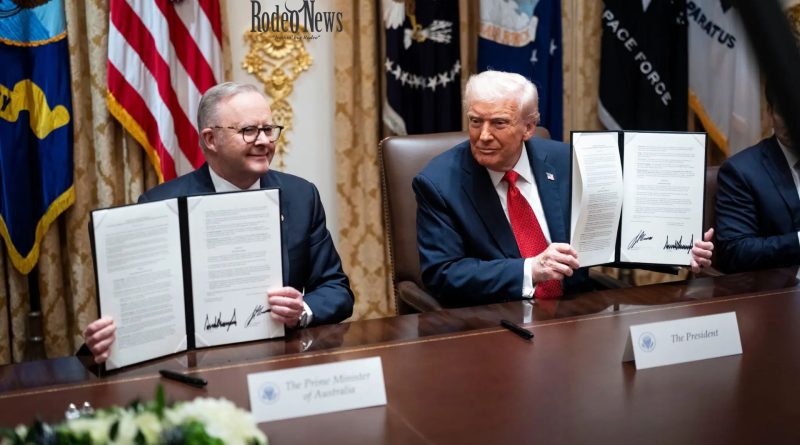
On 20 October 2025, at the Donald Trump White House meeting with Anthony Albanese, the United States and Australia formally agreed to a sweeping framework for cooperation in critical minerals and rare-earths supply chains.
The deal is valued at approximately US $8.5 billion, with each country pledging at least US $1 billion in the next six months toward mining, processing and related downstream projects.
According to U.S. officials, the agreement is aimed at reducing America’s dependence on China, which currently dominates large portions of the rare-earths market.
Why the urgency
For decades, China has held a near-monopoly in certain rare-earths extraction, processing and magnet-making.
Recently, Beijing introduced stricter controls on rare-earth exports and even on products containing them, heightening concerns among Western allies.
In this context, Australia’s role as a major minerals producer becomes strategically important. As one analysis notes, Australia hosts dozens of exploration projects, making it a key partner for supply-chain diversification.
What the deal covers
Mining & processing investment
Both nations will direct public and private capital into mining and processing ventures, particularly in Australia. The goal is to establish reliable sources of rare earths and other critical minerals.
There is also emphasis on downstream value-addition — not simply extracting ore and exporting it, but refining, processing and potentially manufacturing components domestically.
Strategic materials: gallium and rare earth oxides
One highlighted area is gallium — a metal essential for semiconductors, defence electronics and advanced tech. The deal supports a planned gallium plant in Western Australia, co-located at an alumina facility, aimed at bolstering supply within the U.S.–Australia ambit.
Another focus is rare earth oxides like neodymium and praseodymium, key components for high-performance magnets used in wind turbines, electric vehicles and defence systems.
Market stabilisation & supply-chain security
Beyond investment, the framework calls for mechanisms to discourage price-manipulation by dominant suppliers. A price floor is under discussion to protect allied producers from disruptive market practices.
Fast-tracking approvals and regulatory paths is another priority, so that new mines and processing plants move quicker than the extended timelines of previous deals.
Implications & challenges
Strategic benefits
- For the U.S., this means access to trusted partners and resources outside China’s sphere of influence.
- For Australia, the deal offers a chance to move up the value chain — from raw materials exporter toward processing and manufacturing hub.
- For broader allied supply chains, the deal signals a shift toward diversification and resilience in critical industries such as defence, clean energy and high tech.
Real-world hurdles
- While Australia has strong resource reserves, it currently lacks full downstream manufacturing capacity — especially for high-purity refining.
- The pipeline is optimistic: although the commitment is immediate, actual production, refinement and finished goods supply will take years to develop.
- China’s dominance doesn’t vanish overnight. Despite the framework, China remains a powerful actor in global rare-earth markets and could respond with policy moves of its own.
What’s next?
- Over the coming months, expect concrete project announcements, equity injections and joint ventures involving Australian mining firms and U.S. manufacturing partners.
- Monitoring will focus on whether these projects achieve scale, enter downstream manufacturing and deliver under-utilised supply alternatives.
- Policymakers will need to balance speed with environmental and community considerations, especially given the historically intensive nature of rare-earth mining and processing.
Conclusion
The U.S.–Australia critical-minerals pact marks a deliberate and substantial step toward reshaping supply-chain dependencies and reining in the strategic influence of a single dominant supplier. While promising, its success will depend on execution: developing processing infrastructure, creating downstream manufacturing, and delivering secure, competitive supply outside China’s domain. For both countries, this agenda is as much about geopolitics and defence as it is about business and industry.