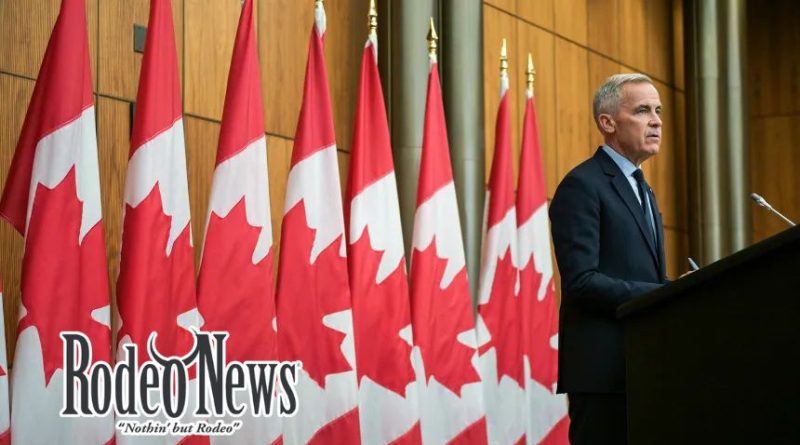
Canada’s Economic Troubles Deepen as PM Carney Heads to Washington for High-Stakes Tariff Talks
October 7, 2025
WASHINGTON, D.C. – With Canada’s economy under significant strain, Prime Minister Mark Carney is headed to Washington on Tuesday for a pivotal meeting with U.S. President Donald Trump. The agenda: tariffs, trade, and the urgent need to prevent further damage to the Canadian economy.
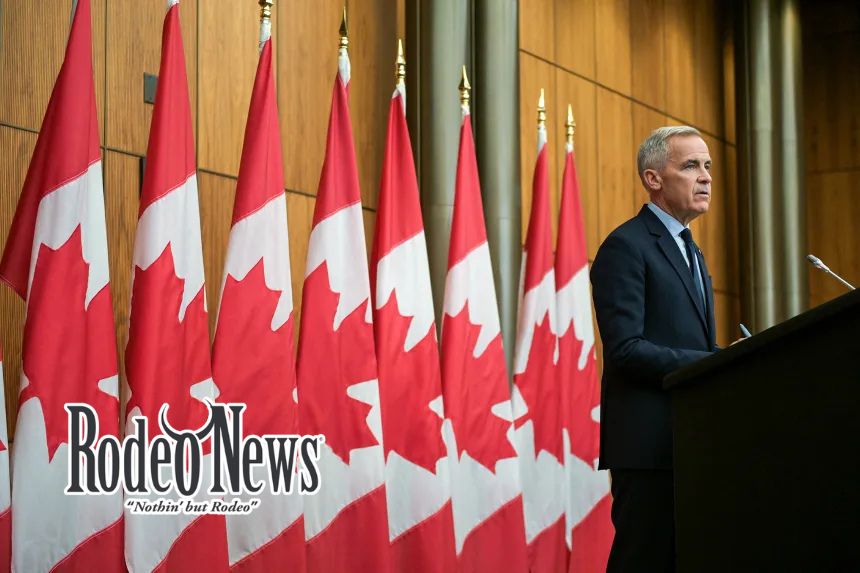
The meeting comes at a critical juncture. Canada is grappling with a 7.1% unemployment rate—the highest in nearly a decade—reflecting a half-point increase since the start of the year. Economic analysts point to mounting U.S. tariffs on Canadian exports like automobiles, steel, and aluminum as key contributors to the downturn.
Now, concerns are rising that another blow is imminent: the White House is reportedly preparing to impose new tariffs on softwood lumber—one of Canada’s top exports to the United States.
“It makes a difference to have face-to-face time with Trump,” said Inu Manak, a senior fellow for international trade at the Council on Foreign Relations. “The pressure is on Carney to leverage it.”
📉 A Struggling Economy Amid Tariff Tensions
The Canadian public is increasingly anxious. A recent poll conducted by Abacus Data among 1,500 adults found that the cost of living and the overall economic climate top the list of concerns. Inflation, slowed wage growth, and uncertainty around cross-border trade have only added fuel to the fire.
Experts suggest that tariffs on Canadian exports not only weaken industry performance but also drive up domestic prices—since many Canadian goods are made using raw materials that travel back and forth across the border.
“Even if Canadians aren’t the direct target, they feel the impact,” said Jeffrey Schott, senior fellow at the Peterson Institute for International Economics. “Higher costs eventually hit consumers and businesses alike.”
Carney is expected to push for sectoral exemptions—narrowly targeted tariff waivers that could alleviate pressure on industries vital to Canada’s economic recovery.
According to Manak and Schott, any movement on tariff relief will likely be tied to specific industry compliance under the U.S.-Mexico-Canada Agreement (USMCA).
⚖️ Bigger Stakes: The Future of North American Trade
While the immediate concern is tariffs, broader issues loom large. The USMCA—renegotiated by Trump during his first term—is scheduled for mandatory review next year. The agreement has so far allowed compliant goods from Canada and Mexico to enter the U.S. tariff-free, despite rising protectionist sentiment in Washington.
Insiders say Trump may now use newly proposed tariffs as a bargaining chip to reshape the terms of the deal—or unravel it altogether.
“What is at risk is the continuation of that deal or the slow unraveling of it,” warned Schott.
Carney’s strategy, sources suggest, is twofold: avoid deeper economic injury through strategic tariff relief, and prepare for a possible shift in U.S. policy away from multilateral trade deals toward bilateral arrangements.
Mexico’s new president, Claudia Sheinbaum, is reportedly watching these developments closely. Both she and Carney may soon find themselves negotiating independently with Washington, should the trilateral framework begin to falter.
“I don’t think Trump is planning to renew USMCA,” Manak said. “He’s more likely to use it as endless leverage in one-on-one negotiations.”
🔍 What’s Next?
Carney’s trip to Washington is more than just diplomacy—it’s damage control. With sectors such as automotive manufacturing, forestry, and metals under pressure, Canada cannot afford further disruptions in its largest trading partnership.
The outcome of Tuesday’s meeting could signal how far Trump is willing to go on tariffs—and how much Carney is willing to concede to protect Canadian jobs and economic stability.
As North America braces for another potential trade standoff, eyes remain fixed on Washington, where two leaders face a test of strategy, stamina, and statesmanship.