Mercedes-AMG GT SUV Unveiled With 1,153 HP
Mercedes-AMG has unveiled the all-electric Mercedes-AMG GT SUV, a high-performance luxury vehicle designed to combine supercar-level acceleration with advanced battery technology and exceptionally fast charging. The flagship GT 63 SUV delivers a claimed peak output of 1,153 horsepower, while its larger battery versions support DC fast charging at up to 710 kilowatts.
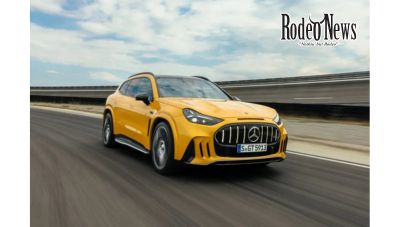
The new electric SUV represents a major step in Mercedes-AMG’s strategy to establish a stronger position in the premium electric performance market. It introduces a dedicated high-performance electric architecture, advanced axial-flux motors and an 800-volt battery system designed to deliver both rapid acceleration and sustained performance.
The vehicle is also entering a competitive market. Porsche has already established a presence in the high-performance electric SUV segment with its Cayenne Electric, giving Mercedes-AMG a direct rival as luxury automakers compete to deliver greater power, faster charging and more sophisticated driving technology.
According to Electrek, the first examples of the Mercedes-AMG GT SUV are expected to reach US dealerships in summer 2027. Pricing has not yet been announced, leaving prospective buyers waiting for more information about the vehicle’s final market positioning.
Mercedes-AMG GT SUV Introduces 1,153 HP Performance
The headline figure belongs to the Mercedes-AMG GT 63 SUV, the most powerful version of the new electric lineup. Mercedes-AMG says the flagship produces up to 1,153 horsepower at peak output, supported by three axial-flux electric motors and a sophisticated electric drivetrain.
According to Electrek, the GT 63 SUV generates up to 1,475 pound-feet of torque and is expected to accelerate from zero to 60 mph in 2.6 seconds under the manufacturer’s stated estimate. The time falls to 2.4 seconds when measured using a one-foot rollout, a testing convention that excludes the first foot of movement. Its maximum speed is electronically limited to 168 mph.
These figures place the Mercedes-AMG GT SUV among the most powerful electric performance SUVs announced by a traditional luxury automaker.
However, peak horsepower tells only part of the story. Mercedes also lists 711 horsepower of continuous output for the GT 63 and GT 55 versions. That distinction matters because maximum power may be available only under specific operating conditions, while continuous output provides another indication of how a vehicle can sustain performance beyond a short acceleration run.
The vehicle’s substantial performance figures also come with a practical consideration: weight. Electrek reports that the GT 63 SUV weighs approximately 5,942 pounds, or 2,695 kilograms. Managing that mass during cornering, braking and repeated acceleration will be an important test of the SUV’s suspension and thermal-management systems.
Three Mercedes-AMG GT SUV Versions Planned
Mercedes-AMG is preparing three versions of the electric SUV for the US market. Each targets a different balance of performance, battery capacity and driving capability.
The lineup begins with the GT 53 SUV, followed by the GT 55 SUV and the flagship GT 63 SUV.
| Model | Peak power | Battery capacity | Estimated 0–60 mph |
|---|---|---|---|
| AMG GT 53 SUV | 536 hp | 106 kWh | 4.1 seconds |
| AMG GT 55 SUV | 805 hp | 128 kWh | 3.0 seconds |
| AMG GT 63 SUV | 1,153 hp | 128 kWh | 2.6 seconds |
Specifications and acceleration estimates reported by Electrek. Acceleration figures vary with the testing method.
The GT 53 uses two conventional synchronous motors, while the GT 55 and GT 63 employ three axial-flux motors. The more powerful models also receive the larger 128-kilowatt-hour usable battery pack, compared with the GT 53’s 106-kilowatt-hour battery.
This structure gives Mercedes an opportunity to reach customers with different priorities. Some buyers may want the entry model’s substantial power without paying for flagship performance, while others may consider the GT 63’s additional output and advanced equipment central to the ownership experience.
Nevertheless, the final value proposition will depend heavily on pricing, which Mercedes has not yet disclosed.
Why Axial-Flux Motors Matter for Electric SUVs
One of the most important technologies in the Mercedes-AMG GT SUV is its axial-flux electric motor system.
Unlike conventional radial-flux motors, axial-flux motors use a different arrangement of magnetic flux and can offer high torque and power relative to their size and weight. Their flatter construction makes them particularly attractive for high-performance vehicles in which packaging efficiency is important.
Mercedes-AMG is drawing on technology associated with YASA, the British electric-motor specialist acquired by Mercedes-Benz in 2021. The company has been developing axial-flux motor technology for demanding automotive applications, and the GT SUV extends that approach into a large luxury vehicle.
The potential advantage is not limited to maximum acceleration. Compact, powerful motors can give engineers more flexibility when arranging the drivetrain, managing vehicle weight and balancing cabin space against mechanical components.
For the GT 63 and GT 55, three motors help deliver the headline performance figures. Yet the broader engineering challenge is ensuring that the vehicle can repeat that performance without excessive heat buildup or significant reductions in available power.
Mercedes says the new SUV has been developed around sustained performance as well as headline output. Real-world testing will ultimately show how effectively the system handles repeated acceleration, demanding roads and extended high-speed driving.
Mercedes-AMG GT SUV Features 710 kW Fast Charging
Beyond horsepower, charging speed is one of the most notable features of the Mercedes-AMG GT SUV.
The GT 63 and GT 55 use an 800-volt electrical architecture and a 128 kWh usable battery. Mercedes rates these versions for DC charging at up to 710 kW under suitable conditions. The company says a charge from 10% to 80% can take approximately 12 minutes.
If achieved at compatible charging stations, that capability could substantially reduce waiting times during long-distance journeys.
Mercedes also states that the larger-battery models can add up to approximately 450 kilometres of WLTP-rated driving range in 10 minutes. Electrek reports the figure as 454 kilometres, or about 282 miles, under the manufacturer’s stated conditions. These are official range-based estimates, not a guarantee of how much energy every driver will receive during a typical charging stop.
The GT 53 also supports high-power charging, with a reported peak of 600 kW. Mercedes lists an estimated 10% to 80% charging time of 11 minutes for that version.
However, maximum charging power depends on more than the vehicle itself. Battery temperature, charging-station capability, battery state of charge and power-management limits can all affect the actual charging rate.
That makes the distinction between a vehicle’s technical maximum and the charging speeds drivers routinely experience especially important.
Charging infrastructure remains a challenge
The United States does not yet have widespread public charging infrastructure capable of delivering 710 kW to a single passenger vehicle.
Electrek reports that many of the fastest public chargers being deployed in the country are rated at approximately 400 kW. Although the Mercedes-AMG GT SUV is listed as supporting the North American Charging Standard, or NACS, compatibility with charging networks does not mean that every station can provide the vehicle’s maximum charging rate.
Consequently, early owners may be unable to take full advantage of the SUV’s advertised charging capability on many routes.
That could change as charging networks invest in more powerful equipment. Until then, the 710 kW figure is best understood as a measure of the vehicle’s technical potential rather than a charging speed that will be available everywhere.
For buyers who regularly travel long distances, the location and output of compatible charging stations may be just as important as the battery specification.
Mercedes-AMG GT SUV Targets Up to 435 Miles of Range
Range will be another important factor for buyers considering the new electric SUV.
Mercedes lists a WLTP driving range of approximately 620 to 700 kilometres, equivalent to 385 to 435 miles, for the GT 63 and GT 55. The GT 53 is rated at approximately 597 to 668 kilometres, or 371 to 415 miles, under the same testing standard.
These figures suggest that the vehicle is designed to combine high performance with enough battery capacity for longer journeys.
However, WLTP results are produced under a standardized European testing procedure. They should not be treated as direct predictions of the range American drivers will achieve under the US Environmental Protection Agency’s testing system.
Actual range will also depend on driving speed, weather, road conditions, tire selection, cabin climate settings and how frequently drivers use the SUV’s full performance.
Aggressive acceleration and sustained high-speed driving can consume substantially more energy than moderate cruising. This is particularly relevant for a large, heavy vehicle designed to deliver sports-car-like performance.
Mercedes has not yet established the final US EPA range figures in the information reported by Electrek. Prospective buyers should therefore wait for market-specific ratings before making direct comparisons with other electric SUVs.
Advanced Suspension and Rear-Wheel Steering
Producing more than 1,100 horsepower is only one part of the challenge facing a performance SUV. Engineers must also make sure the vehicle remains composed and responsive despite its considerable size and weight.
Mercedes-AMG has equipped the GT SUV with rear-axle steering capable of turning the rear wheels by up to six degrees. This technology can improve maneuverability at lower speeds while helping the vehicle feel more responsive during faster driving, depending on the steering system’s calibration.
The GT 63 also receives AMG Active Ride Control+ as standard, according to Electrek. The system uses active hydraulic technology and air springs to manage body movement, including roll and pitch.
Such systems are particularly relevant in electric performance vehicles. Battery packs add substantial mass, while powerful motors can deliver torque almost instantly. Advanced suspension and chassis controls help engineers balance acceleration, comfort and handling.
Still, the effectiveness of these features cannot be judged from specifications alone. Ride comfort, steering feedback and cornering behavior will need to be evaluated in independent road tests.
The GT SUV’s real achievement will be whether it can deliver a convincing combination of everyday usability and high-performance driving rather than simply producing impressive figures on paper.
Inside the Mercedes-AMG GT SUV: Screens and Practical Space
The interior combines digital displays with the everyday practicality expected from a five-seat luxury SUV.
According to Electrek, the cabin features a 14-inch central display integrated with a 10.2-inch driver display. Buyers can also specify an additional 14-inch screen for the front passenger
The layout is intended to support the vehicle’s modern electric architecture while preserving a driver-focused environment.
Passenger and cargo space will also matter to customers considering the SUV as a daily vehicle. Electrek reports 21.4 cubic feet of cargo capacity behind the rear seats and a small 2.8-cubic-foot front trunk.
Those figures offer useful storage options, although buyers should assess the cargo area in person if they regularly carry large luggage, sports equipment or family necessities.
Mercedes-AMG is also retaining a recognizable element of its performance-car identity through simulated engine sounds.
In the AMGFORCE Sport+ setting, the GT 63 and GT 55 can reproduce recorded V8 sounds, while the GT 53 uses a six-cylinder sound profile. Simulated gear changes can also be triggered using the paddles. Drivers who prefer a quieter experience can select a Silent setting, according to Electrek.
The approach reflects a broader question for electric performance cars: how should manufacturers recreate the emotional experience traditionally associated with combustion engines when the powertrain itself operates differently?
Some enthusiasts may appreciate the additional sound and interaction, while others may prefer the quieter character of an electric vehicle. Making these features optional gives drivers greater control over that experience.
Mercedes-AMG GT SUV vs. Porsche Cayenne Electric
The Porsche Cayenne Electric is an obvious competitor for the new Mercedes-AMG model.
Both vehicles target customers seeking luxury, strong acceleration and the practicality of an SUV without sacrificing performance. Their flagship versions also demonstrate how quickly electric powertrains are changing expectations in the premium segment.
Electrek’s comparison of manufacturer figures places the Mercedes-AMG GT 63 SUV at 1,153 horsepower, compared with 1,139 horsepower for the Porsche Cayenne Turbo Electric. Both are listed at an estimated or stated 2.4 seconds to reach 60 mph when using a one-foot rollout, although testing methods and conditions matter.
The Mercedes has an advantage in the published battery and peak charging figures. Its 128 kWh usable battery is larger than the 113 kWh battery cited for the Porsche in Electrek’s comparison. The Mercedes is also rated for up to 710 kW of DC charging, compared with 400 kW for the Porsche.
However, these specifications do not settle the overall competition.
The Porsche’s driving dynamics, comfort, efficiency, equipment and real-world charging performance will all influence how the vehicles compare. Similarly, the Mercedes’ substantial power figures will matter less to some buyers than interior quality, warranty coverage, service availability and total ownership costs.
Price is another unanswered question. Electrek cited a US price of $163,000 for the Porsche Cayenne Turbo Electric, while Mercedes had not announced pricing for the GT SUV at the time of its report. That means a definitive value comparison is not yet possible.
What the Electric Mercedes-AMG GT SUV Means for the EV Market
The Mercedes-AMG GT SUV arrives at a time when premium electric vehicles are increasingly competing on more than acceleration.
Early high-performance EVs often attracted attention through instant torque and rapid acceleration. The next stage of competition is likely to place greater emphasis on charging convenience, battery durability, repeatable performance, efficient thermal management and the quality of the complete ownership experience.
Mercedes’ combination of axial-flux motors, an 800-volt architecture and a battery rated for exceptionally high charging power signals an attempt to address several of these priorities in one vehicle.
Nevertheless, the GT SUV will occupy a premium market segment. Its eventual price, operating costs and availability of suitable charging infrastructure could limit its appeal even if its technical specifications prove competitive.
The vehicle also illustrates the importance of distinguishing between engineering potential and everyday convenience. A 710 kW charging capability may become increasingly useful as public charging networks expand, but buyers will still need accessible stations, compatible equipment and dependable charging performance.
For Mercedes-AMG, the challenge is to translate its impressive specifications into a vehicle that performs consistently on public roads and delivers the comfort and practicality expected of a luxury SUV.
Mercedes-AMG GT SUV Launch: What Happens Next?
The next major milestones will be the release of final market specifications, pricing, official range ratings and independent performance tests.
The expected US dealership arrival in summer 2027 gives Mercedes time to provide more details about the model lineup and its equipment. Buyers will also need confirmation of EPA range estimates and information about how the vehicle performs under real-world charging conditions.
Independent reviews should eventually help answer questions that specifications alone cannot resolve. These include how the suspension behaves on rough roads, whether the large battery delivers competitive efficiency, how charging speeds vary with temperature and how well the vehicle balances performance with passenger comfort.
Pricing will be equally important. If the GT SUV enters the market near the upper end of the luxury segment, Mercedes will need to demonstrate that its technology and driving experience justify the investment.
For now, the Mercedes-AMG GT SUV stands out as an ambitious electric performance vehicle. Its flagship’s 1,153 horsepower and the larger-battery versions’ 710 kW charging capability make it a serious contender on paper, while its advanced chassis technology aims to address the challenges of managing such performance in a large SUV.
The decisive test will come when the vehicle reaches customers. If Mercedes can combine its headline specifications with dependable charging, competitive range and convincing real-world handling, the GT SUV could become an important addition to the high-performance electric luxury market.